Roof Systems
A folded flashing corner can pull away from its bonded edge where the rubber changes direction beside a curb. The repair needs the corner geometry and receiving surface examined before new material covers the fold. We install and repair EPDM commercial roofing in Norman, OK, by assessing the rubber sheet, seams and adjoining layers as connected parts of the assembly. Compatible components and preparation follow the installed material and the condition that produced the opening.
Downtown Norman includes artist studios, galleries, shops and restaurants. The Porter Avenue Corridor has commercial and institutional uses adjoining residential neighborhoods. On a requested building, the roof approach and operation below a curb or wall can change the working window. We establish those conditions before repairing the EPDM detail, with the receiving layers and any equipment or wall task assessed before the new connection is completed.
How should flashing fit a change in direction?
A corner turns the flashing through several surfaces and can concentrate strain where material is stretched or folded into an unsuitable arrangement. We examine the actual detail, support and adjoining membrane before selecting compatible replacement components. The installed system and geometry determine the flashing method, including preparation of the surface it bonds to. A new piece needs a supported arrangement and suitable overlap rather than being forced into the same failed shape.
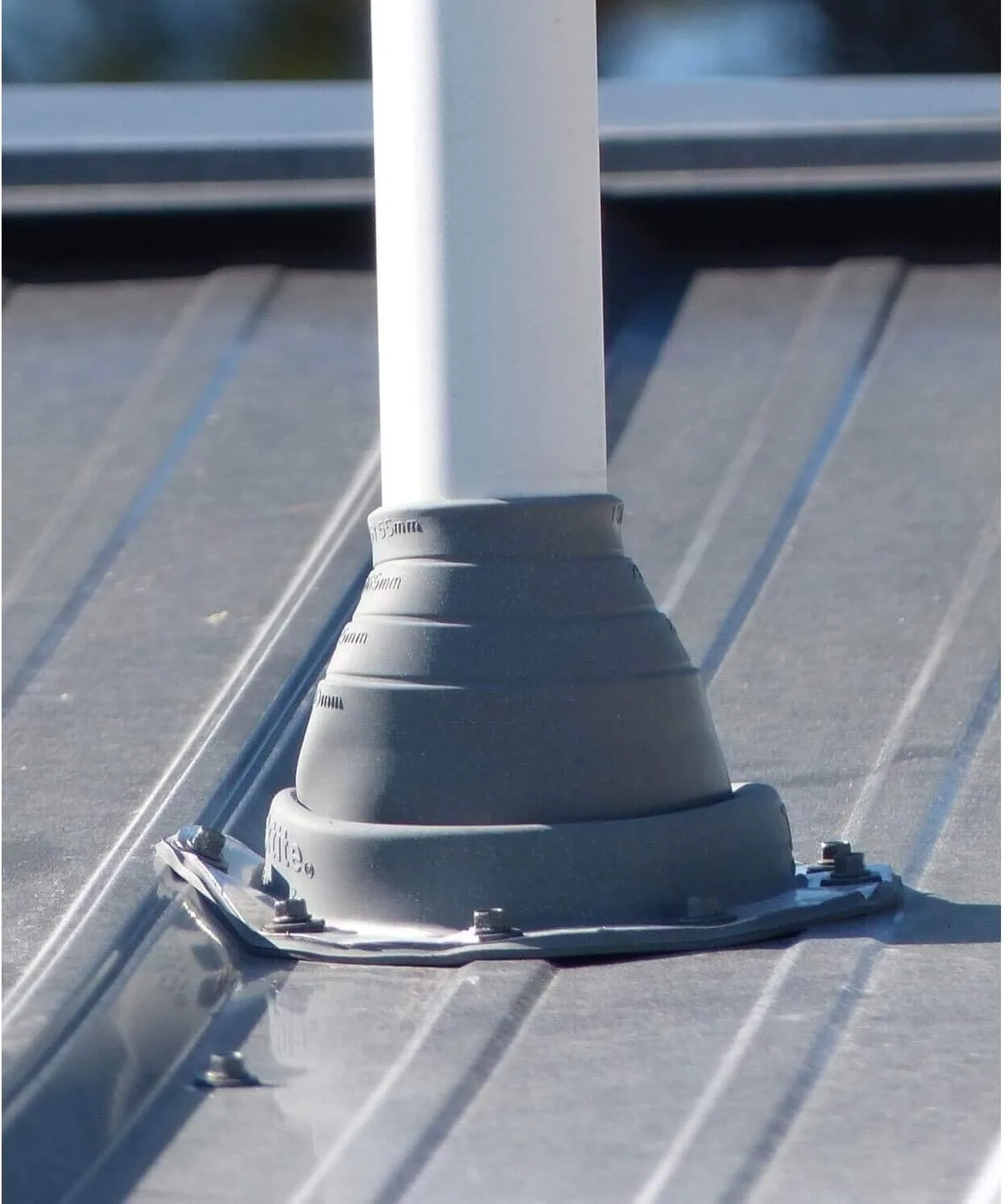
Curbs and penetrations also need enough space for the repair. An overhanging equipment unit or clustered pipe arrangement may limit preparation at the upper termination. We identify the access task and coordinate another trade where a component needs movement or alteration. Our rubber flashing and penetration work completes the roof-side connection after those receiving conditions are ready. The repaired junction is examined through its corners, seams and termination so a straight section that bonds well does not conceal an unresolved transition beside it.
What changes preparation at an older seam?
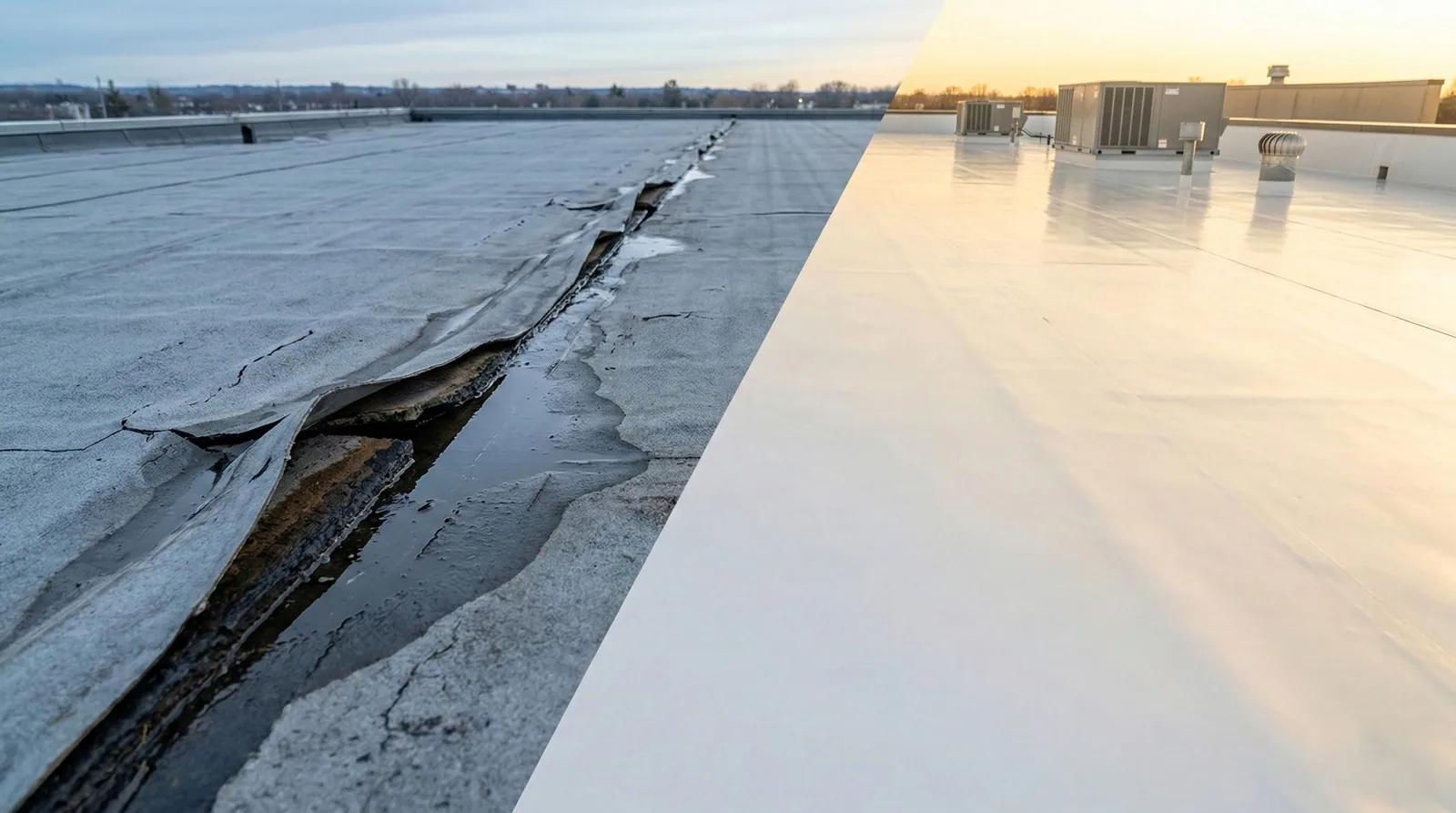
Surface deposits and earlier repair compounds can interfere with an EPDM seam repair. We identify the material and its condition before selecting cleaning, primer and compatible seam components. Methods are chosen for the installed assembly and application requirements. Loose or unsuitable earlier work can require removal to reach rubber capable of receiving the repair.
The visible edge is examined with the surrounding sheet so the repair boundary reaches useful material. If moisture entered beneath the opening, selected investigation may be needed to assess the layer condition before closure. Comparisons with welded TPO assemblies can help during a new-system decision, but EPDM repair uses its own compatible preparation and connection method. We review the completed seam and adjoining detail before the work area closes. The cause of separation, including movement or contact at nearby equipment, is addressed alongside the surface connection.
Which restrained edge affects sheet movement?
An EPDM sheet held at a curb or perimeter can place stress on the transition if the surrounding assembly moves differently. We examine attachment, termination and available clearance where that strain appears. The repair may involve membrane, a component receiving the termination or an adjoining support. Adding material across the visible separation is considered only after the interaction has been assessed.
Cleveland County's climate normals include summer heat and below-freezing nights. Those county conditions make temperature-related movement relevant to an installed assembly, while the actual roof details determine corrective work. We coordinate perimeter material with coping and roof-edge repairs where metal or its receiving base is affected. A wall component that needs correction remains available to the responsible trade before the rubber flashing closes it. The construction sequence preserves that inspection point so the new roof-side detail does not retain an unresolved attachment or support condition.
When does the rubber repair need layer removal?
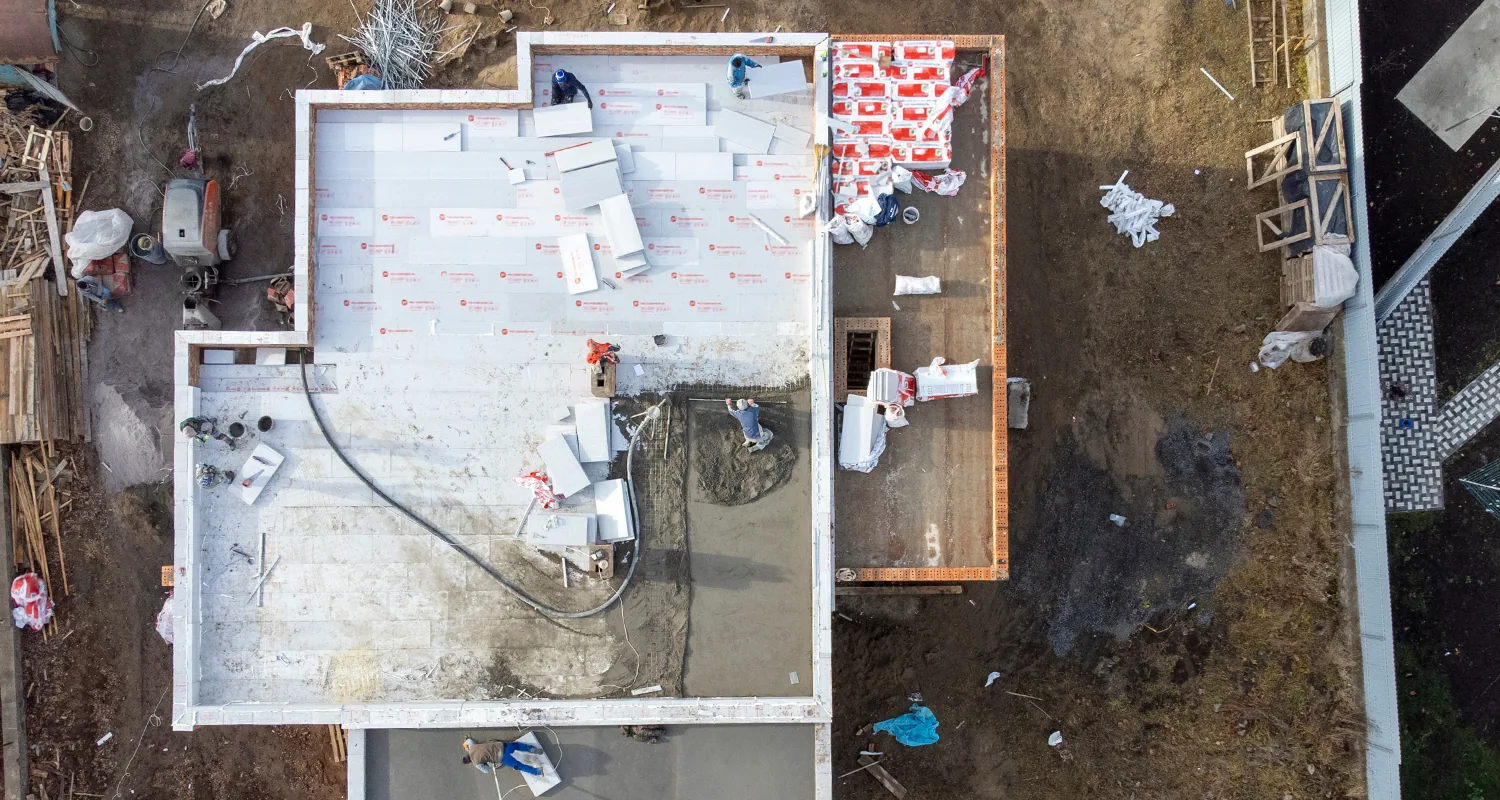
A puncture over wet insulation can require more than surface preparation. We investigate the area relevant to the repair and identify the material that must be removed or restored. The retained boundary needs sound support and a compatible elevation for the new layers. Confirmed deterioration is examined against the adjoining assembly so removal stops at a workable receiving area rather than the original visible hole alone.
A local insulation and cover board correction can alter nearby flashing and outlet relationships. We examine those details before the membrane closes the replacement material. Where deterioration connects several roof areas, a broader renewal assessment may be required. The general contractor receives the exposed layer findings and the trade tasks affecting their closure. The new rubber connection proceeds after the deck or retained insulation has been assessed and prepared, with temporary water control coordinated while another component remains under investigation.
How should the repair fit a commercial wall or entrance?
A wall transition above an occupied entrance can require exterior access as well as roof-side preparation. We establish the working area and protection with the property contact before removing material. The wall condition, termination and surrounding sheet are examined together. A roofing repair can be coordinated with masonry or other wall work where that component controls the receiving connection.
In the Porter Avenue commercial corridor, institutional and business uses sit alongside residential areas. The requested property's access and operating arrangement determine the work period and material route. For a public building roof, escorts or controlled access may also affect the inspection and closure stage. We discuss those actual requirements rather than assigning one operating pattern to the corridor. The construction sequence identifies which wall or support task precedes roofing, allowing the repair to close against a component ready for the compatible EPDM detail.
What distinguishes renewal from another localized repair?
Repeated openings across several connections can indicate an assembly question that isolated patching does not resolve. We examine how far deterioration, moisture or attachment concerns extend and determine whether useful receiving material remains for contained work. A renewal option describes the layers removed or retained, the new attachment and the reconstructed details. It is compared with localized repairs against those physical findings.
Where PVC sheet construction or another system is considered, its preparation and component requirements are assessed for the building rather than transferred from the EPDM repair approach. Later maintenance still follows the material installed. We provide the repaired locations and assembly information useful for future compatible work, including points needing examination after equipment alterations. Drainage clearing and service-route protection remain part of care. The handoff identifies the actual rubber connections restored and any separate assembly task that needs further investigation or construction coordination.
Related Work
Commercial Roofing Questions
Can a folded corner be repaired by adding more seam material?
Examine the geometry and receiving surface before choosing the detail. The corner may need removal and reconstruction with compatible flashing rather than another layer over the same strained shape. We identify support, access and adjoining component tasks before permanent closure.
Should old repair compounds remain beneath new EPDM work?
Compatibility and bond condition determine what can remain. We inspect earlier material and prepare the receiving rubber according to the selected components. Loose or unsuitable compounds are removed where needed so the new connection reaches a surface appropriate for the repair.
Why would a puncture repair include insulation work?
Water beneath the rubber can change the condition of supporting layers. We investigate the affected area and identify the material requiring correction. The membrane repair then closes a suitable base with a workable tie-in to retained roofing.
How does equipment movement affect a rubber curb flashing?
Movement or support contact can strain the transition and reopen a repair. We examine the component arrangement and coordinate the responsible trade's task before selecting closure. The compatible flashing detail follows the support, clearance and receiving surface actually provided.
Check the rubber detail before selecting the repair
Provide the Norman property location, EPDM assembly information, corner or seam concern and adjoining trade schedule. We will examine preparation, supporting layers and the connection order needed for compatible work.
Request a Roof Assessment