
Commercial Roofing Services
Debris packed against a scupper changes the water level at nearby seams and flashing. An inspection needs to follow that interaction through the outlet and surrounding roof, rather than record the obstruction alone. We inspect commercial roofs in Norman, OK, by examining drainage, attachment, surface condition and the connections between roofing and adjoining construction. The findings explain which detail needs attention, what investigation remains and how the work fits the building's next construction or maintenance step.
The State Highway 9 Technology Corridor includes adjoining university facilities and local employers, while downtown Norman combines shops, galleries and restaurants. Those building uses can change access, equipment coordination and the interior areas relevant to an inspection. We establish the requested property's assembly and operating constraints before walking it. A preventive maintenance assessment can use the same physical findings to distinguish routine clearing from a connection that needs repair or a layer that requires closer investigation.
Where should the inspection begin?
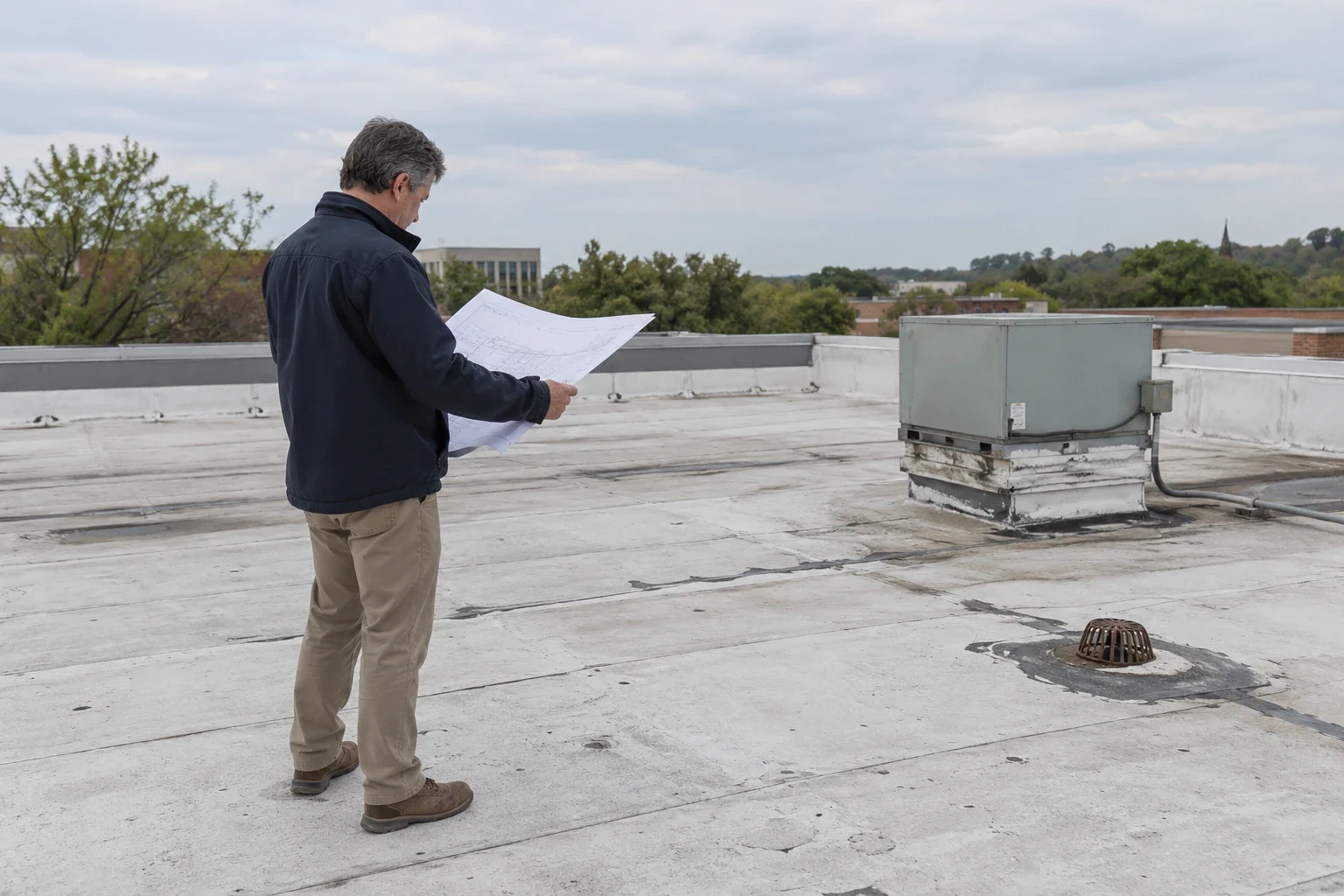
Water flow provides one useful route across the roof. We identify outlets, higher adjoining surfaces and transitions, then examine the areas that drain toward each receiving connection. Debris, sediment and surface irregularities can help direct attention, but they are assessed alongside actual slope and material condition. At a drain, we inspect the membrane transition, accessible hardware and the surrounding basin. A separate overflow provision receives its own examination where it is part of the assembly.
We also use reported concerns to establish observation points. An interior leak, a displaced metal component or a planned equipment change can require closer attention to a particular junction. Our leak tracing work can extend the assessment where water entry remains unresolved. The roof walk is organized by physical areas and connections so findings can be located again during repair. Where safe access prevents examination of part of the assembly, we identify the access needed and select an appropriate next method rather than treating the inaccessible area as inspected.
Which connection changes the next trade task?
A curb flashing with limited height can become a construction problem when insulation is added or equipment is replaced. We inspect the current detail and examine available dimensions before the proposed work changes it. At walls, we look at the roof termination and adjoining surfaces that can deliver water toward it. At metal edges, loose attachment, damage and movement clearance can influence whether a localized repair will have a suitable receiving connection.
We describe the roofing finding and the component responsible for the next step. A support repair can belong with a structural or equipment trade before the membrane is closed. An intact curb with damaged sheet material may permit a different sequence. Our perimeter metal evaluation considers the metal, fastening and roofing transition together. This distinction is particularly useful for a general contractor coordinating several scopes above an operating building. The inspection establishes the junction to examine or rebuild, allowing the trade schedule to account for the connection order rather than only the visible surface defect.
When does the inspection need a test opening?
A surface examination cannot show every concealed layer. Where moisture, thickness or deck condition affects a proposed repair or replacement, we identify the additional investigation required. Test openings can establish material arrangement at selected locations, while attachment testing or other appropriate methods may address separate design questions. Each test is selected for the decision being made. We explain its location and what its findings mean for the next construction step.
A moisture survey with physical confirmation can help investigate suspect areas when the assembly and weather support useful thermal contrast. The inspection records those indications separately from confirmed material conditions. Where no thermal survey is appropriate, local openings and other observations can guide the assessment. We restore investigation openings with compatible roofing details. The resulting information can influence removal boundaries, retained insulation or the support available for a repair. It is assessed with the roof layout and adjoining details rather than applied indiscriminately to areas that were not examined.
How are repair priorities established?
An open seam with active water entry needs a different priority from minor surface wear that is not admitting water. We relate each finding to its effect on water control, attachment or the proposed construction. Items that require immediate attention are distinguished from planned repairs, routine maintenance and further investigation. The written recommendation explains the affected connection and the conditions that make its timing relevant.
For a property in downtown Norman, galleries, shops or restaurants may influence the repair window and interior protection. We ask the building team for those operating requirements before converting inspection findings into a work sequence. A roof capital assessment can then compare localized work with a larger project where deterioration or assembly limitations extend beyond isolated details. We consider the receiving materials, drainage corrections and equipment changes involved in each option. The recommendation links the physical condition to the owner's decision, making it possible to schedule the required work without assuming every observed defect has the same consequence.
What remains useful after the inspection visit?
Location photographs and clear descriptions allow the construction team to return to an affected detail. We provide the observed condition, the proposed task and any investigation or trade correction needed before roofing work proceeds. Findings are grouped by roof area and connection so a repair crew can distinguish one penetration, drain or perimeter segment from another. A photograph of a surface mark is paired with the physical assessment that explains its significance.
The April 2023 hail report west of Norman provides a reason to consider storm-related inspection after a relevant event. We examine the requested covering and details for actual damage, then separate those findings from ordinary wear or unrelated defects where the evidence supports that distinction. An inspection for an office property also considers equipment service routes and maintenance access supplied for the building. Follow-up priorities can change after alterations, a storm or a new water-entry report. The owner receives the points that warrant reassessment and the assembly information needed for the next work decision.
Related Work

Commercial Roofing Questions
Can an inspection help before a mechanical equipment replacement?
Inspect the curb, flashing height, nearby drainage and the roof's receiving surface before equipment is ordered or lifted. We identify roofing changes that need coordination with the mechanical scope. That assessment helps establish which support or curb task precedes membrane work and where an inspection point should remain accessible.
Will a roof walk establish whether insulation is wet?
Visible conditions can identify suspect areas, but concealed moisture often needs further investigation. We explain when a suitable survey or physical opening is needed and relate the selected tests to the decision. The roof walk and test findings are combined without treating an unexamined layer as confirmed dry.
How do you distinguish maintenance from a roof repair?
Clearing an outlet can be a maintenance task, while a damaged membrane transition requires compatible repair. We inspect the affected connection and explain whether cleaning alone addresses the condition. The recommendation also identifies adjoining component problems or concealed-layer questions that change the work beyond routine maintenance.
What can a general contractor use from the inspection findings?
Use the detail locations, material observations and recommended connection order to coordinate the trades. We identify which roofing surface can receive work and which component needs correction first. Access restrictions and unresolved investigation needs are included so the next scope can be scheduled against the condition actually found.
Should we request another inspection after adding rooftop equipment?
A new penetration, support or service route changes the roof's interfaces and warrants checking the affected construction. We examine the completed flashing, attachment and drainage around that work. The assessment can be limited to the altered area or extended where the project disturbed adjoining materials or introduced a new operating concern.
Schedule the roof connections for inspection
Provide the Norman building location, reported concerns and proposed alterations. We will examine the relevant details and explain the findings that affect the next roofing or trade decision.
Request a Roof Assessment