Roof Systems
Open side flashing at a raised curb can require reconstruction of several plies while the adjoining field remains suitable for retention. The receiving curb surface and the connection between vertical and horizontal layers need exposure before a compatible repair boundary is selected. We install and repair modified bitumen commercial roofing in Norman, OK, by assessing the asphalt-based layers, their attachment and the details that close the assembly. The application method follows the specific SBS or APP system and the construction conditions at the property.
Downtown Norman's restaurants, shops and artist spaces can have different operating limits from Goldsby's industrial and flex properties. At a requested building, the interior use and roof access affect removal, preparation and application arrangements. We establish those conditions before proposing a modified bitumen repair. The selected detail reaches useful receiving material and includes the underlying layer work needed before a new ply closes access to the affected assembly.
Which sheet and application method are present?
Modified bitumen uses asphalt altered with polymers, commonly SBS or APP, in a reinforced roofing sheet. Product construction and installation requirements vary, so we identify the actual material before selecting repair components. The proposed method can involve self-adhered, cold-applied or other specified application arrangements appropriate to the system. A method used on one cap sheet is not automatically transferred to another without compatibility assessment.
We review accessible material information and the roof found, including base plies, surfacing and old repairs. Where the existing configuration remains unresolved, an opening or additional assessment may be needed before construction is described. Comparisons with built-up asphalt roofing can inform a renewal decision, but the installed modified sheet has its own ply and connection requirements. The scope identifies the layers and preparation involved so the general contractor can coordinate the working method with the building operation and the actual receiving assembly.
How is a separated lap prepared for repair?
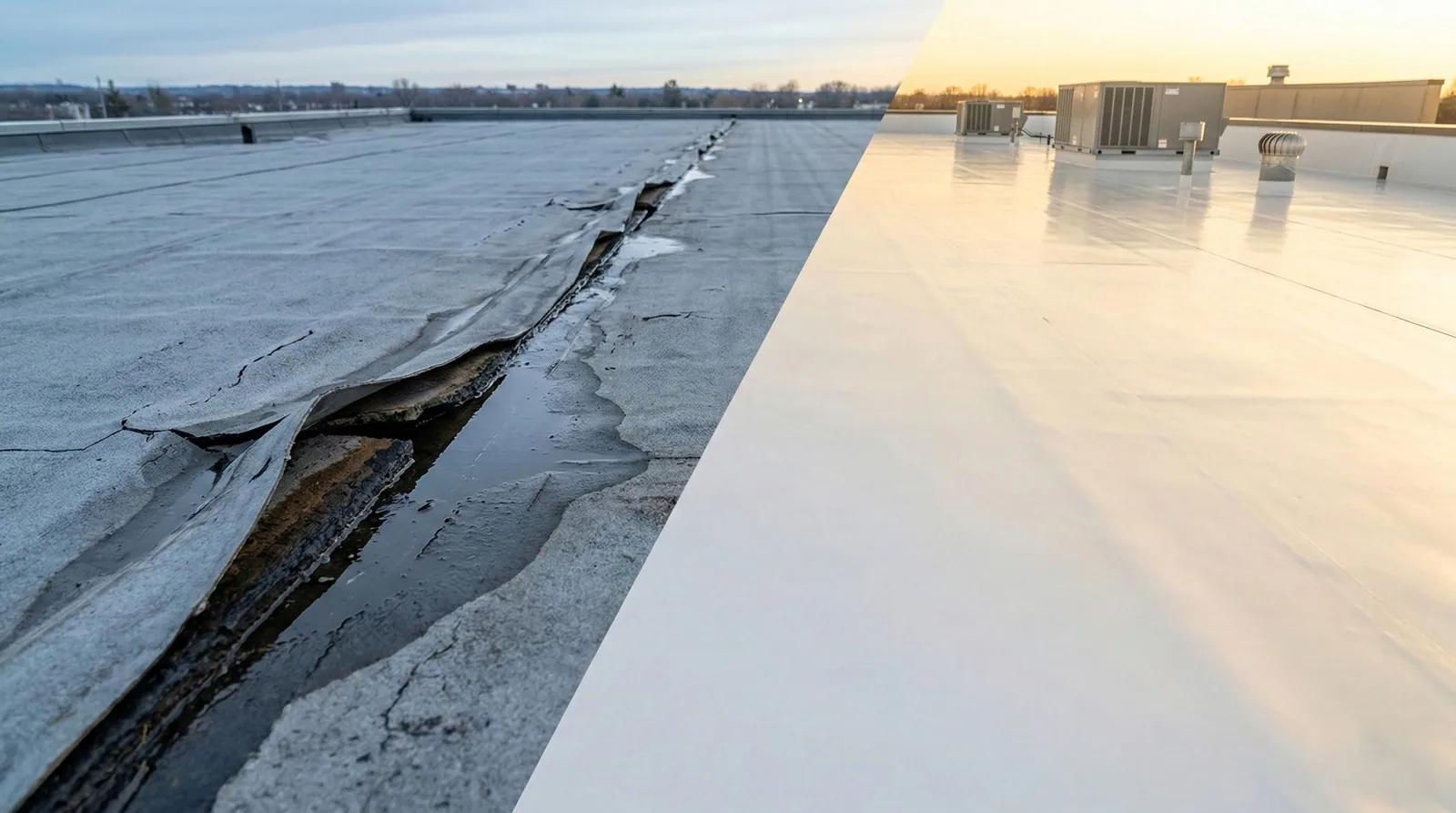
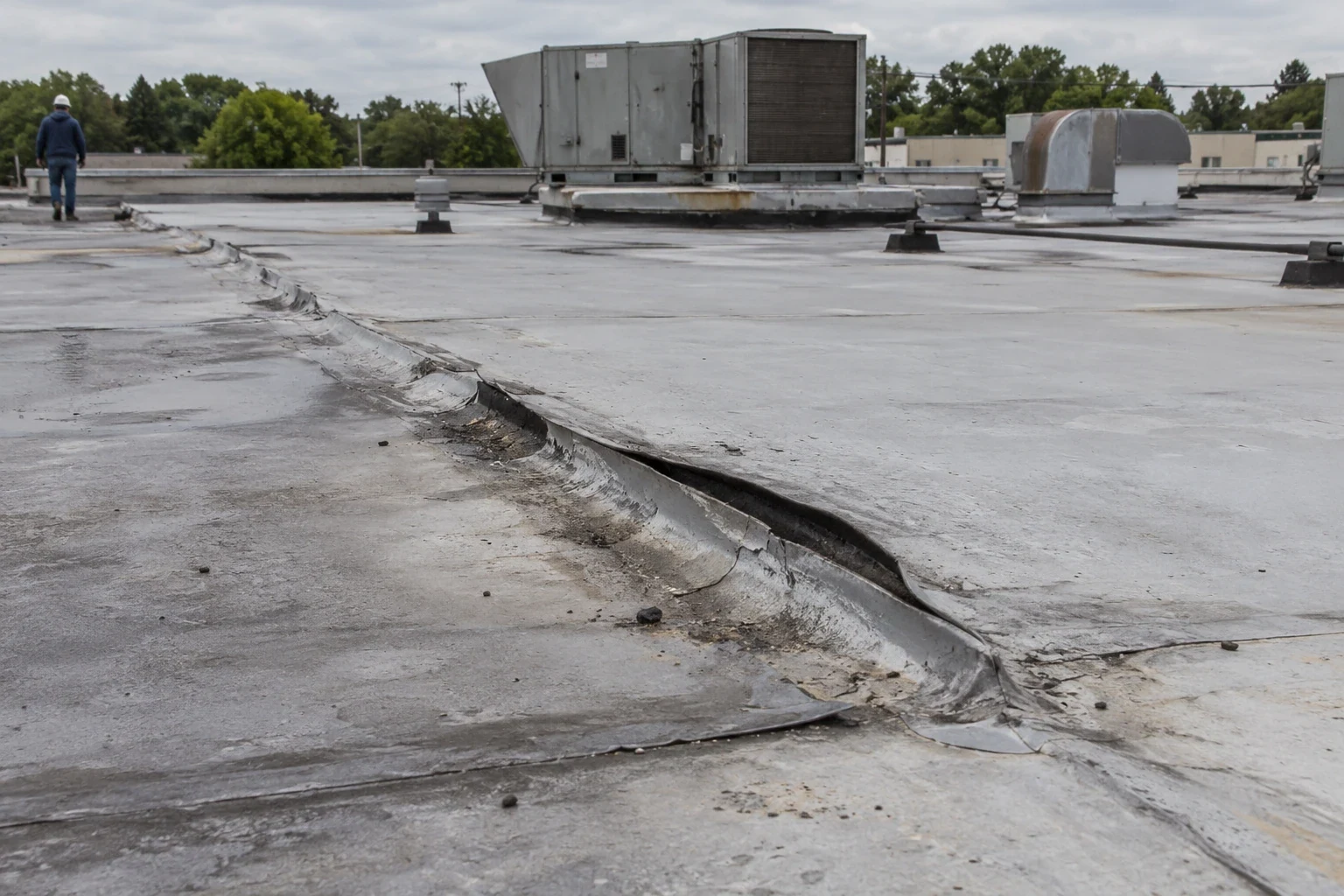
A loose lap can conceal moisture or incomplete attachment below its visible edge. We examine the opening and adjoining sheet before deciding where the repair should terminate. Granule treatment, cleaning and application preparation follow the selected repair system. Deteriorated material or incompatible older work can require removal to reach a surface capable of receiving the new connection.
The repair extends through the necessary plies and detail rather than relying on another surface layer to conceal an unresolved opening. We check the connection and adjoining material after the selected application is complete. If equipment movement or a wall transition continues stressing the lap, that component task enters the same scope. A separation at a roofing overlap is assessed with its cause and receiving condition. The completed patch has a defined boundary, with any remaining concealed question investigated before closure proceeds across the affected area.
What does a blister change beneath the cap sheet?
A raised area can indicate separation within the assembly, but its treatment requires examination of the actual layers and conditions. We assess the location, surrounding material and the question it raises for the proposed work. Selected exposure can reveal moisture, separation or another layer condition affecting retention. The opening is planned with suitable restoration and protection for the occupied area below.
An investigation of concealed layer moisture may help select confirmation points under appropriate conditions. The survey observation and physically exposed material are related before removal quantities are proposed. Where affected insulation needs replacement, the new build-up must provide support and a workable tie-in for the modified bitumen plies. Connected deterioration may change the project into a wider assembly decision. We identify that consequence through the material findings, preserving the distinction between a local surface repair and reconstruction of layers that no longer provide suitable receiving conditions.
Which application conditions affect the working area?
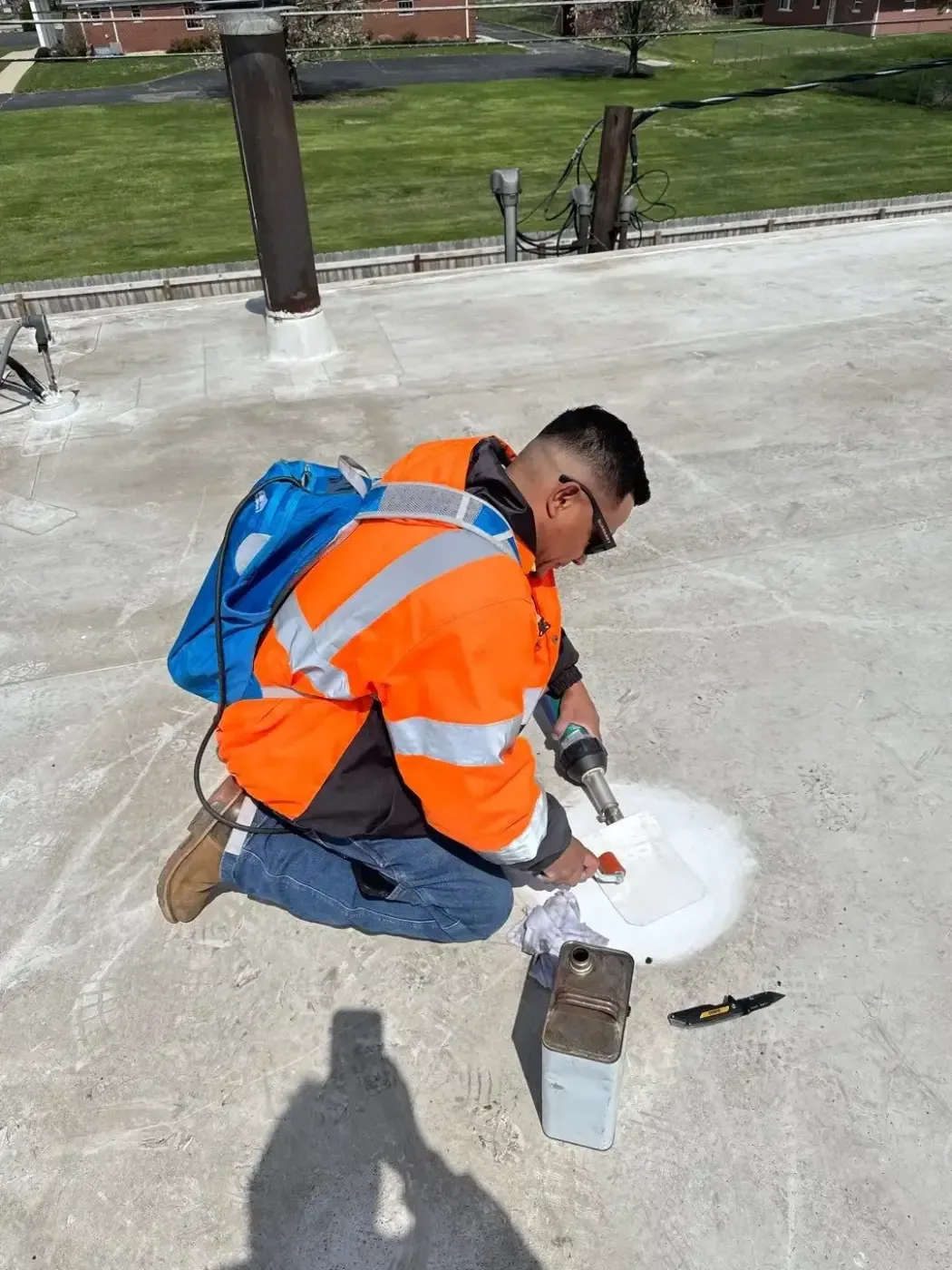
An application method can introduce different access, ventilation and protection requirements from a simple inspection. We select the method against the specific roofing product and building conditions, then coordinate the relevant precautions and working arrangements. Where heat or other application equipment is involved, the task needs controls appropriate to the method and adjoining construction. The selected system and project requirements govern how the work proceeds.
In Downtown Norman, a requested shop or restaurant property can have a constrained entrance or service route. We establish that actual route and the occupied area affected by preparation and removal. Layer replacement above ongoing operations is arranged around the ability to restore water control and complete the required details. The work window includes preparation, application and closure, not only placement of the sheet. Any component or receiving-base task that changes the sequence is identified while the area remains available for inspection.
Where do the plies turn onto a wall or curb?
A multi-ply field needs compatible flashing at its perimeter and equipment junctions. We examine receiving walls, curb sides and existing terminations before selecting the detail. Changes in direction and limited access can affect preparation, reinforcement and closure. A damaged curb or unsuitable wall base needs correction before roofing is brought onto it, with another trade coordinated where required.
For a flex industrial building, actual equipment service and interior activity guide access and protection. Goldsby's documented production, office and staging uses provide context for those operating questions on a requested property. We establish the equipment or wall release point before flashing closes the receiving component. The modified bitumen detail is then completed according to the selected assembly, with the relationship between field plies and vertical transition assessed together. The connection remains available for the required inspection before another construction stage limits access.
What remains under the repaired roof's water path?
A low area beneath the plies can continue collecting water after the finish is renewed. We examine outlets, insulation profile and surrounding details before defining the drainage correction. Cleaning and flashing repair address different conditions from a slope change. The chosen construction needs a usable outlet connection and suitable support beneath its new layers.
A single-ply replacement option can be compared where the existing assembly needs renewal, with removal, attachment and detail work assessed for the actual building. If modified bitumen remains suitable, later care follows that installed material and its compatible repair requirements. We identify completed locations and the adjoining components retained, including drainage and equipment points needing future examination. The construction handoff records which layers and connections changed, giving a later crew useful material information rather than an assumption based only on the cap-sheet finish.
Related Work
Commercial Roofing Questions
Can a separated granulated lap receive another sheet immediately?
Assess the receiving material and prepare it for the selected repair system first. Loose edges, unsuitable older work or affected plies may need removal. We establish the boundary and compatible method before new material closes the opening.
Does every modified bitumen roof use the same application method?
The specific sheet and assembly determine the appropriate method. We identify product and layer information before choosing preparation and repair components. The proposed application is coordinated with the building conditions and the work required at adjoining details.
Should a raised area be opened during an initial inspection?
An opening needs a purpose related to the material decision and a planned restoration. We examine the surrounding condition and explain which exposure would establish the affected layer. The findings then guide retention, removal or further investigation at that location.
Will a new cap sheet correct standing water near a curb?
The underlying profile and outlet relationship need assessment separately. We examine the water route and identify slope or detail changes required before closure. New surface material follows the support beneath it and does not supply a missing drainage configuration on its own.
Examine the modified plies and their repair boundary
Provide the Norman-area building location, known sheet system, lap or layer concern and operating schedule. We will assess compatible preparation and the receiving-base tasks needed before the assembly closes.
Request a Roof Assessment