Commercial Roofing Services
A patch carries the movement of the material beneath it. If that receiving material is loose, contaminated or damaged through its thickness, the new connection needs more than extra sealant. We perform commercial roof repair in Norman, OK, by identifying the affected component, checking the adjoining interface and preparing a compatible repair that can remain connected as the assembly moves. The work can involve a seam, penetration, membrane surface, drain connection or perimeter detail. Its boundary follows the condition found.
Downtown Norman's shops and restaurants bring operating areas close to the roof work, and Ed Noble Parkway contains hotels and retail buildings beside Interstate 35. We coordinate repair access with those uses while examining the actual roof construction. A visible defect is assessed alongside nearby attachment and water flow. For an unresolved active leak, water-entry investigation helps establish which connection needs repair before a localized patch is selected.
How far does the damaged connection extend?
A split at a flashing corner may continue beneath an overlapping sheet. We inspect the exposed material and adjoining connections, then establish the repair boundary where the new work can meet sound material. Previous patches can obscure that boundary or introduce incompatible coatings and adhesives. We identify what must be removed, what can remain and which surfaces need additional investigation. The condition of the surrounding area determines the useful extent of a localized repair.
We also distinguish membrane damage from support or equipment problems. A puncture caused by an unsecured component needs attention to that component as well as the sheet. A curb that moves against its flashing may require work beyond the membrane. Our equipment curb and support assessment helps coordinate those adjoining responsibilities. We describe the visible failure, the likely interaction and the work needed to test or expose uncertain details. That gives the general contractor a practical sequence for the roof repair and any work that must precede it.
Which material can receive the repair?
Membranes that look similar can require different repair procedures. Heat welding, adhesive bonding and liquid-applied work depend on the installed material and its surface condition. We identify the roofing system and examine contamination, weathering and previous treatment before preparing the repair. The selected material must suit both the field sheet and the detail being rebuilt. Surface cleaning is part of that connection, but cleaning alone does not restore a deteriorated or unsuitable layer.
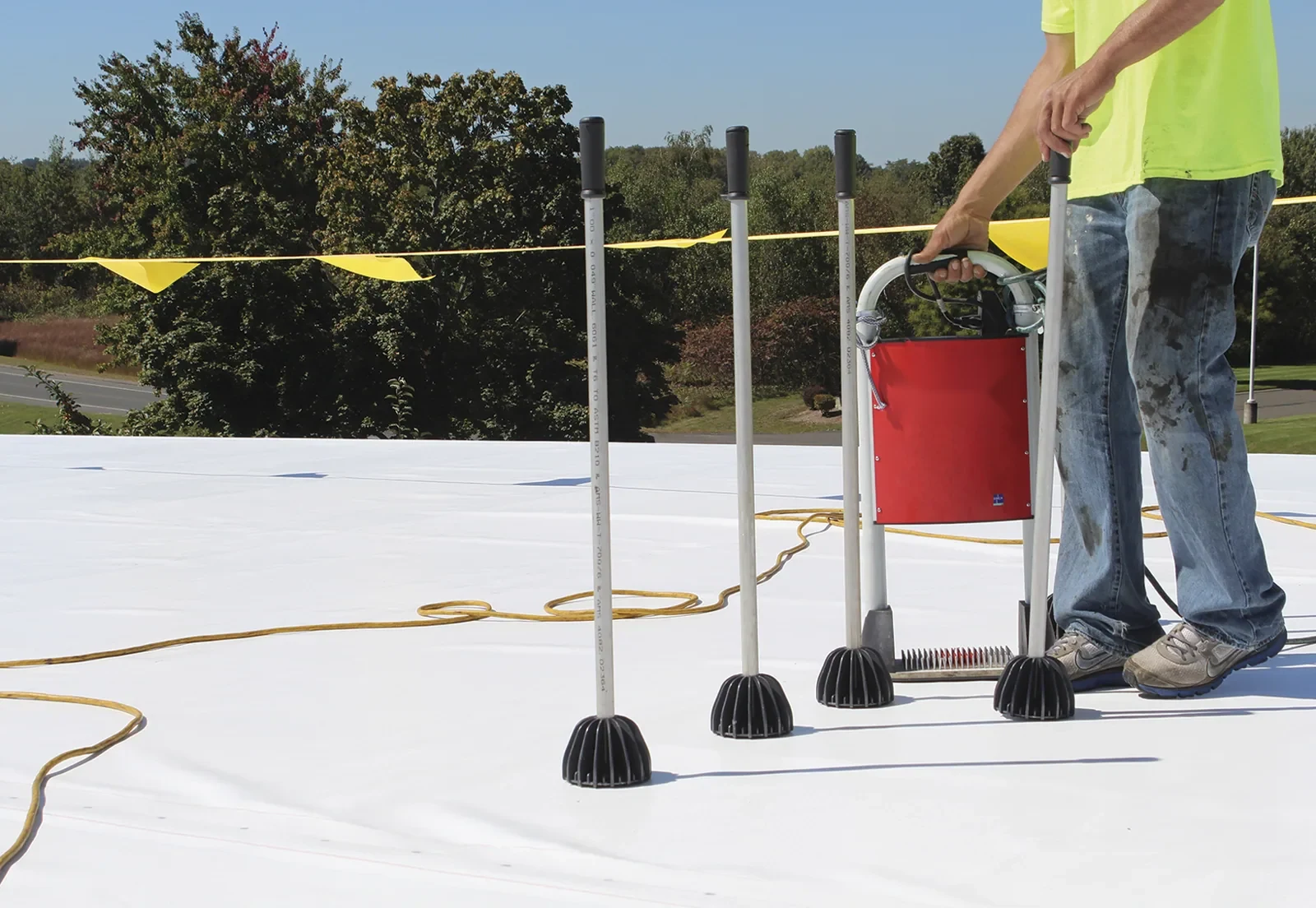
On a PVC roof, repair preparation and welding need to suit the existing sheet and the compatible repair material. On a modified bitumen or built-up roof, the surface and layer arrangement call for a different approach. We establish that distinction before application. At metal details, corrosion, fastening and thermal movement can change the receiving surface. A compatible membrane patch cannot compensate for a loose metal component that continues to stress the connection. We resolve the interface and identify when material replacement provides a better repair surface than repeated treatment of a damaged area.
Does the repair alter the water route?
A repair can create an obstruction if its build-up sits across a drainage path. We examine the surrounding slope and outlet before adding material, particularly near drains and scuppers. The work needs to keep the intended receiving basin open and maintain a sound transition into the outlet. Water that remains against a rebuilt flashing can continue to test that detail, even where the membrane connection itself is well prepared.
For a commercial building along Ed Noble Parkway, the roof assessment includes the installed drainage arrangement and available access above the operating property. Retail entrances, hotel operations and delivery areas affect the inspection window. We identify the installed material and drainage components during the roof walk, then coordinate access to the connections requiring work. Where a low area results from compressed insulation or damaged support, we explain the layer correction needed beneath the repair. A ponding-water correction may require an assembly change instead of another surface patch over the same depression.
What must another trade finish first?
An equipment connection can remain open while mechanical or electrical work proceeds nearby. We establish the order for completing the support, penetration and membrane detail so the finished roofing is not cut apart immediately afterward. Temporary protection may be required between those steps. It must be compatible with the receiving area and arranged to carry water away from the unfinished junction. The construction team needs to know which detail remains temporary and what will permit final closure.
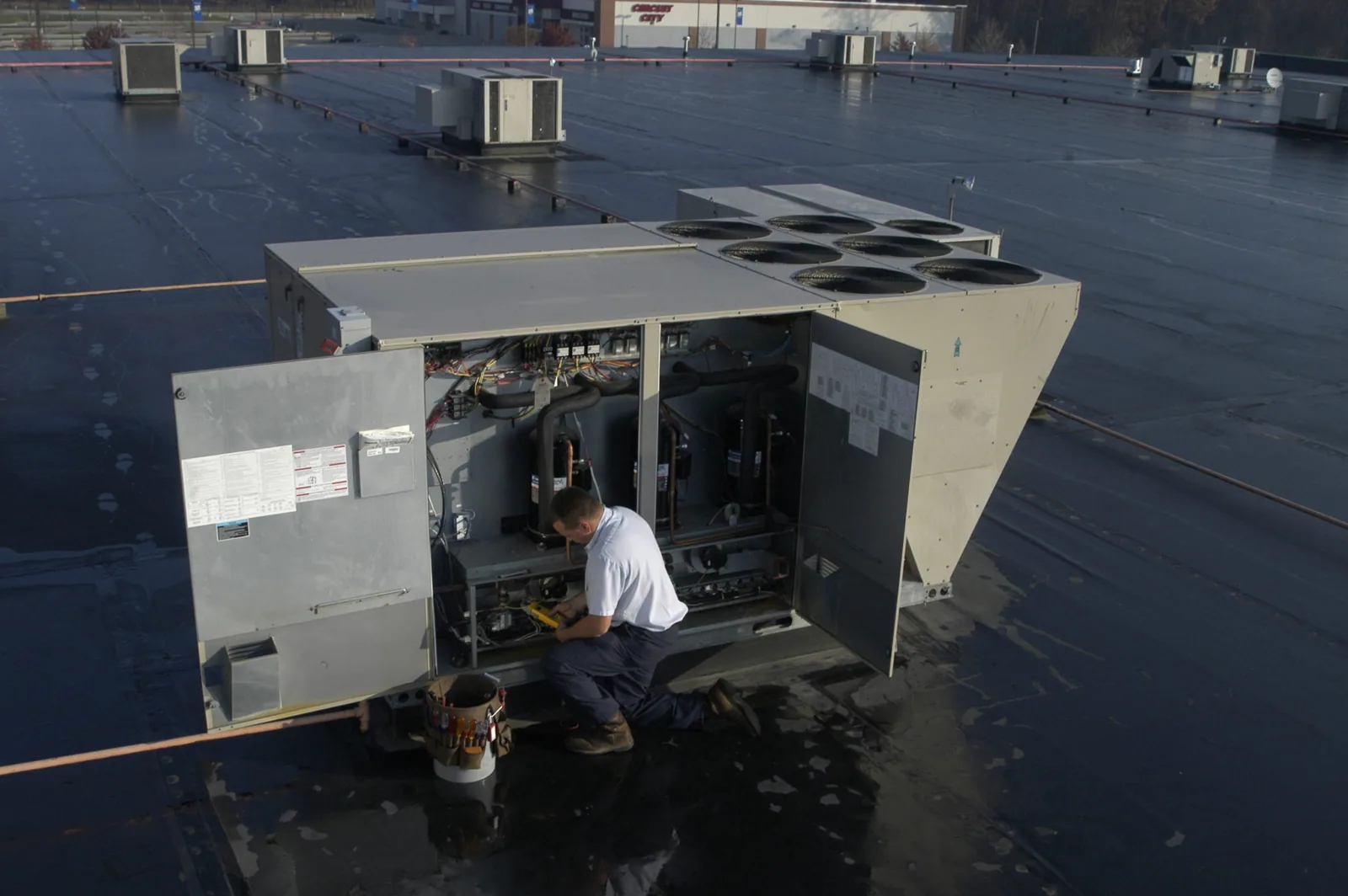
A restaurant repair in downtown Norman may also require coordination with rooftop equipment service and interior operations. We arrange material handling, work access and protection for the affected area, identifying where equipment service and roofing tasks share an access route. Our restaurant roofing work considers equipment interfaces and safe service access during the repair sequence. We also explain how later equipment visits can protect the completed connection. A repaired penetration should not become the convenient resting place for tools, loose panels or sharp service materials that could damage its new surface.
What establishes that the connection is ready?
A rebuilt seam is examined after the joining procedure is complete and the material is ready for checking. We inspect the seam, surrounding bond condition and termination rather than judge the repair from its appearance alone. At a drain or flashing, we look at the entire receiving connection, including attachment and the path water takes into or past the detail. Suitable testing is selected for the system and the building conditions.
Cleveland County's hot weather and freezing nights provide local context for repeated material movement. A repair needs an appropriate connection for that movement and a clear maintenance route afterward. We provide photographs and describe the completed work, the adjoining items addressed and any separate follow-up needs. Where damage is distributed across the roof or the receiving layers are no longer serviceable, we explain the limits of localized work and the investigation needed for a larger project. For sudden water entry outside the planned schedule, we also provide emergency assistance day or night, with temporary protection directed at the affected connection.
Related Work

Commercial Roofing Questions
Can you repair a seam that already has several patches?
Investigate the underlying sheet and the materials used in the earlier repairs. We remove unsuitable material where necessary to reach a sound receiving surface. A larger compatible repair may be appropriate, while extensive deterioration can change the recommendation to an assembly investigation instead of another patch over uncertain layers.
Who handles a loose equipment panel that damaged the membrane?
The equipment component needs correction by the responsible trade, coordinated with our roofing repair. We identify the affected membrane area and arrange the order of work. Completing the sheet repair without securing the component would leave the same damaging interaction in place, so the two tasks are planned together.
Does surface cracking require replacement of the whole roof?
Cracking needs assessment of its depth, distribution and effect on the assembly. We inspect the material and adjoining connections before establishing the repair boundary. A localized detail can be treated differently from a covering with widespread deterioration; the condition of the receiving layers influences that distinction.
How should we sequence painting near repaired flashing?
Keep coatings and cleaning products away from the receiving surface until compatibility and the trade sequence have been agreed. We coordinate the roof termination with adjoining wall work so painting does not contaminate a bond area or conceal a junction before inspection. The finished connection should remain accessible through the handoff.
What drives the cost of a planned repair visit?
Access, material identification, removal extent and adjoining trade work affect the scope. Concealed moisture or damaged support can require more than the visible repair suggests. We explain the investigation needed and separate the compatible roofing repair from component corrections, allowing the building team to compare the actual tasks involved.
Identify the repair interface
Share the Norman property location, the affected detail and any adjoining trade work. We will inspect the receiving material and establish a compatible repair sequence.
Request a Roof Assessment