Property Types We Roof
A discontinuity in vapor control beside a cold-room curb can admit humid air to a chilled layer, creating condensation or frost within the junction. The repair needs the air and moisture path examined before the outer covering is closed. We assess and repair cold storage roofing in Norman, OK, by coordinating the roof assembly with the building's temperature operation and adjoining component details. The investigation distinguishes exterior water entry from moisture behavior that requires an assembly or equipment response.
Newcastle supports distribution and manufacturing development, and Del City has commercial distribution and manufacturing sites. For a requested temperature-controlled building, the actual roof layers, internal conditions and equipment arrangement determine the work. We establish those facts with the operating and project teams before examining the cold-storage roof interfaces. We examine the installed vapor-control and roofing arrangements at the requested property, identifying where penetrations and wall transitions meet them. Those connections establish the investigation points and component tasks needed before closure.
Which moisture path needs the first investigation?
Water at an interior connection can relate to exterior entry, condensation or equipment discharge. We examine accessible evidence and coordinate the operating information needed to distinguish those questions. The timing of the condition, temperatures and affected location help select the next investigation, with design or equipment expertise involved where the assembly behavior requires it. A roof patch is selected only after its intended function is established.
A roof entry investigation examines seams, flashing and adjoining surfaces relevant to the report. Air leakage or vapor-control concerns may require assessment beyond the exterior covering. We identify the roofing boundary and the component task responsible for that investigation. Interior protection and access are arranged with the building contact before testing or opening. The resulting work sequence keeps roof water control connected to the actual mechanism admitting or producing moisture rather than treating every damp area in the cold-storage operation as evidence of a membrane breach.
How does vapor control continue through a roof junction?
A vapor-control layer needs continuity through its interfaces to perform its intended function. We examine the proposed roof and wall arrangement, including penetrations and transitions where different components meet. The location and design of vapor control depend on the building and assembly, so the responsible project team establishes the appropriate configuration. Roofing work follows that design through the accessible connection rather than selecting a layer position from a general rule.
Curbs, pipes and wall terminations can interrupt continuity if adjoining tasks are handled separately. We identify the receiving surfaces and the point where each trade's work meets the next layer. A changed piece of equipment may require revisiting that junction before permanent closure. Equipment curb and support coordination establishes the roof-side access and flashing task, while design and temperature-operation questions remain with the appropriate team. The construction sequence preserves inspection of those interfaces before the covering conceals the material that controls the moisture path.
What does affected insulation change in a cold roof?
Damp or deteriorated insulation can change both the receiving support for roofing and the assembly's intended thermal arrangement. We investigate the material relevant to the proposed work and identify its actual condition. Selected openings are planned with restoration and protection appropriate to the operating building. The findings are related to adjoining layers and detail locations before a removal or retention boundary is proposed.
A comparison with roofing at general storage properties or distribution roof operations can help identify shared access needs, but temperature-controlled construction requires its own assembly assessment. Replacement insulation and supporting board work is coordinated with vapor-control continuity, attachment and flashing height. The selected materials and design follow the actual project requirements. The general contractor receives those dependencies before layer removal advances, allowing base preparation and adjoining component tasks to be completed before the new assembly closes the investigated area.
Where does refrigeration service affect the roof seal?
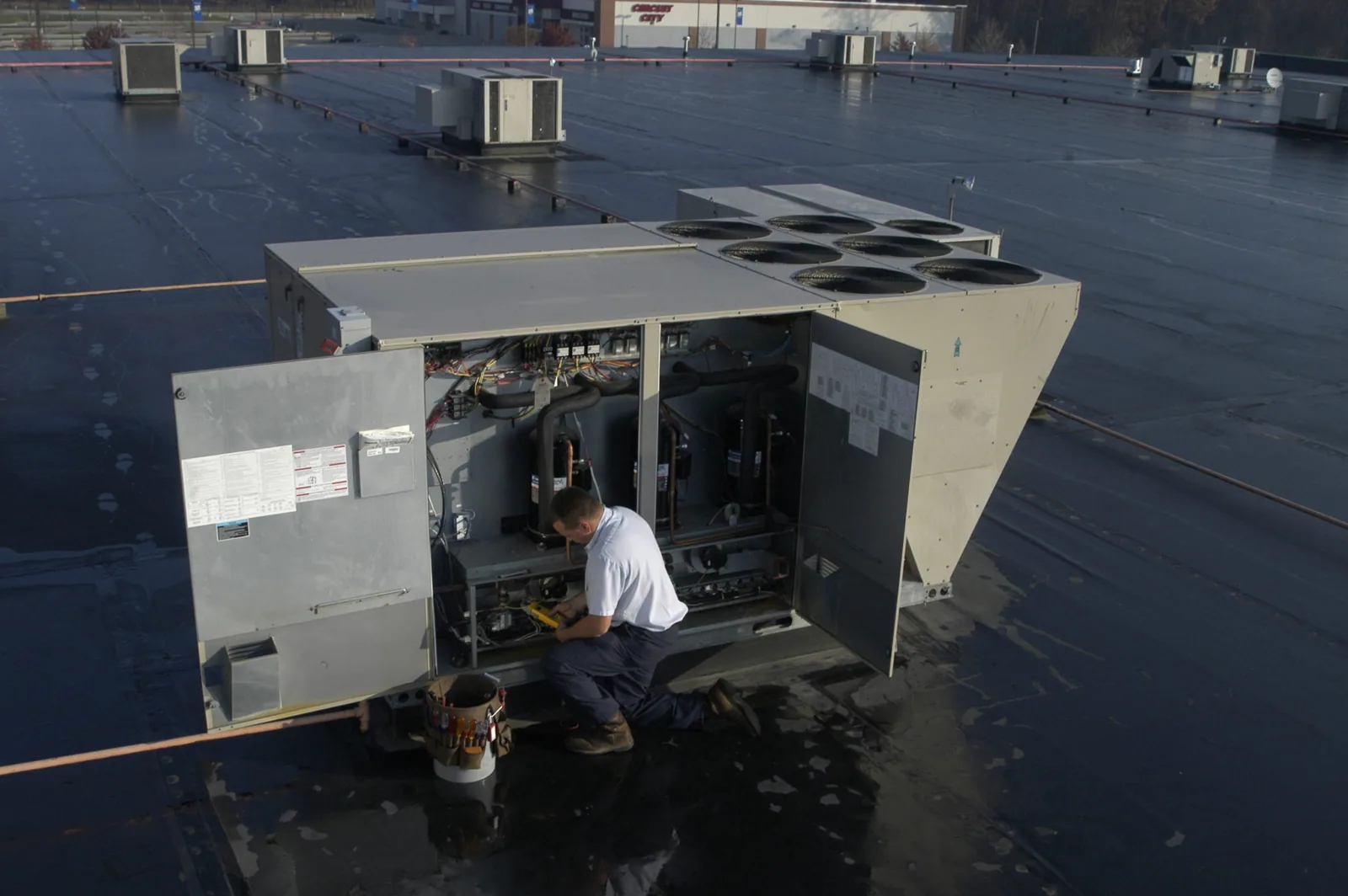
A pipe or unit support can move against flashing and create contact damage at the covering. We inspect the accessible arrangement with the trade responsible for the equipment, distinguishing support and service tasks from roof-side water control. The component needs stability and clearance suitable for the intended detail. A membrane repair cannot substitute for an unsupported pipe or an unresolved equipment discharge.
For a PVC membrane assembly, the preparation and compatible flashing follow the sheet actually installed. Other coverings require their own methods. We identify the equipment release needed before the roofing transition can be completed, including any lift or alteration that exposes its receiving surface. Temporary water control remains coordinated during that work. The connection is inspected before the component or a finish stage limits access again, preserving the roof seal and the continuity required by the surrounding cold-storage assembly.
How should an opening fit the temperature-controlled operation?
Removal above a cold-storage area can affect protection and the building conditions while the assembly is open. The operating team establishes the temperature, access and product-handling requirements relevant to the work. We identify the roofing opening, temporary measures and closure tasks that fit that arrangement. Equipment or interior activities are coordinated with the responsible personnel before the roof task begins.
In Newcastle, commercial and industrial development has Interstate 35 and Interstate 44 frontage. The requested building's actual receiving and roof approach determine the construction route. At a requested Del City distribution or manufacturing site, we coordinate receiving activity and equipment access with the opening needed for investigation. We establish the specific work period and preserve the connection inspection needed before closure. Exposed material findings can change the removal boundary, with the revised task assessed against the operation and the ability to restore the intended roof and vapor-control junction.
What should be reviewed after the new layers close?
A finished membrane needs its curbs, outlets and wall interfaces examined with the layer work performed. We identify the details altered and the trade tasks completed before closure. Material information and located photographs provide the building team with usable references for later service. Any assembly or equipment question remaining outside the roofing scope is identified at its actual connection.
Cleveland County's climate normals show recurring hot days and below-freezing nights. Those seasonal conditions are considered alongside the requested building's controlled internal environment and designed assembly. Future equipment changes can alter penetrations or continuity, so relevant junctions should be reassessed after that work. We explain the roof-side inspection points and coordinate the remaining design or operation questions through the project team. The handoff keeps the physical roofing, vapor-control and equipment boundaries understandable for later compatible repair without treating a uniform exterior finish as the only condition that matters.
Related Work
Commercial Roofing Questions
Can condensation inside the cold-storage assembly resemble a roof leak?
Both can produce moisture at an interior connection, so the path needs investigation. We examine exterior details and coordinate operating or design information where condensation is a concern. The corrective work follows the actual roof, vapor-control or equipment question established.
Should vapor-control placement be selected from the exterior covering type?
The building and complete assembly determine the intended arrangement. The responsible project team establishes that design, and we coordinate the roofing interfaces that must preserve it. Penetrations and wall transitions are examined before new layers conceal their connections.
How do refrigeration pipe changes affect roofing work?
Support, clearance and component movement can change the flashing detail. We coordinate those tasks with the equipment trade before roof closure. The compatible roofing connection is completed after the receiving component is ready and the surrounding continuity requirements have been addressed.
What information is needed before opening a temperature-controlled roof?
Provide the assembly details, operating conditions and protection requirements for the affected area. We identify the investigation and restoration tasks needed to answer the material question. The work period is then coordinated with the building team and any design or equipment task affecting closure.
Investigate the cold-roof moisture and layer interfaces
Share the Norman-area property, roof assembly, reported moisture condition and temperature-operation schedule. We will coordinate the roofing assessment and the design or equipment handoffs needed before new layers close.
Request a Roof Assessment