Commercial Roofing Services
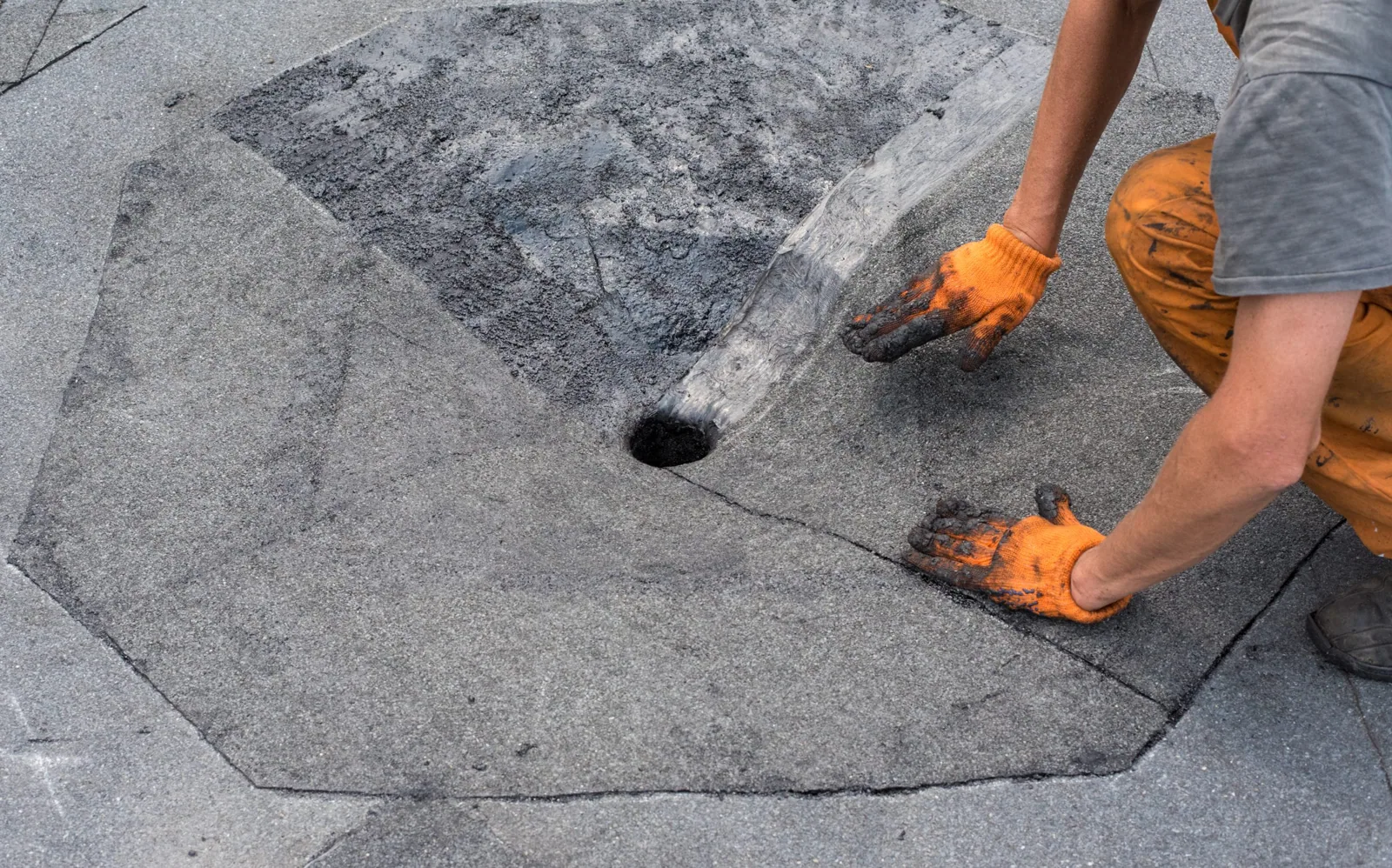
Leaves resting against a drain strainer can redirect water toward a flashing lap that normally stays above the drainage path. Removing the obstruction is useful, but the adjoining connection also deserves examination. We provide preventive roof maintenance in Norman, OK, by following that interaction from the visible accumulation to the outlet, membrane and nearby details. The visit addresses serviceable components, identifies developing defects and sets the next repair task before another trade or weather event changes the condition.
Campus Corner contains merchants, restaurants and bars, while the Lindsey Street District includes restaurants, auto service businesses and fitness studios. On a requested commercial property in either area, exhaust servicing, equipment access and deliveries can influence maintenance arrangements. We discuss those activities with the building contact and examine their effect on the roof. A detailed connection inspection establishes the starting condition when the installed assembly or earlier repair history needs closer assessment.
What remains beneath the cleared outlet?
Sediment surrounding a drain can indicate repeated water collection even after loose debris is removed. We examine the membrane transition, accessible drain hardware and nearby surface for deterioration or an unsuitable connection. Cleaning restores available flow; it does not change a low basin or repair damaged flashing. The maintenance findings distinguish those conditions so the construction team can assign an appropriate correction.
We inspect scuppers and gutters as separate parts of the water route, including accessible downspout connections and discharge arrangements. A blockage farther along that route can continue affecting roof drainage despite a clear inlet. Where outlet reconstruction or slope correction is needed, we identify the roof boundary and the component that requires another trade. Overflow provisions are checked independently where present. The maintenance record identifies the cleared area and the connection needing follow-up, allowing later visits to compare the same physical point rather than treating all standing water as a recurring cleaning task.
Which service movement contacts the membrane?
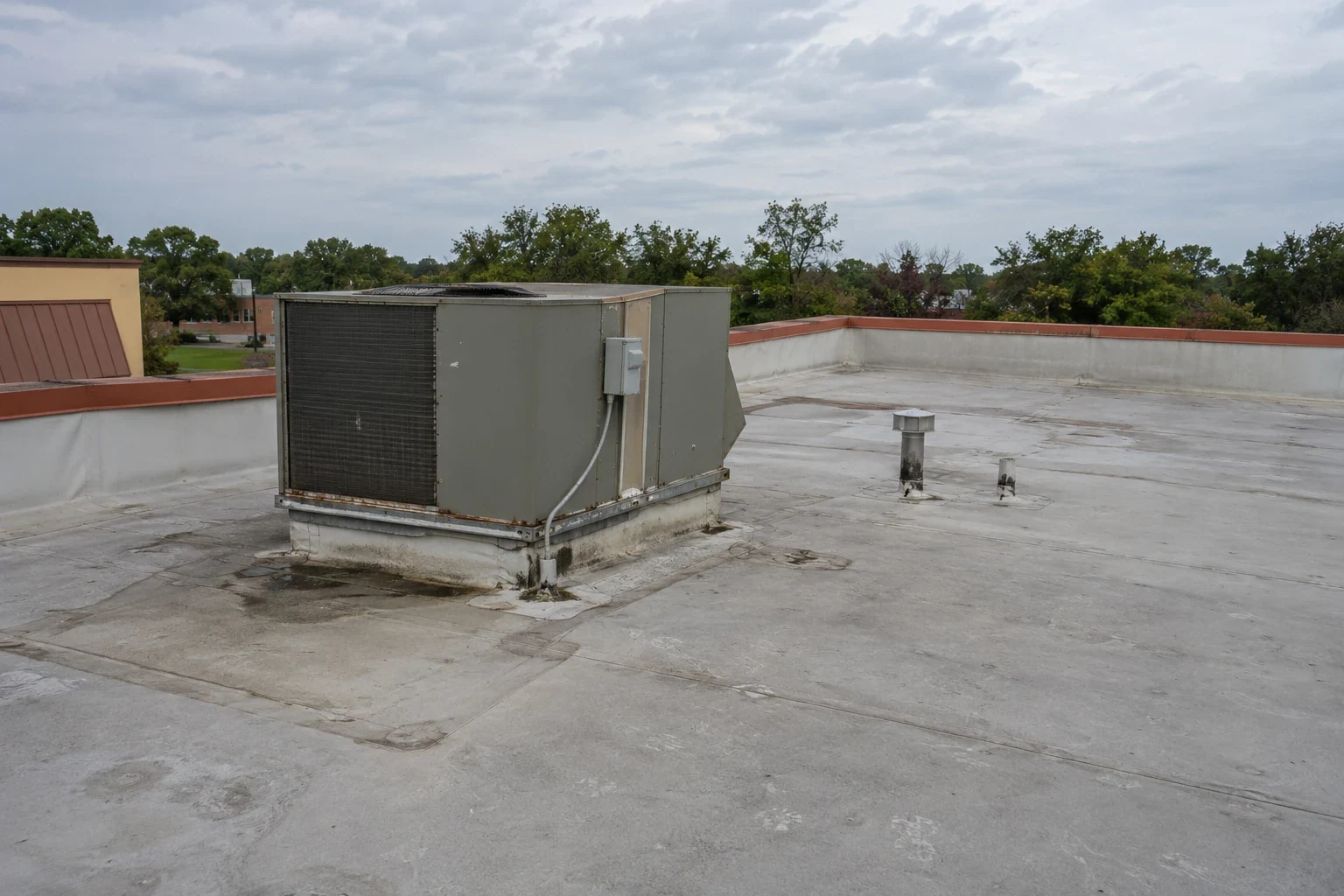
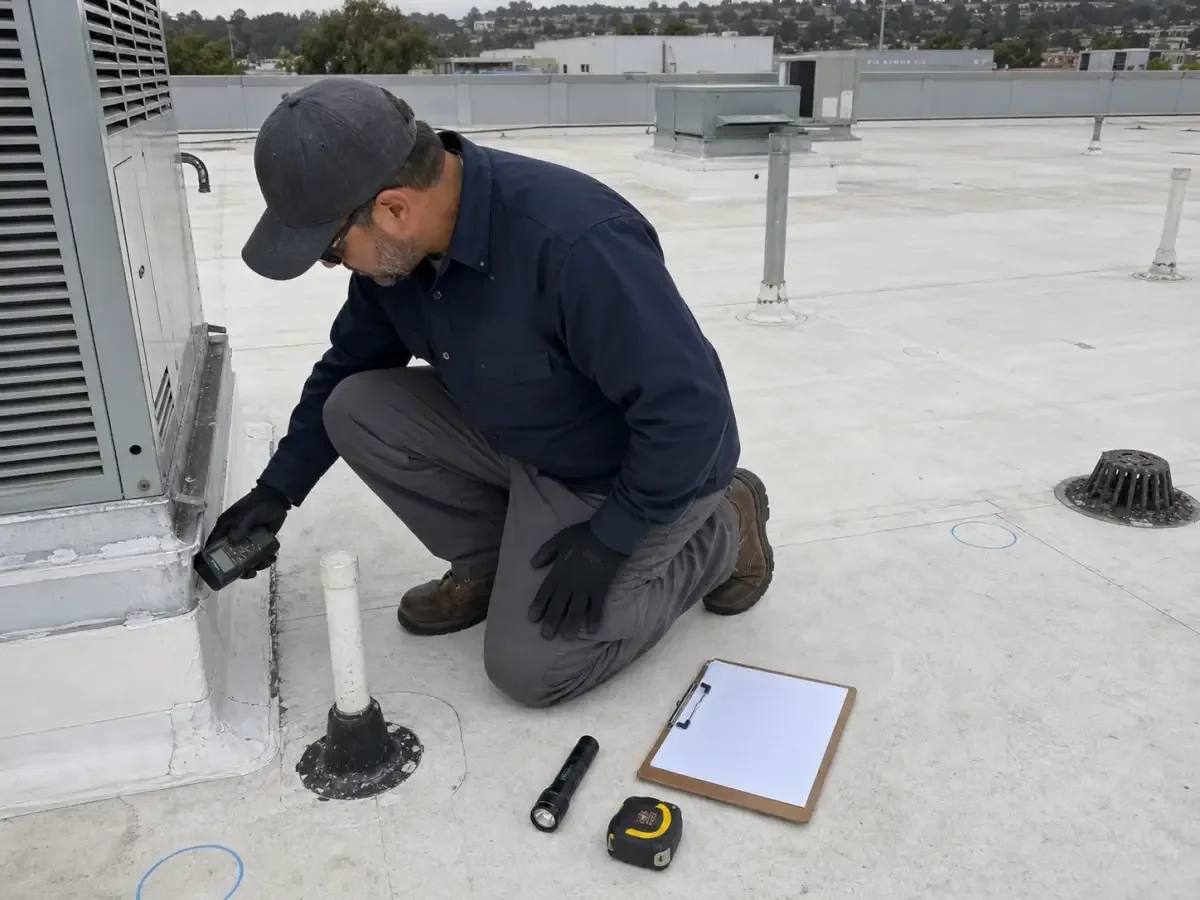
A tool set beside an equipment unit can puncture roofing or damage an older patch edge. We examine service routes and the surfaces around rooftop equipment for wear, loose protective material and sharp contact points. The maintenance task can include restoring suitable protection where appropriate, while repeated damage may require changing the way equipment is reached or serviced. That decision belongs with the building team and the trade using the route.
For roofing above restaurant operations, exhaust and mechanical servicing can affect the surrounding covering. We identify deposits, contact damage and flashing changes requiring assessment, then select cleaning or repair compatible with the installed material. Aggressive cleaning can damage an otherwise useful surface, so the method is chosen after examining it. The equipment remains part of the coordination: roofing work can correct the affected membrane, while a leaking component or unsuitable support may need its own service task before the roof detail is restored.
When does routine care become a detail repair?
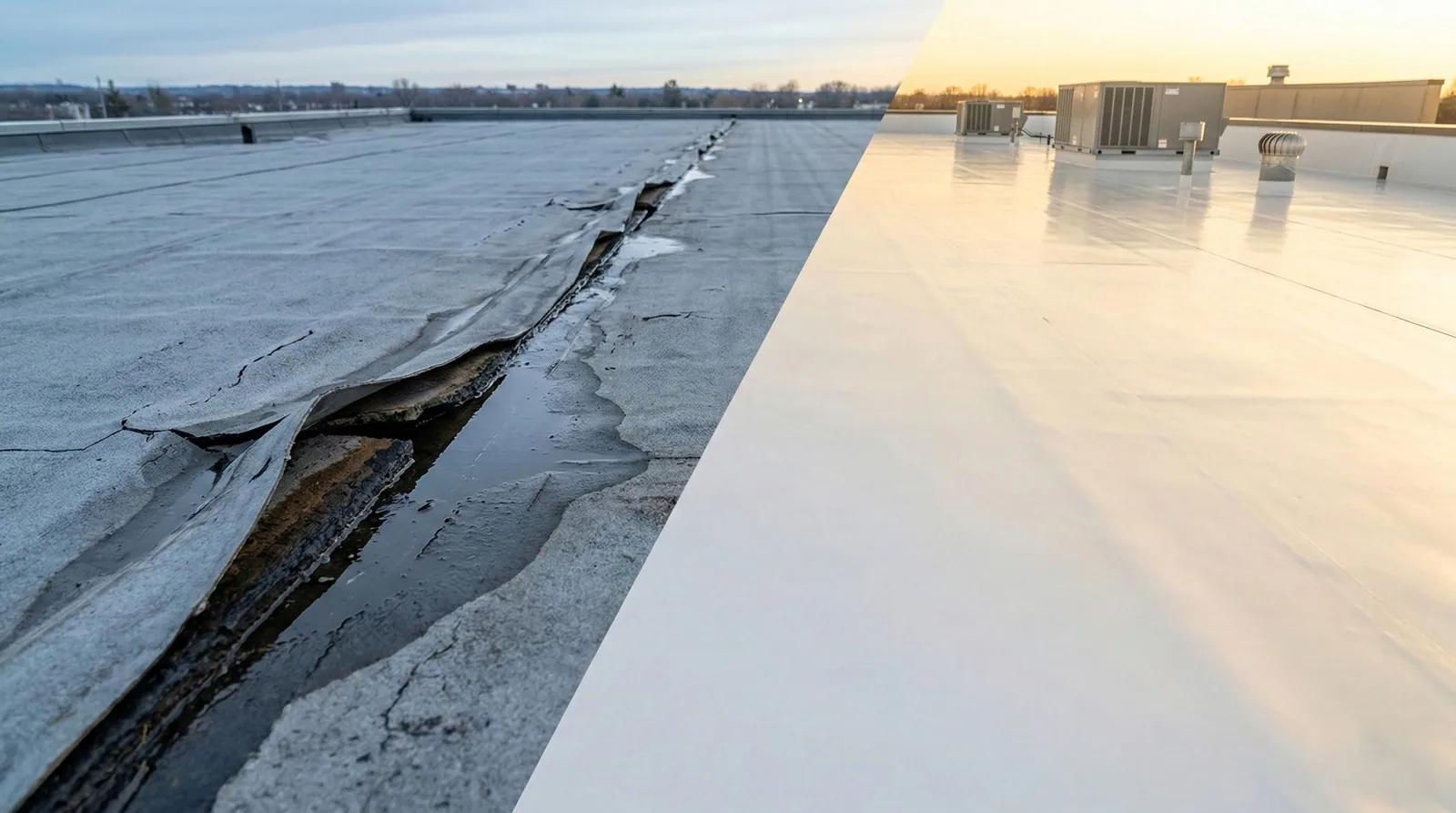
A small opening at a lap requires examination of the receiving surface before repair material is applied. We check whether the surrounding sheet is suitable, whether previous sealant needs removal and whether movement or contact caused the opening. A compatible repair restores the affected junction. Where the base is deteriorated or the defect extends into concealed layers, we identify the additional investigation and do not reduce it to a maintenance touch-up.
Maintenance can therefore produce several different actions at one visit. Clearing a drain, preparing a localized seam repair and scheduling equipment coordination address different mechanisms. Our planned membrane and flashing repairs use a defined extent when corrective work exceeds routine care. We explain the physical finding that changes the scope, including adjoining metal, insulation or support concerns. The next trade can then work against the actual connection order. Where roofing must remain open for support inspection, we define temporary protection and the point at which the receiving component is ready. That prevents the maintenance repair from concealing a junction still awaiting correction. A roof area needing further assessment remains identified until that assessment or correction is completed.
How should the next visit fit changing conditions?
A roof altered by new equipment has different inspection points from the roof examined before the installation. We adjust maintenance attention to those new curbs, penetrations and service routes. Weather exposure can also change which details need examination. Cleveland County normals include freezing nights and summer heat, making seasonal movement and drainage checks useful considerations for an installed assembly.
The Lindsey Street commercial district has direct interstate access and a mix of businesses with different operating schedules. At a particular building there, we coordinate maintenance with the available roof approach, equipment servicing and work already planned. The visit frequency is selected from the covering condition, debris exposure, drainage behavior and building requirements rather than a universal interval. Storm-related damage calls for a separate assessment when reported. The scheduled program keeps ordinary maintenance useful while leaving room to investigate a new opening or disturbed component promptly.
What information helps the next crew return to the detail?
A photograph showing a repaired seam should identify its roof area and adjoining equipment or perimeter reference. We record maintenance tasks by usable locations, with the cleared outlet, inspected transition and repair described separately. This gives the building team a way to confirm which work was completed and which condition still requires a construction decision. Later observations can be compared with the same junction.
A roof maintenance history can connect those visits with equipment alterations and larger renewal planning. The useful information is physical: the material found, the task performed and the point that remains available for inspection. For a TPO roof covering, later repair selection also benefits from knowing the installed sheet and previous work. We discuss the remaining concerns with the person coordinating the property so a drain correction or support repair can enter the trade schedule. Maintenance then continues from a known condition rather than repeating a task that leaves its adjoining cause unresolved.
Related Work
Commercial Roofing Questions
Should drain clearing include an inspection of the drain flashing?
Include the surrounding membrane and accessible connection in the visit. An obstruction and a failed flashing detail can occur together, and removing debris only resolves the first condition. We identify any opening, loose component or elevation concern that requires a separate repair or drainage assessment.
Can maintenance address damage left by equipment servicing?
Contact damage can often receive a localized assessment and compatible repair. We also examine the service route and component that caused it. Where the same contact will recur, the building and equipment trade need a protection or access change alongside the roofing correction.
How do you select a maintenance interval for an unfamiliar roof?
Start with the installed assembly, visible condition, drainage and operating activity. We establish the details needing attention and recommend a visit arrangement suited to those findings. New equipment, debris accumulation or reported storm damage can justify reassessment before the next scheduled maintenance date.
What distinguishes a minor repair from a concealed problem?
The receiving material and adjoining layers determine the required work. We examine a visible opening before choosing its repair boundary. Soft material, persistent water or deterioration beneath a detail can require investigation, with the opening and restoration planned separately from routine surface care.
Will maintenance findings help coordinate a future reroof?
Located drainage and detail findings can identify corrections worth considering during renewal. We retain the task history and explain which components were repaired or left for further work. A replacement assessment then examines the complete assembly and the changes needed beyond those maintained locations.
Set the next maintenance visit against the roof condition
Provide the Norman building location, installed covering, recurring drain or detail concerns and upcoming equipment work. We will identify the maintenance tasks and connections needing a separate correction.
Request a Roof Assessment