Commercial Roofing Services
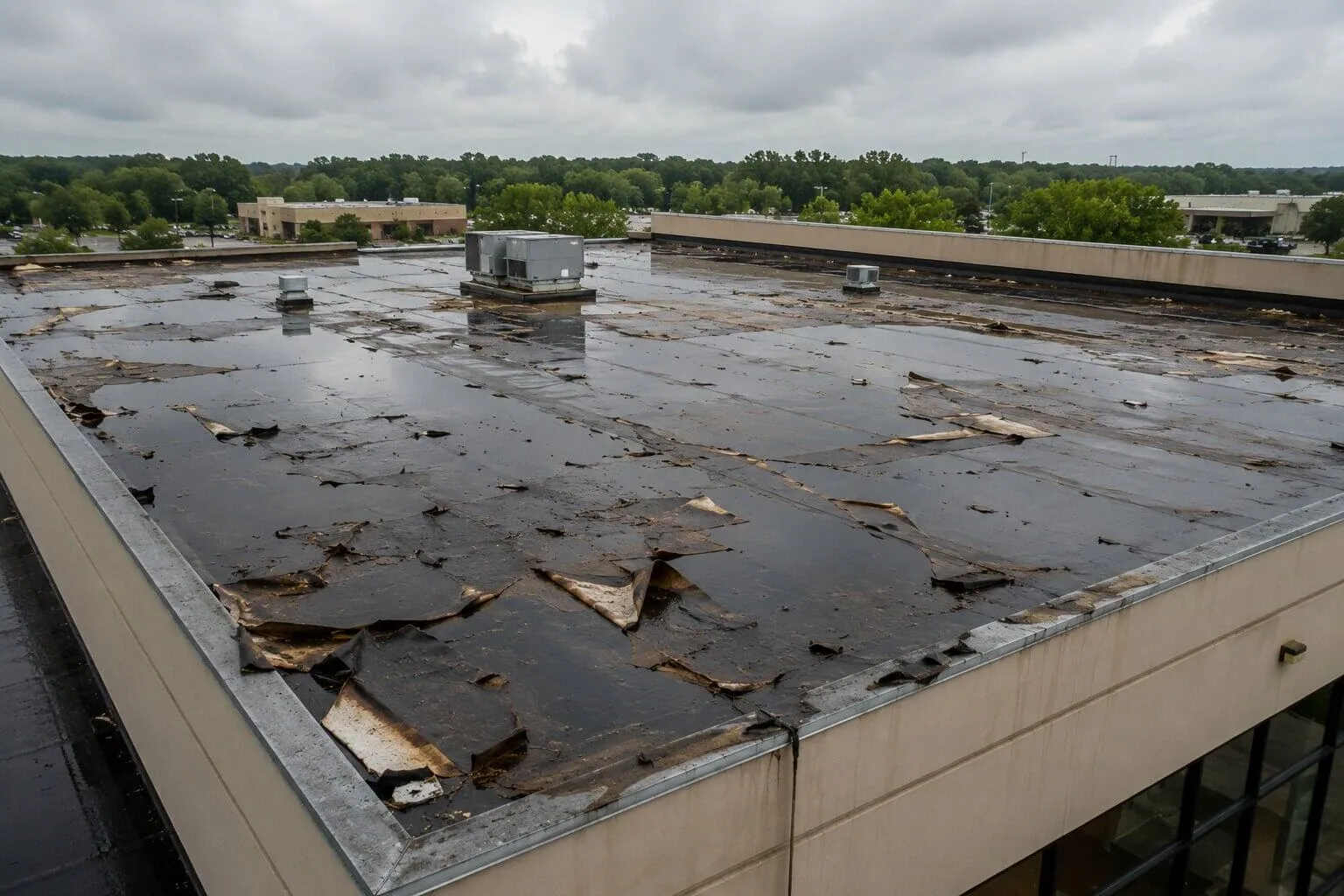
Rain crossing a broken skylight can reach occupied space before a membrane seam begins to leak. Emergency work therefore starts by locating the exposed connection and assessing the hazards beside it. We provide emergency commercial roof assistance in Norman, OK, through the night, on weekends and during holidays. The initial objective is a safe reduction of water exposure, followed by a repair sequence suited to the damaged assembly. A temporary cover must reach suitable receiving material and shed water without creating another open junction.
The February 2023 Goldsby-Norman EF2 tornado gives the area a specific severe-weather history. For a requested property, we assess the actual roof, damaged components and access conditions before selecting protection. The Interstate 35 commercial frontage includes hotels, dealerships, shops and restaurants, which can place active operations beneath the affected roof. We coordinate roof access and interior response with the building team, then distinguish immediate protection from the storm repair work needed afterward.
What can be reached safely?
A displaced component, unstable deck area or damaged electrical connection can prevent immediate roof access. We assess those conditions with the responsible building personnel and identify when another qualified trade or emergency service must address the hazard first. Wet surfaces, lightning, high winds and poor visibility also affect safe working conditions. An urgent report does not make an unsafe access route usable; the response must account for the building and the weather.
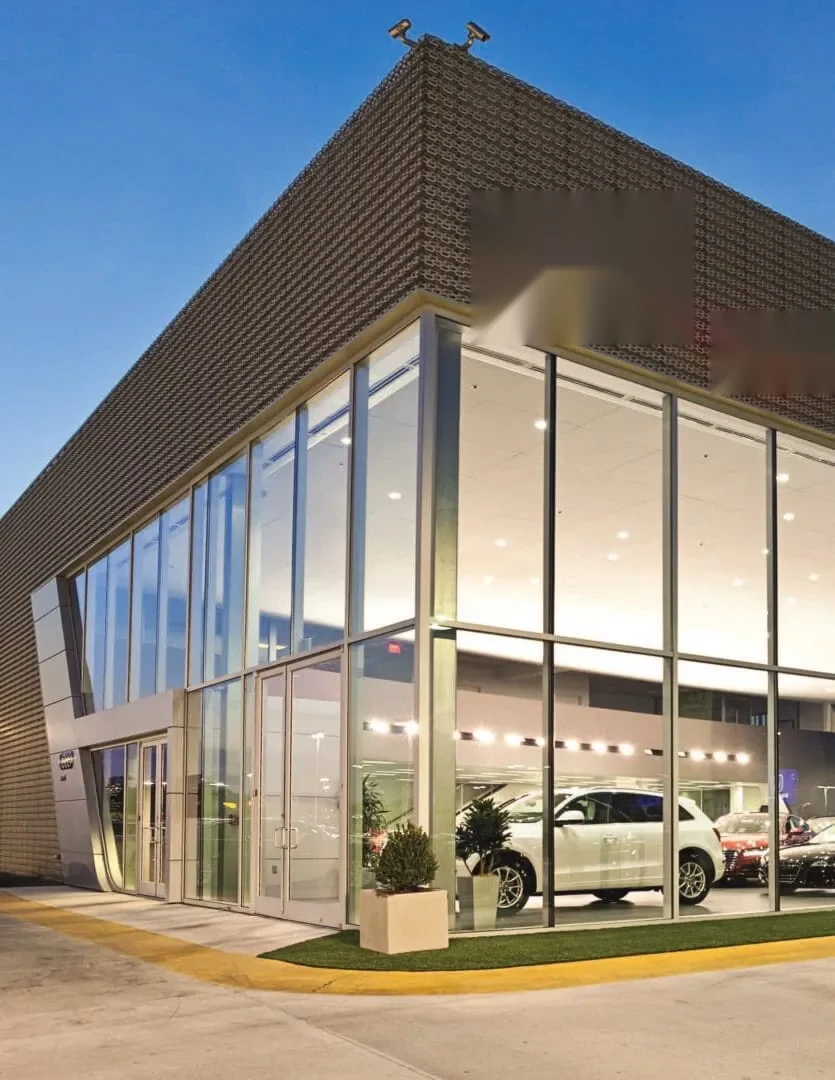
Inside the building, keep people clear of damaged ceilings, electrical exposure and areas where water could affect equipment. The property team can provide the interior observation point and communicate changes while roof conditions are assessed. We coordinate the affected operating area and any safe access restrictions needed for the work. For a dealership building, the response may need to account for vehicle circulation and occupied service spaces. Those operating details are supplied for the requested property rather than assumed from its location. The next protection step follows the hazards that have been identified.
Where can temporary protection connect?
A temporary sheet or cover needs a defined attachment arrangement and a water-shedding boundary. We examine the receiving area before fastening or bonding protection, considering the installed membrane, damaged components and supporting material. Simply placing a cover above an opening can leave rain able to run beneath it or load it with collected water. The arrangement must direct drainage away from the exposed junction and avoid damaging adjacent sound roofing.
Our active leak investigation can identify a connection that needs immediate closure, while a broader damaged area may require controlled dry-in. We check the temporary perimeter and its relationship to nearby outlets. A loose metal component may need to be secured or removed by the appropriate trade before protection can stay connected. Where the condition permits only an interim measure, we describe its purpose and the changes that warrant another assessment. Temporary work remains part of the roof's water-control arrangement until it is replaced by the permanent detail.
Which damaged detail needs the first repair?
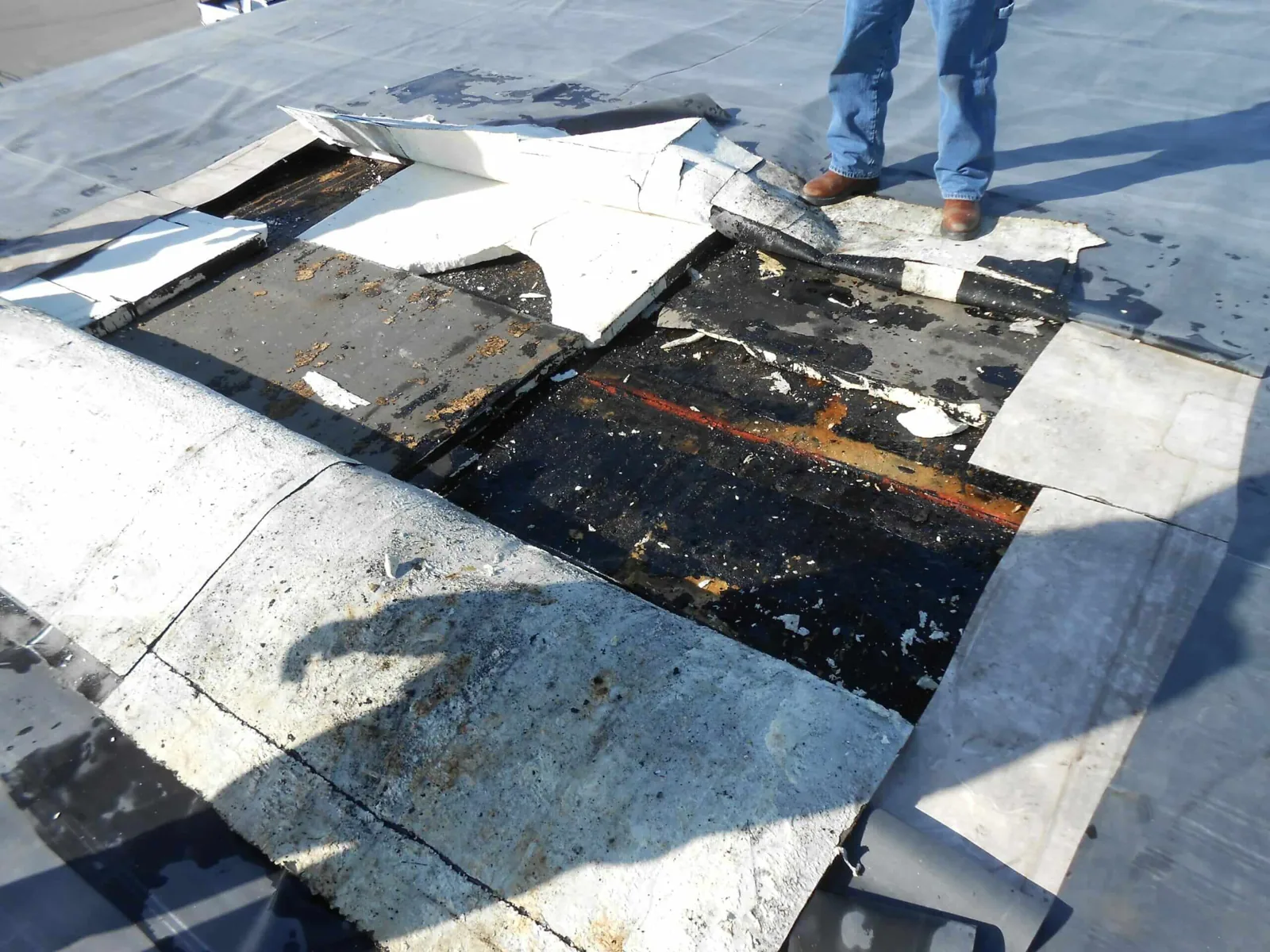
An open penetration that admits water may take priority over a surface dent that has not breached the covering. We inspect exposed defects, loose components and the path water can take into the building. The order of work follows immediate exposure and safe access, then the condition of the adjoining layers. Several visible defects can have different implications, so each affected connection is examined before being assigned a repair task.
A public report recorded 1.75-inch hail two miles west of Norman on April 19, 2023. After a hail event, our hail damage assessment examines the requested roof's sheet, seams, flashings and equipment interfaces. Impact effects depend on the materials and their condition. We check the covering for breaches, examine adjoining seams and inspect components that could have moved against the membrane. We identify openings or displaced details needing immediate protection and separate them from areas requiring closer evaluation. That division helps the building team schedule follow-up work without treating every mark as the same type of roof failure.
How does the temporary detail become permanent?
Permanent repair may require drying, wet-layer removal, a replacement component or another trade's correction. We identify those prerequisites while the temporary protection is accessible. The proposed detail needs a compatible membrane connection and a sound receiving surface, with the appropriate height and movement clearance at adjoining components. Material installed for immediate protection is removed or integrated only where the final assembly's requirements permit it.
For businesses along the Lindsey Street District, roof access and equipment work can intersect with restaurant, retail and service operations. We agree on the trade sequence and affected area before opening the temporary closure. If a mechanical component must be replaced, its installation and inspection occur before final flashing. Work involving skylights and penetrations considers the curb, cover and membrane connection together. The construction team receives a defined handoff so a completed roof junction is not reopened to reach an unresolved support or equipment item.
What information supports the follow-up decision?
Photographs taken during the response identify the damaged detail, the temporary protection and the surfaces available for examination. We describe the condition observed and the work performed, distinguishing those findings from proposed permanent repairs. The building team can use that information to coordinate insurance documentation, material selection and adjoining trade responsibilities. Concealed conditions still require their appropriate investigation before they become part of the repair scope.
A roof condition record for an insurance claim presents the observed assembly and damage without promising a coverage decision. We also explain how the protected area will be checked and what access is needed for the next construction step. Temporary protection can be affected by another storm or nearby equipment work, making changes at its perimeter relevant to follow-up. Send new reports of water entry promptly so the affected junction can be assessed again. The emergency response and permanent repair stay connected through the actual condition of the roof, rather than through an assumed schedule that ignores weather or material readiness.
Related Work
Commercial Roofing Questions
What should our night supervisor communicate during a roof emergency?
Give the building location, the affected interior area, current water entry and any electrical or ceiling hazards. Describe available safe access and the contact responsible for the property. We use that information to coordinate the first assessment and identify conditions that must be addressed before roof work can proceed.
Can a temporary cover interfere with roof drainage?
Yes, a poorly positioned cover can retain water or obstruct an outlet. We assess its receiving area and water route before installation, then inspect the temporary boundary. The arrangement needs to protect the opening without transferring exposure to another detail or placing collected water above the affected interior space.
Will the first response include permanent membrane work?
Material condition, weather and access determine which work can be completed safely. We may establish temporary protection before the roof can be prepared for a permanent connection. Wet layers, damaged supports or equipment replacement can change the sequence, and we explain those prerequisites during the follow-up assessment.
How are multiple damaged roof areas prioritized?
Immediate water exposure and safe access guide the first tasks. We inspect each affected connection, identify open or unstable details and separate temporary protection from further investigation. The building's operating restrictions and the availability of adjoining trades then help establish the permanent repair order.
Can you provide photographs for our restoration team?
We provide condition photographs and explain the roofing work performed during the response. The restoration team can relate those findings to the affected interior area and planned roof repairs. Insurance coverage and interior remediation remain separate decisions, with the roof documentation focused on the assembly and damage actually observed.
Arrange an emergency roof assessment
Call with the Norman-area location, active exposure and safe access information. We will assess the damaged connection and coordinate temporary protection and the next repair step.
Request a Roof Assessment