Commercial Roofing Services
Insulation added beside a drain can raise the receiving surface above the outlet's usable flashing connection. The water path and membrane tie-in therefore need assessment together before the new layer is installed. We repair commercial roof drains and scuppers in Norman, OK, by examining the outlet, surrounding elevations and adjoining construction. The correction follows the route water takes through the roof assembly, with roofing and piping tasks coordinated where the connection crosses their work boundaries.
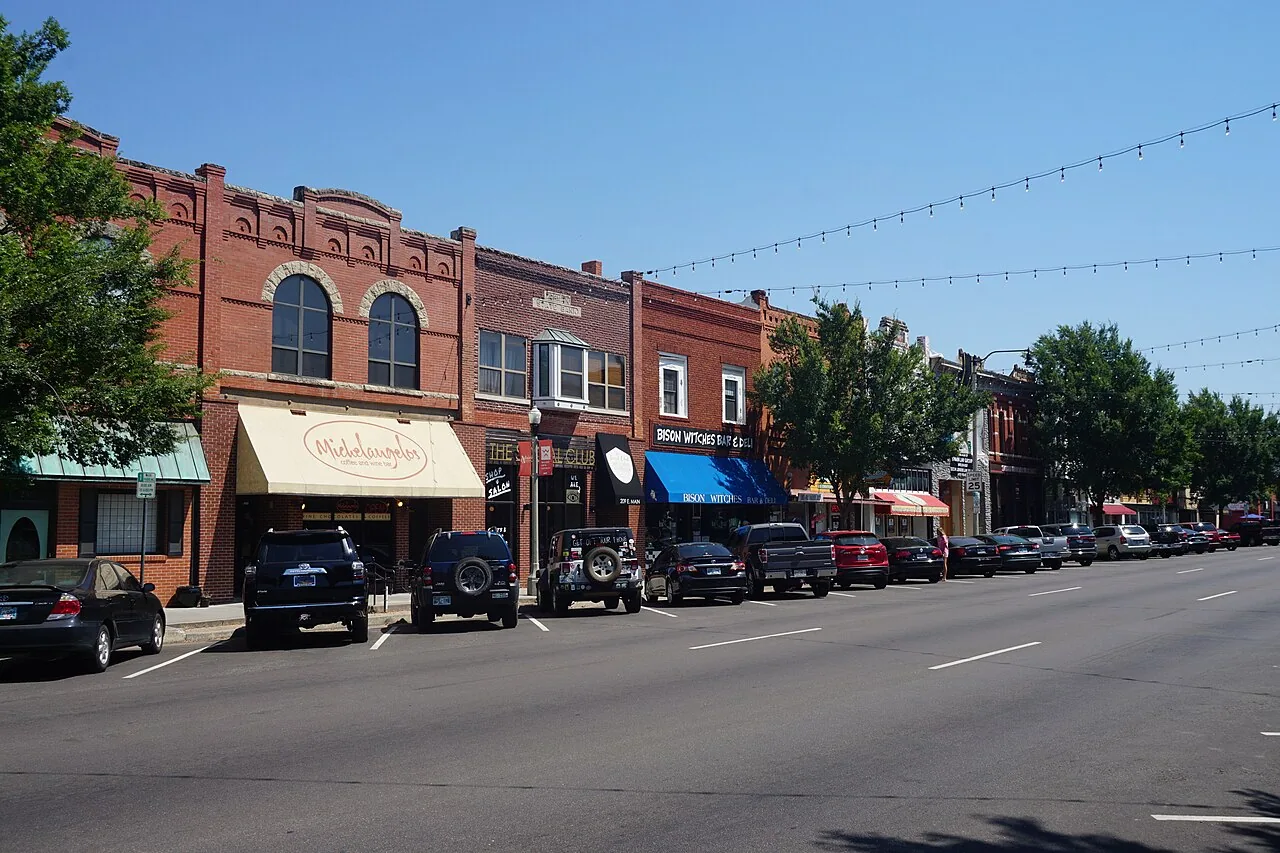
Ed Noble Parkway contains big-box stores, hotels and restaurants, while the State Highway 9 Technology Corridor has adjoining university facilities and employment uses. On a requested building, the occupied space beneath an outlet and the access to its piping can affect the construction sequence. We inspect those conditions before selecting the correction. A roof drainage inspection distinguishes an obstruction from a failed connection or slope issue, allowing the team to assign the work required at the actual component.
Why does water remain beside the outlet?
Sediment collected in a basin can show where water repeatedly slows or remains. We examine the roof profile, drain position and surrounding surface rather than assuming the outlet itself is blocked. Debris may interrupt flow at the strainer, while unsuitable elevations can prevent water from reaching an otherwise clear drain. A damaged membrane connection can also admit water without changing the apparent drainage rate.
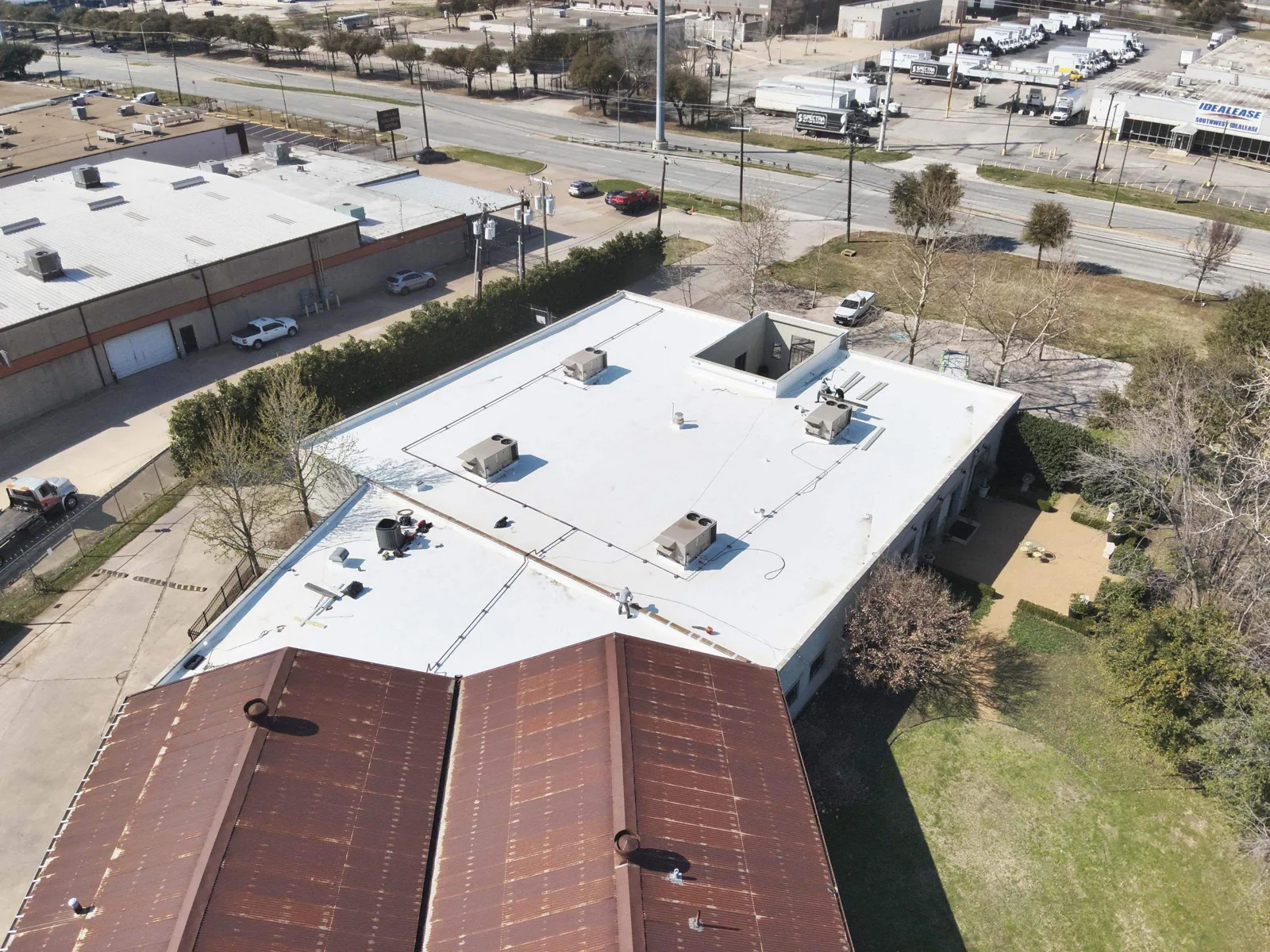
We separate those findings before proposing work. Cleaning can restore an obstructed route, a flashing repair can address entry around the outlet and a slope correction can change the basin. Our assessment of water collection examines the affected field and adjoining details where the problem extends beyond one drain. The location and extent of the low area matter for the correction, including how water approaches walls, curbs and equipment. Measurements and selected investigation establish the layer arrangement needed before changing that route or raising the surrounding roof.
Which drain component must be reached for repair?
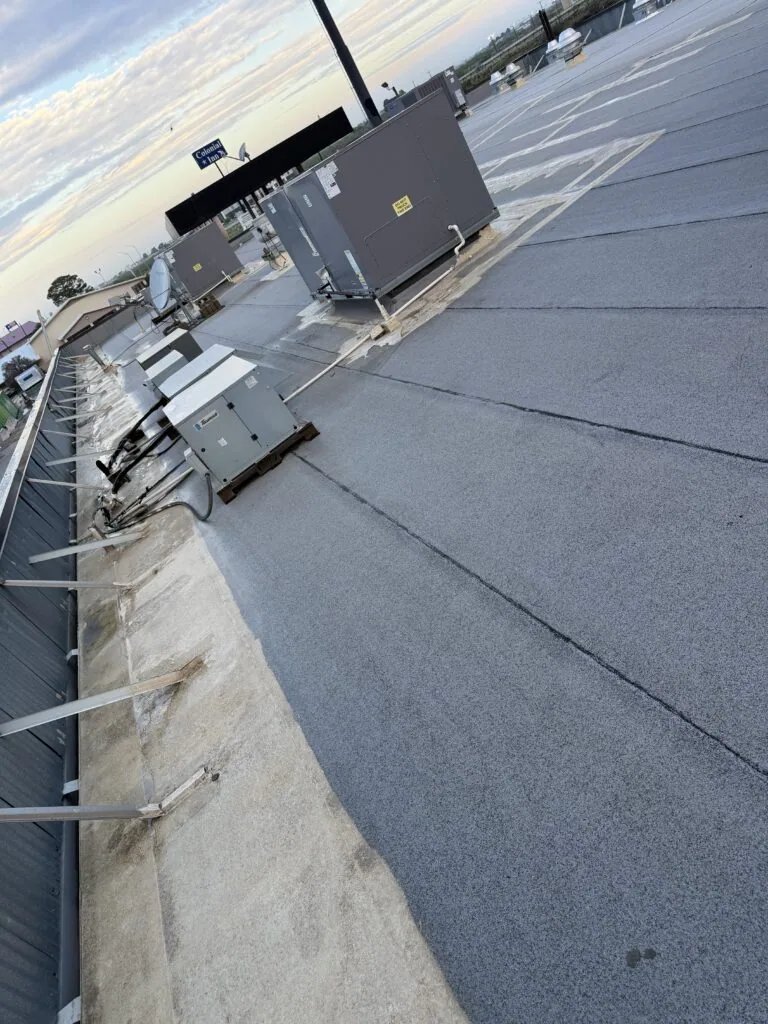
A loose or corroded accessible drain component can affect the connection that holds roofing at the outlet. We examine the actual drain arrangement, membrane transition and receiving surfaces before determining what needs replacement. The assembly may require removal of adjoining roofing to expose the body or hardware. That opening needs temporary water control and a closure detail compatible with the existing covering.
Drain piping belongs to a separate part of the investigation when the concern continues below the roof. We identify the roofing boundary and coordinate with the trade responsible for piping, leaks or blockage in that system. Work above a medical office interior may require access and protection arrangements for the rooms beneath the connection. The outlet is closed after its receiving component and any necessary piping task are ready. This sequencing keeps new flashing from concealing a junction that still needs examination or component replacement.
How does a scupper connect through the wall?
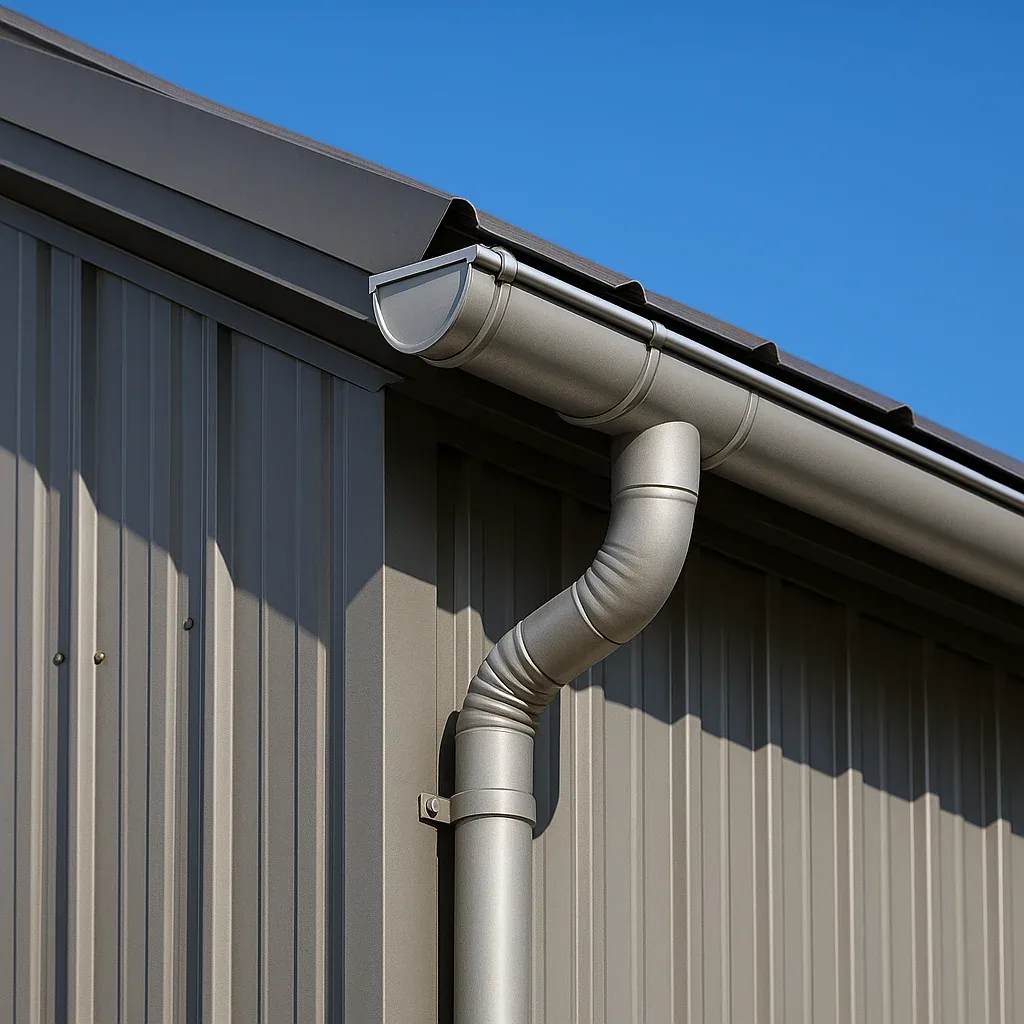
A scupper opening passes through a perimeter assembly, so the inside flashing and outside discharge need to work together. We examine the opening, lining, metal interfaces and adjoining membrane, including corners where material changes direction. Separation or unsuitable overlap can allow water to enter the perimeter instead of passing through it. The repair addresses the complete transition rather than the most accessible seam alone.
The receiving wall and exterior drainage components can change the task. A loose collector or damaged downspout may need correction before the discharge route is usable. We coordinate perimeter metal and discharge work with the membrane connection where both are affected. In Ed Noble Parkway's commercial corridor, occupied hotel and restaurant properties can have different entrance and service-area constraints. At the requested property, we identify where exterior access and temporary discharge could affect people or operations, then establish the work area before opening the wall transition.
Where should a cricket redirect the water?
A curb can divide the water path and leave a collection area on its uphill side. A cricket or localized tapered section may help redirect flow, but its shape must connect with the existing roof slope and a suitable outlet. We examine the surrounding elevations and flashing height before proposing that change. Moving water toward a new low point without examining its outlet can replace one problem with another.
Tapered insulation and cover board work changes more than the field profile. Added thickness can reduce usable curb flashing height, alter a door threshold or raise the surface beside perimeter metal. We identify those connections and select the construction order that keeps them accessible. Where insulation is removed or added, the new layer needs suitable support and a compatible tie-in to retained material. The general contractor receives the adjoining detail changes along with the drainage correction so equipment and wall work can enter the same sequence.
What happens if the primary route is restricted?
A secondary outlet, where part of the assembly, needs its own examination because its intended route differs from the primary drain. We identify the component and assess its opening, flashing and discharge arrangement. The relevant elevations and current requirements are considered for proposed work. A blocked secondary opening or discharge above an unsuitable occupied area needs a defined correction rather than being left outside the drainage assessment.
The Oklahoma 2024 International Building Code took effect with state amendments on September 14, 2026. We determine applicable requirements for the requested project and its drainage changes before construction details are finalized. Existing configurations are examined against the work being proposed, with design or another trade involved where needed. The TPO membrane connection or other installed covering must also fit the outlet detail. Material preparation and fastening are selected for that actual system, preserving the relationship between the water route, the opening and the roofing that surrounds it.
How is the corrected route checked before handoff?
A completed drain repair needs the outlet, flashed basin and adjoining field examined together. We review the components installed or retained and inspect the tie-ins that became accessible during work. Where a slope correction was included, its relationship with the outlet and nearby curbs is checked against the construction detail. Any piping or exterior discharge work awaiting another trade remains identified.
The building team receives the location and scope of the corrected connection, along with maintenance points that keep its route usable. Strainers, scuppers and accessible discharge components need attention to debris after later roof activity or weather. Equipment installation can alter flow again if supports or materials are placed in the route. We explain where those changes should trigger reassessment, giving the next trade a clear view of the drainage function. The finished work restores the intended connection and identifies the remaining inspection points rather than treating a new drain component as the end of the water-path decision.
Related Work
Commercial Roofing Questions
Can an outlet repair resolve every low area around it?
The surrounding elevations determine whether water can reach the outlet. We examine the basin and separate connection work from slope correction. If retained layers form the low area, the repair scope needs to address that profile as well as the drain component.
Should piping work happen before new drain flashing?
Complete the necessary receiving-component and piping tasks before permanent roof closure. We identify which portion belongs to the roofing scope and which needs another trade. Temporary protection is coordinated while the connection remains open for that work.
Will a cricket affect equipment curb flashing?
Added insulation can change the surface height beside the curb. We examine the available flashing space and equipment clearance before selecting the cricket detail. The construction sequence includes any required curb or transition change before the new layers are closed.
How should scupper repairs be scheduled above an entrance?
Establish exterior access, the protected area and the discharge route with the building contact. We inspect both sides of the opening and coordinate metal or downspout tasks where necessary. The work window accounts for occupants before the perimeter transition is opened.
Check the outlet and its adjoining roof levels
Send the Norman building location, drainage concern, covering information and planned layer or equipment changes. We will examine the water route and coordinate the roofing, outlet and piping tasks required.
Request a Roof Assessment