
Roof Systems
Corrosion concealed beneath a metal overlap can reduce the receiving material available for a retrofit even where the exposed panel still appears useful. The junction needs examination before new components cover it. We retrofit commercial metal roofs in Norman, OK, by assessing retained panels, support, attachment and the proposed new assembly. The approach can involve compatible restoration or a designed construction change, selected from the condition and requirements of the requested building.
Goldsby has established industrial and commercial uses east of Interstate 35, including flex properties serving production and staging. Del City's commercial development includes manufacturing, distribution and retail sites. Those uses provide operating context for a requested project, while its actual metal roof determines retention and preparation. A metal base assessment identifies the component questions that must be resolved before retrofit material is ordered or a new layer conceals the old connection.
Which existing metal remains suitable for the proposal?
Panel condition and support condition are separate parts of a retention decision. We examine accessible corrosion, damaged profiles, loose connections and prior repairs, then identify concealed information needed for the proposed work. A retained panel may be suitable for one construction approach and inappropriate for another. Its role in the new assembly must be established against the actual design rather than assigned from its surface appearance.
Selected exposure can clarify metal condition beneath laps or near fasteners. The investigation is planned with protection and compatible restoration for the opening. Structural or support concerns are coordinated with the responsible project team before roofing closure. Where deterioration extends across connected areas, removal or another construction approach may be needed. We explain the components that can remain and the correction that precedes retrofit installation, allowing the general contractor to sequence base work before covering access to the junction examined.
How does the new assembly reach dependable support?
A retrofit attachment arrangement needs a suitable receiving structure and a defined load path. We identify the retained configuration and the information required for the proposed design. Fastening to deteriorated metal or an unassessed support is not treated as a solution because a new surface is being added. Testing, structural assessment or other design input is coordinated where the project requires it.
A comparison with a new standing seam system can consider panel removal, support correction and the selected attachment detail. A membrane retrofit introduces different receiving-surface and profile questions. We explain those tasks for the actual option being evaluated. The existing support, proposed components and adjoining transitions are assessed together so preparation does not create a finished field that leaves the perimeter or equipment detail without a suitable base. The next layer proceeds after the receiving construction has been examined and made ready.
What fills or changes the existing panel profile?
A corrugated or ribbed metal surface may need a designed receiving arrangement for a different covering. The selected construction determines how boards, supports or other components fit the existing profile and provide suitable support. We examine the proposed interface rather than assume a flat layer placed over ribs will perform independently of its base. Material layout and attachment must suit the system and building.
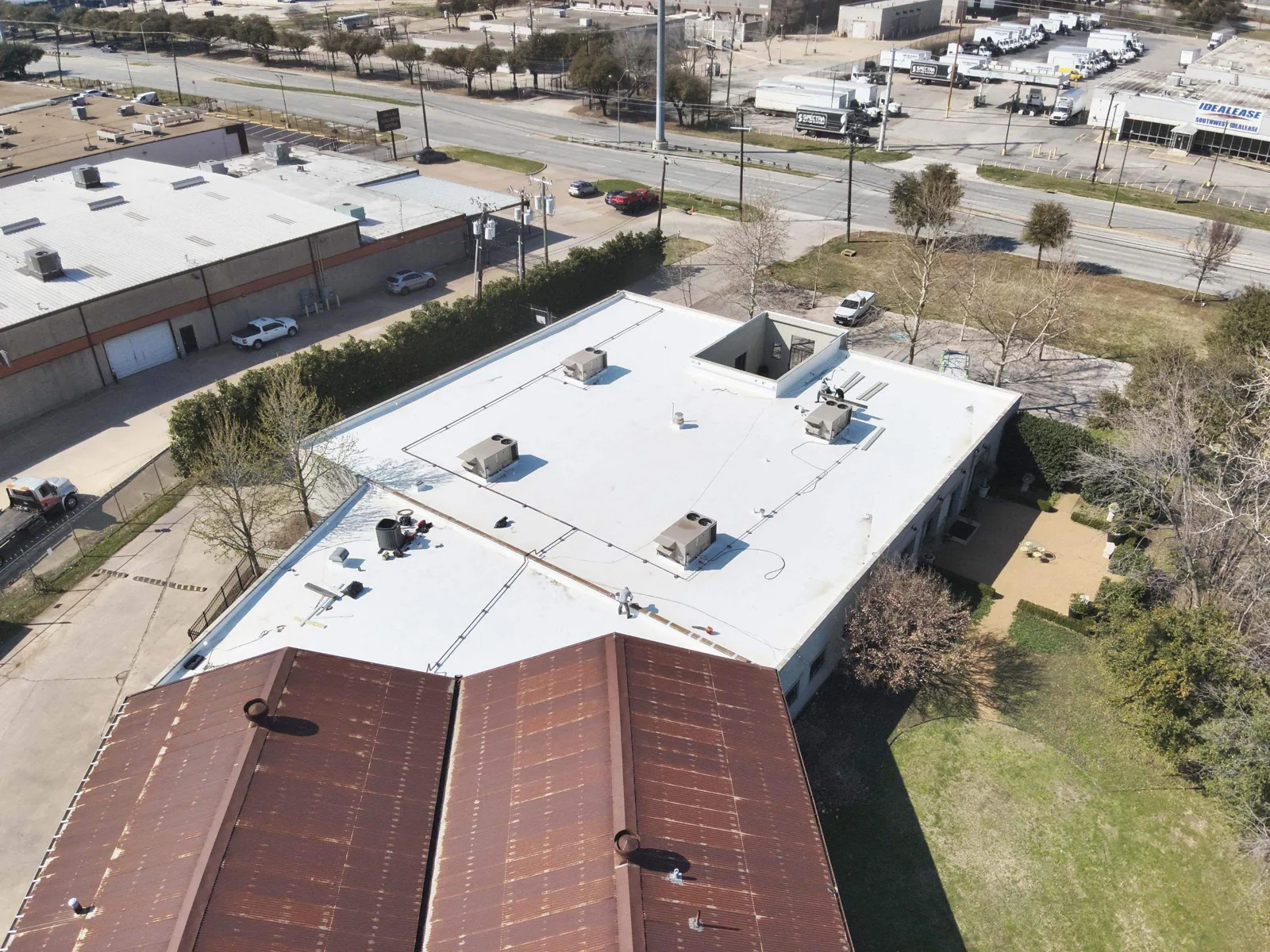
For a TPO membrane retrofit, the supporting layers and compatible transitions are established before sheet installation. Insulation and cover board work can change both profile and roof height, affecting curb flashing, wall terminations and outlets. We identify those adjoining adjustments in the construction sequence. The general contractor can then coordinate base preparation and component alterations before membrane closure. The new assembly receives a continuous and suitable working surface through the field and the details instead of treating each ribbed-to-flat junction as an isolated finish problem.
When can preparation and coating retain the metal?
An intact metal panel with serviceable support can present a different option from a panel with concealed corrosion or unsuitable attachment. We examine seams, fasteners, coating condition and exposed metal before considering restoration. The receiving surface needs compatibility and preparation appropriate to the selected application. Releasing old material or active component movement can require correction before another finish is added.
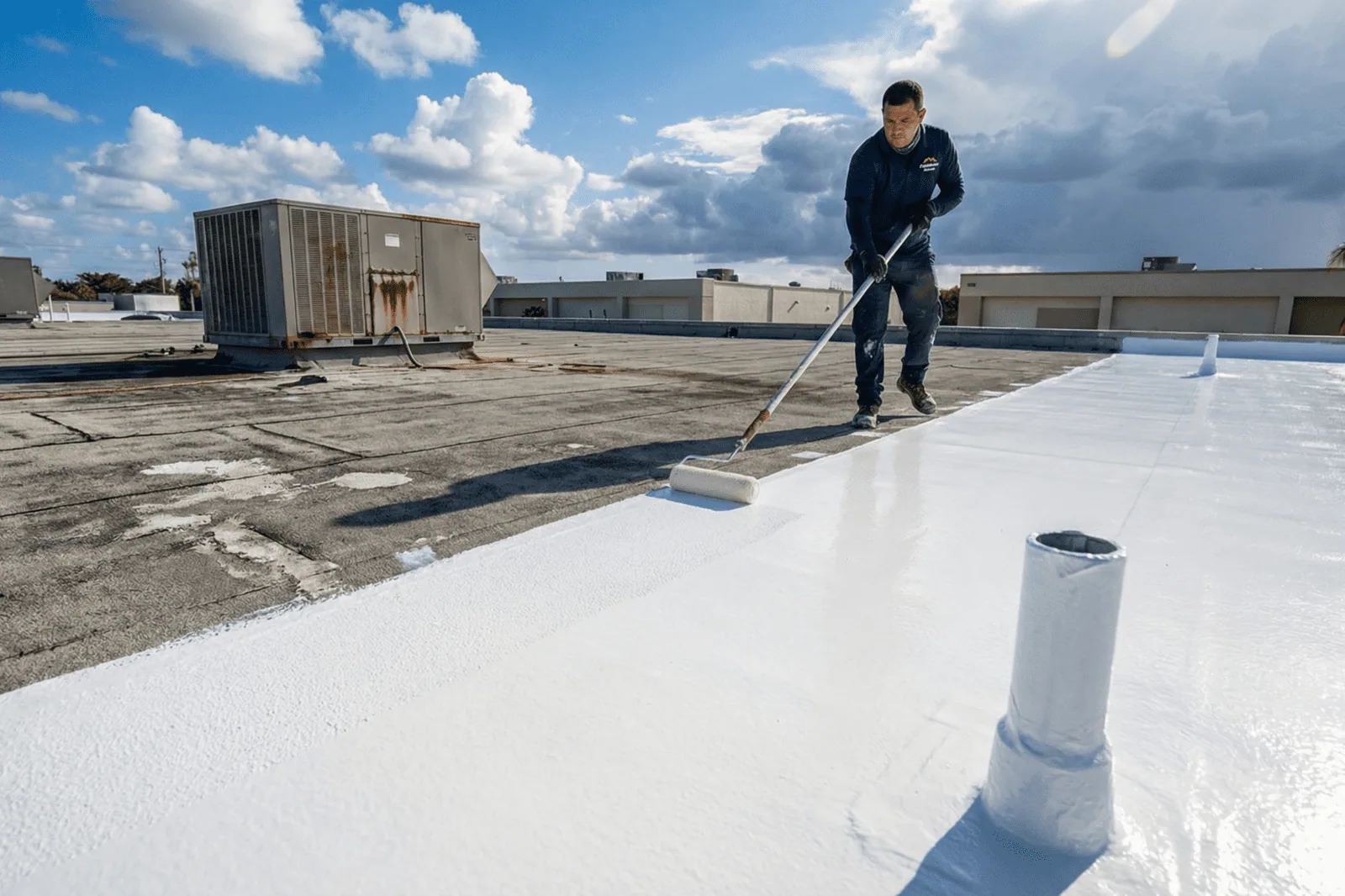
A silicone restoration system or another suitable coating is evaluated against the actual metal and exposure. The detail work includes the connections and penetrations requiring repair, not only application across the panel surface. We identify what preparation resolves and what remains a separate support or structural task. The construction choice then follows retained-material suitability and the completed detail scope. If restoration leaves a component needing correction, that work is coordinated before the coating conceals the junction or makes access more involved.
Where does the altered roof send water?
A retrofit build-up can change eave and gutter relationships or raise the surface around an existing penetration. We examine the intended flow route and discharge components before selecting the final profile. New material must connect to an outlet arrangement suitable for the proposed assembly. An existing low area, damaged gutter support or unsuitable curb transition can require its own corrective task.
At a distribution property, exterior work may affect loading or service routes. We establish those actual operating requirements while examining the requested roof. In Del City, manufacturing, distribution and retail development provides context for the work-area questions, with the property contact identifying its operation. The retrofit sequence coordinates removal, temporary water handling and permanent drainage details. Any piping or receiving support assigned to another trade is identified before the new covering closes the affected area.
What remains available during the retrofit handoff?
A concealed base correction should be inspected before new panels or boards make it inaccessible. We coordinate those stages with the project team, identifying the components examined and the point at which roofing can advance. Equipment or wall alterations are scheduled against the receiving details they affect. Temporary protection accounts for the actual opening while the adjoining work remains unfinished.
Cleveland County normals include hot days and freezing nights, providing seasonal context for assessing movement in retained and new components. The installed configuration determines the actual accommodation needed at their interface. We identify the completed assembly and altered details at handoff, including components retained beneath the retrofit. Later equipment service and maintenance can use that information to select compatible work and preserve drainage access. The project record follows the support and material condition examined, giving a returning crew a physical starting point rather than only the name of the new surface covering.
Related Work
Commercial Roofing Questions
Can a panel that looks sound be unsuitable beneath a retrofit?
Hidden lap corrosion, attachment or support condition can change its usefulness. We investigate the receiving components relevant to the proposed design. The retention decision follows the actual role of that metal in the new assembly rather than its exposed appearance alone.
Should a membrane be placed directly over the existing metal ribs?
The proposed system needs a suitable designed receiving arrangement. We examine the profile, support and attachment before describing its boards or other components. The construction detail establishes how the new covering connects to the retained base and adjoining transitions.
How do you compare coating restoration with a larger retrofit?
Assess the metal, support, preparation and connection tasks each approach requires. Sound receiving material may support suitable restoration, while other conditions need correction or removal. We explain the physical work and unresolved design questions before the construction option is selected.
Will a retrofit require changes to existing gutters or curbs?
A changed roof profile can alter those relationships. We check discharge, flashing height and component clearance against the proposed build-up. Required adjustments are coordinated with the responsible trades before new roofing closes the perimeter or equipment junction.
Assess the retained metal before selecting the retrofit
Provide the Norman-area building location, existing panel and support information, corrosion or leak concerns and project schedule. We will examine the receiving assembly and the preparation needed for the proposed construction.
Request a Roof Assessment