
Commercial Roofing Services
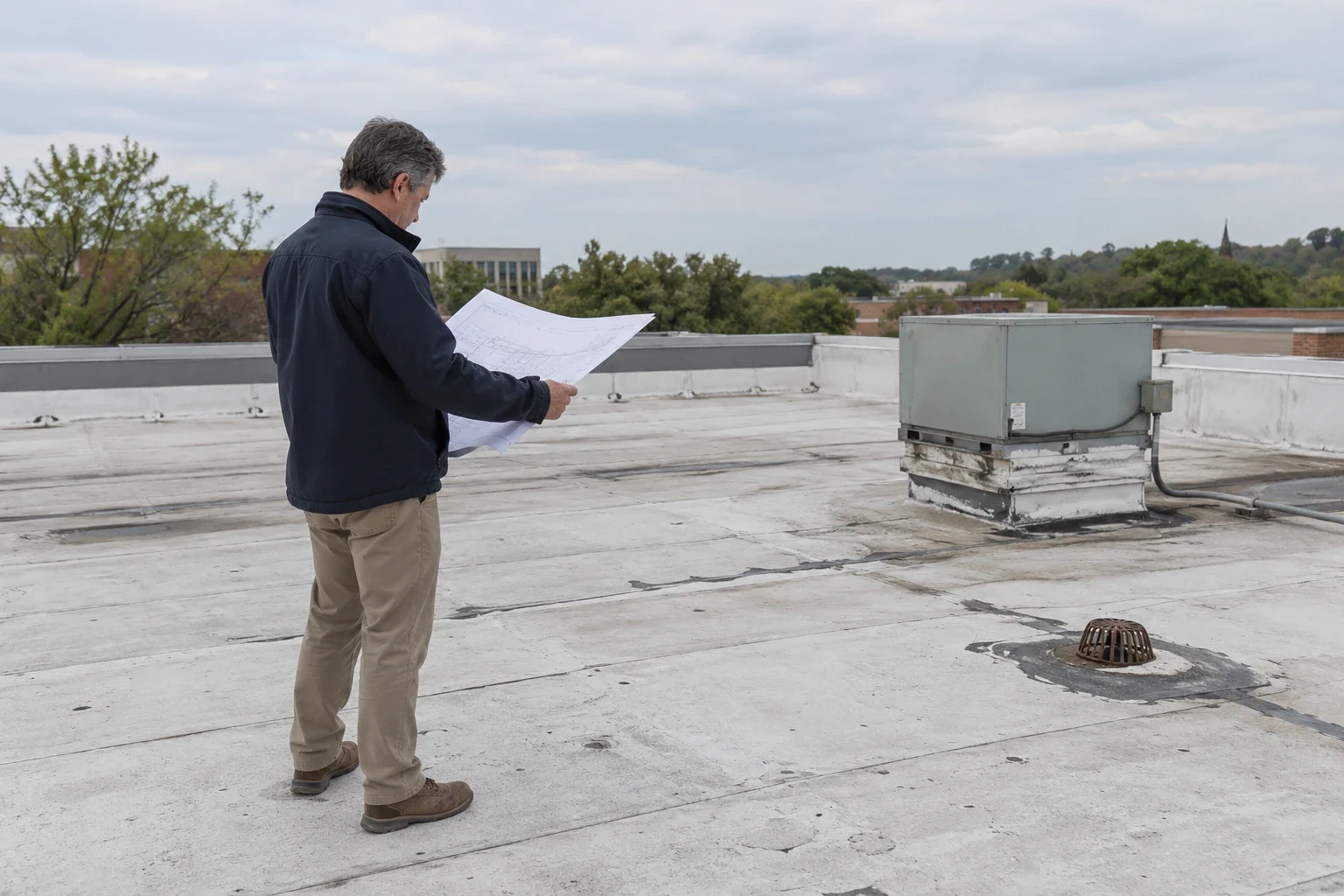
Heat retained beneath a roof covering can change the surface temperature as adjoining materials cool. An infrared survey examines that contrast, then selected physical openings establish what is present within the layers. We conduct roof moisture surveys in Norman, OK, for repairs, recover decisions and replacement planning. The investigation follows the assembly from the visible thermal pattern to the insulation, interfaces and deck conditions that affect the proposed work.
Cleveland County climate normals include summer heat and freezing nights. Those seasonal conditions make survey timing and the condition of the roof surface relevant to the investigation. In Northwest Norman, offices and specialty medical uses can also affect access and the operating window. We evaluate the requested building, covering and weather before choosing a method. A proposed roof recover needs information about the layers that would remain, while a repair may require a more focused investigation of the area adjoining a failed connection.
What makes the thermal contrast useful?
A surface that has received uneven solar heating can retain a pattern that resembles a concealed material difference. Shade from equipment, varying covering colors and standing water can affect the image. We examine those conditions before interpreting the survey. The assembly also matters: insulation arrangement, deck type and the number of layers influence how heat moves through the roof and appears at the surface.
We select a survey window that allows meaningful observation for the installed materials and current weather. Recent precipitation, cloud cover, wind and surface wetness can reduce or complicate the contrast. A Cleveland County climate summary records snowfall as well as hot weather, so seasonal surface conditions need assessment rather than a fixed calendar assumption. Where thermal examination is unsuitable, we identify another investigation approach or a different visit window. The purpose is to obtain information that can guide the actual roof decision. Selected observations are compared with the assembly and surroundings before an area is marked for physical confirmation.
Which temperature pattern needs a test opening?
A warmer area extending across several insulation boards may indicate a material difference beneath the covering. A small warm line beside metal or equipment may have a different explanation. We examine the shape, boundaries and neighboring details before choosing test points. Changes in covering thickness, previous repairs and rooftop equipment can affect the apparent surface temperature and must be considered alongside possible moisture.
The test locations are chosen to investigate both suspect areas and useful comparison areas. This helps establish how the thermal observation relates to the actual layers. A modified bitumen assembly with multiple plies requires different opening and restoration details from a single sheet covering. We identify the installed materials before cutting. The findings can include wet insulation, a dry comparison layer or an unexpected change in assembly. Each result is located on the roof layout, allowing the construction team to relate the opening to the surrounding pattern rather than assign one test result to the entire building.
How does the investigation opening close?
A core cut passes through material interfaces that need to be restored after examination. We plan the opening, inspect the exposed layers and record the conditions relevant to the proposed work. Where the investigation reaches the deck, the accessible deck surface is assessed for the question at hand. Insulation thickness, material arrangement and moisture observations are kept connected to that particular location.
The closure uses materials and details compatible with the existing roof. The cut area needs suitable backing and a prepared receiving surface so the investigation does not leave an unsupported repair. Our localized membrane repair restores the covering connection after the examination. Where the opening reveals deteriorated material, the repair extent is adjusted to the condition exposed. A survey involving several test points therefore includes a closure plan as part of the work. Access, roof condition and the required openings influence the investigation effort, along with the time needed to interpret the findings for the proposed project.
Where should material removal stop?
Wet insulation found at a test point establishes a condition that can change the removal scope. We relate it to the surrounding survey pattern and use additional examination where the boundary remains uncertain. The construction sequence needs a practical division between material to remove and material suitable to retain. That division must also provide workable tie-ins, support and drainage after the new layers are installed.
For insulation and cover board work, the replacement build-up can change flashing heights and outlet relationships. We examine those junctions before treating moisture removal as an isolated material task. A localized finding may permit targeted removal, while connected areas or other assembly limitations may require a broader scope. A capital project comparison can consider those options with the affected details. In northwest Norman, the mix of offices, medical uses, hotels and retail makes the requested property's operating requirements part of the removal plan. We coordinate those requirements with the investigation findings and the proposed dry-in sequence.
What changes before the new layers are installed?
A moisture survey conducted before construction gives the team an initial removal and investigation plan. Conditions exposed during tear-off can refine that plan, particularly where concealed deterioration extends beyond the tested points. We compare the opened area with the survey findings and examine the remaining boundary before new insulation or covering closes it. The receiving surface and adjacent flashing need to be ready for the selected assembly.
Downtown Norman includes restaurants, shops and galleries. For a requested commercial property there, the interior use can influence protection beneath investigation openings and the hours available for later removal. Work on a restaurant roof also requires coordination with the equipment serving that building. We identify where roof removal meets a curb, drain or equipment support and establish the connection order. The survey findings then serve a specific construction purpose: locate suspect layers, select confirmation points and explain how the confirmed conditions affect retained materials and repair boundaries. The project proceeds with the exposed assembly assessed before the next layer closes access to it.
Related Work
Commercial Roofing Questions
Can thermal imaging decide whether an existing roof can receive another layer?
Use the survey to investigate the moisture condition of materials proposed for retention, then confirm selected findings physically. We also examine assembly limits, drainage, attachment and flashing relationships for the recover decision. The temperature pattern contributes to that assessment, while the confirmed layer condition determines what can remain in the work area.
Why would a suspect warm area turn out to be dry?
Different materials, repairs, shading and equipment effects can change surface temperature. We compare the pattern with the installed assembly and investigate selected points to distinguish those effects from wet layers. A dry result is recorded at its actual location and used to refine the interpretation of adjoining areas.
Should test openings be made beside every visible leak?
Choose openings according to the concealed condition being investigated and the planned repair. A leak may require tracing at a flashing connection before a core cut is useful. We combine the reported interior location, roof observations and suitable investigation methods to select points that answer the material question without unnecessary openings.
How do we schedule a survey before an insulation project?
Allow time for an appropriate weather window, physical confirmation and interpretation before finalizing retained-material assumptions. We coordinate access and opening restoration with the building contact. The resulting findings help establish removal areas, new layer thicknesses and the adjoining details that need adjustment before installation is scheduled.
What should happen if tear-off exposes more moisture than the survey showed?
Pause closure at the affected boundary and examine the newly exposed material. We reassess the removal extent, the receiving deck or insulation and the tie-in to retained layers. The construction scope is adjusted to the condition found, with the adjacent curb, outlet or perimeter connection checked before replacement materials conceal the area.
Investigate the layers your project would retain
Share the Norman building location, known roof layers, moisture concern and planned construction date. We will assess the survey approach and confirmation work needed for the removal or recover decision.
Request a Roof Assessment