Roof Damage Repair
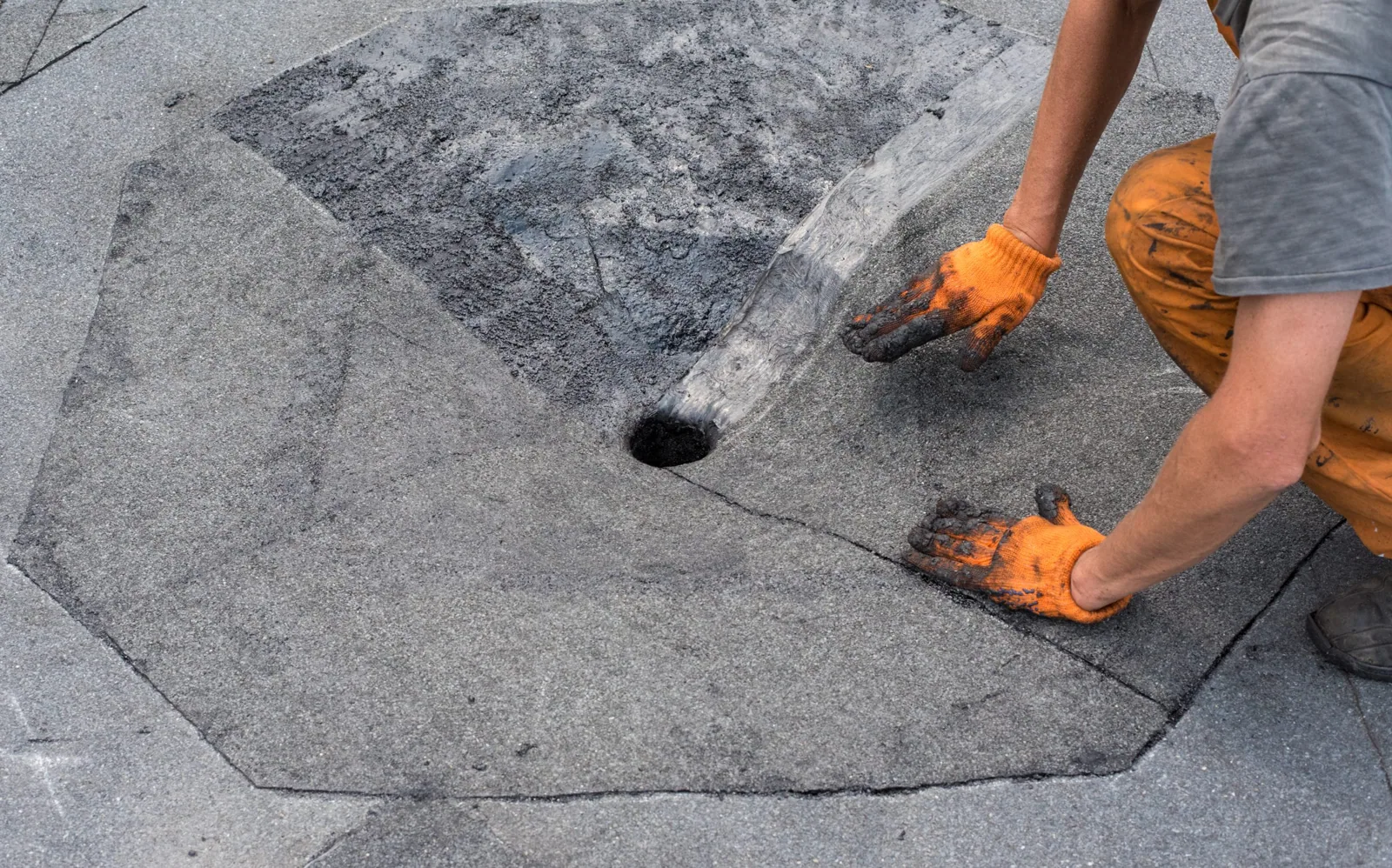
A drain lip above the adjoining field can leave water short of an otherwise clear inlet. The surrounding roof profile and receiving component need assessment before another membrane repair is selected. We correct ponding water on commercial roofs in Norman, OK, by tracing that elevation relationship through the layers and outlet. A profile change or drain adjustment is coordinated before roofing closes the junction that must receive the water.
University North Park's southern commercial development contains retail and hotel uses, while Northwest Norman includes offices and specialty medical properties. At a requested building, we identify the actual roof approach and inlet before correcting the ponding roof outlet. The assembly and receiving elevations determine the task. The project team can then coordinate component access and occupied-area release with the layer work needed to restore discharge rather than assign a surface seal to water that remains below the inlet edge.
Is the outlet clear but too high for the adjoining water approach?
A low basin and an obstructed drain can both hold water, but they need different corrections. We examine the accessible inlet, roof-side flashing and surrounding profile. Clearing exposes the receiving component and allows the approach to be assessed. The task identifies whether the layers, inlet position or another physical restriction needs work before the water route is restored.
The responsible design or drainage professional assesses an alteration affecting the drainage arrangement where required. We coordinate a piping or component task before the membrane connection closes. Ponding roof layer-profile corrections need suitable support and compatible joining to retained materials. The proposed profile is examined with usable height at nearby curbs and walls. Temporary water handling is arranged during exposure, and the new detail is inspected before component placement limits access. The completed inlet and roof approach are considered together through the actual receiving relationship.
Which layers have changed the local profile?
A compressed layer, uneven earlier repair or receiving-support concern can leave a local depression. We assess the surface and identify the material question that needs exposure before correction is selected. The affected layer boundary is located through the assembly, with accessible support examined as removal proceeds. A structural concern is assessed by the responsible professional before replacement roofing encloses it.
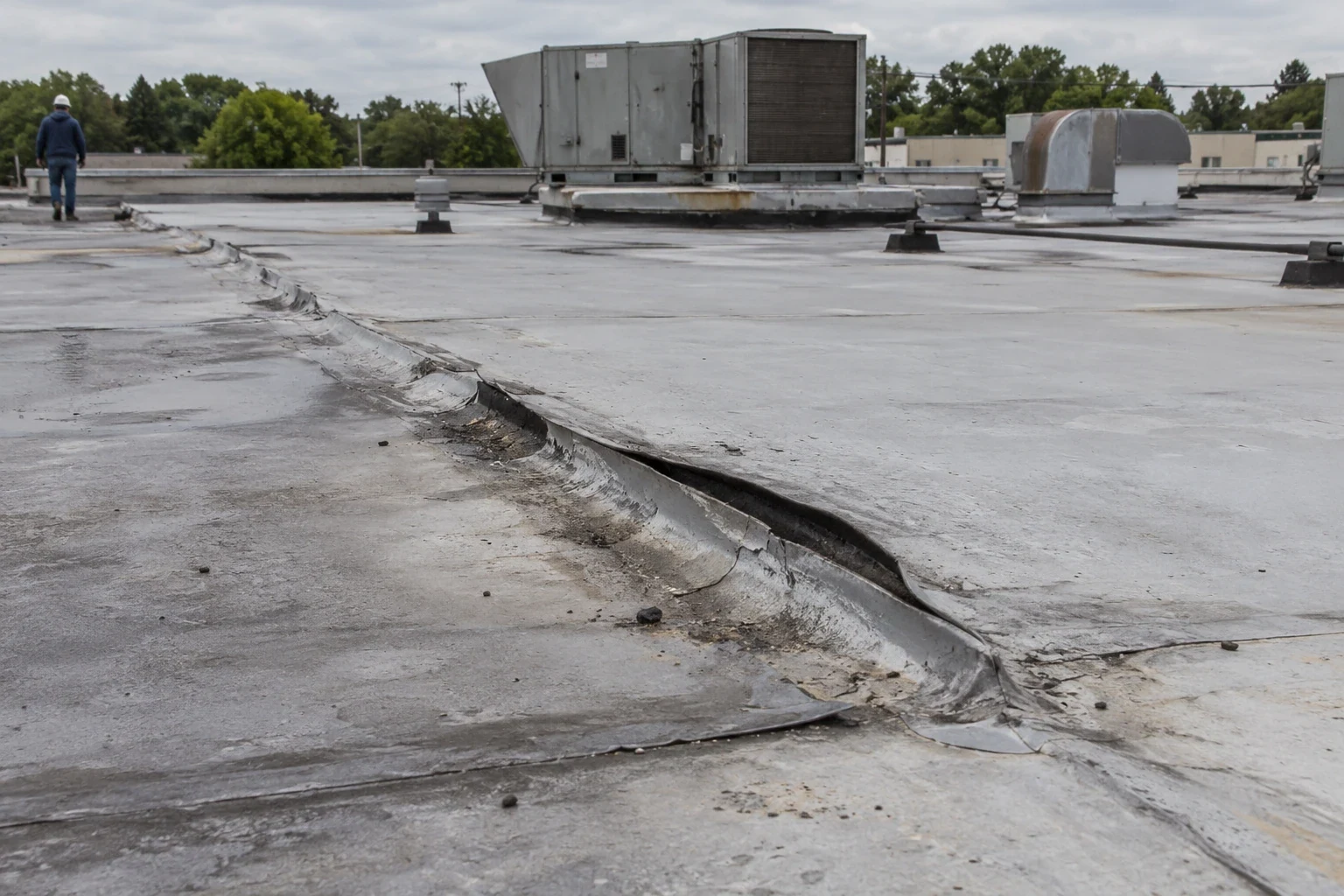
Ponding-area sheet damage corrections can restore a separate opening, while repairs to a ponding-area seam address the joining condition found. Neither task changes a low profile by itself. We identify the layer or component correction needed alongside compatible sheet closure. New materials connect after suitable support and the water approach are ready. The replacement boundary is examined before another covering hides the receiving interface, linking the visible surface defect to the assembly work required beneath or beside it.
Can the new profile join the retained roof without creating another lip?
A local build-up needs a workable transition into the existing field. We examine the retained layers and covering where the replacement will connect. An abrupt raised edge can interrupt runoff or leave the new sheet unsupported. The proposed boundary is selected with compatible material and the approach to the outlet considered before placement.
On an EPDM ponding-area repair, the sheet condition and prior materials establish preparation and joining requirements. We identify removal needed to reach a suitable receiving edge and coordinate the underlying layer task. The prepared transition is examined while accessible. Wall and curb height are checked where the profile change reaches those components, with any receiving adjustment completed before final closure. The new field then joins the retained assembly through a profile and material boundary that can direct water to the actual outlet rather than create a second obstruction beside it.
Where does water go while the receiving outlet is open?
An outlet can serve roof areas beyond the immediate repair, making temporary handling part of its exposure plan. We identify those adjoining sections and coordinate the receiving component task before removal. The opening includes the time needed for preparation, layer correction and compatible closure. The property contact establishes access below or beside the actual work position.
Occupied roof drainage construction connects that exposure to interior protection and material routes. A piping correction or support concern can add another receiving stage, so the daily boundary is reassessed as findings develop. Temporary protection follows the exposed junction until the component and profile are ready. The new flashing is inspected before final placement or another trade's work hides access. Permanent closure proceeds through the completed outlet and suitable layers, with the water route and affected operating area coordinated during the actual construction period.
How does the building use affect investigation of the low area?
University North Park's retail and hotel development gives the market a range of occupied commercial uses. At a requested property there, its actual room and equipment arrangement establishes access beneath the low roof area. We locate the material question and identify protection before exposure. The layer findings and receiving outlet condition determine correction extent.
Offices and specialty medical properties are among Northwest Norman's commercial uses. A requested building in that area has its own operating period and material approach to coordinate. We identify the outlet or profile task and the trade required at its receiving connection. Lifting and delivery access are arranged to support the layers and components needed for closure. The local property setting informs project discussions, while the inspected field and inlet relationships establish whether clearing, layer replacement or component alteration is appropriate for the actual roof.
What should be reassessed if water collects after another roof alteration?
A new support, layer patch or component can change runoff through the repaired area. We examine the altered approach and the receiving inlet before selecting another task. The accessible route is cleared where necessary, and profile or flashing concerns are identified separately. Compatible repair follows the material condition and the physical restriction found at the actual roof.
Cleveland County's climate normals include below-freezing nights and snowfall. At the requested building, we consider exposed drainage and movement details with those seasonal conditions in view. Located photographs and material information preserve the completed profile for later assessment. A new unit or outlet alteration is coordinated before it changes the repaired boundary, with the responsible professional assessing drainage or support requirements where necessary. The next roofing task can then proceed through an identified receiving interface and workable water route, preserving preparation and inspection access before another covering closes the connection.
Related Work
Commercial Roofing Questions
Can a clear drain remain above the low field that holds water?
Examine the inlet elevation and surrounding layer profile after accessible obstruction is removed. We identify the receiving correction required by that relationship. A component adjustment or layer task is coordinated before compatible roofing closes the approach and outlet junction.
How should the replacement profile connect to retained roofing beside the basin?
Assess suitable layers and sheet at the proposed boundary before placement. We identify a transition that accommodates compatible joining and the water approach. Nearby curb or wall heights are considered with the new profile, including receiving adjustments required before closure.
Will sealing an open seam also correct the low area around it?
The seam and drainage profile need separate assessment. We restore compatible joining at a suitable sheet boundary and identify layer or component work affecting runoff. The completed tasks connect through the actual assembly rather than leaving the elevation condition beneath a new surface repair.
What should be checked when equipment is added above the restored water route?
Locate the completed profile and outlet before support or layer changes are made. We assess the receiving junction and coordinate design or structural questions where necessary. The component task preserves the water approach and inspection access needed for compatible roof closure.
Assess the ponding field and receiving inlet elevation
Provide the Norman building, low roof area, outlet and installed layer information. We will examine the profile and coordinate the component, preparation and roofing tasks needed to restore the actual water route.
Request a Roof Assessment