Commercial Roofing Services
Sunlight reflected from a membrane can conceal the seam beside a raised curb in an overhead image. Changing the viewing angle reveals a different part of that connection. We use drone roof inspection in Norman, OK, to examine visible surfaces, establish detail locations and direct closer investigation where access or roof geometry makes an initial roof walk difficult. The flight is selected for the construction question, with images that connect the roof area to the specific junction requiring attention.
University North Park extends along Interstate 35 and includes retail and hotel uses. The Highway 9 Technology Corridor contains adjoining university facilities and local employers. Those operating settings affect the available flight area, ground activity and the points a building team wants examined. We coordinate the requested property and its surroundings before collecting images. A hands-on connection assessment follows where a seam, attachment or concealed layer requires physical examination. The aerial view helps select that work and gives the team a common location reference.
Which viewing angle answers the roof question?
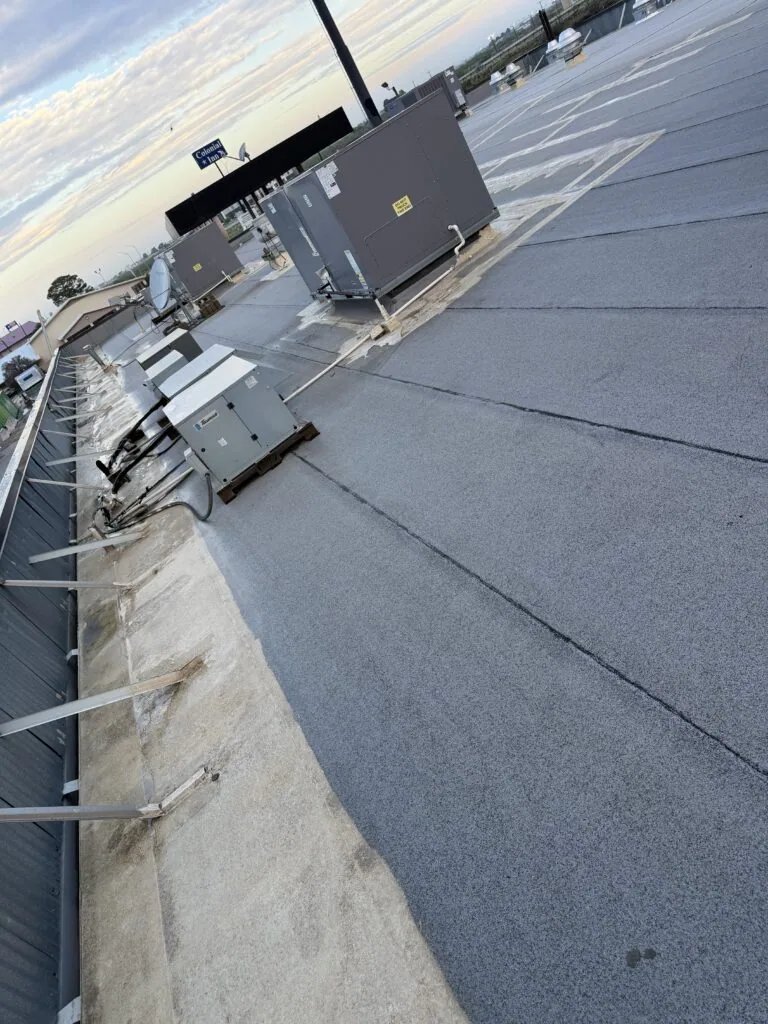
A vertical image can show the arrangement of drains, equipment and roof fields, while an oblique image can reveal the face of a curb or the profile of perimeter metal. We choose the views needed to examine the reported condition. A parapet may hide the outer edge from one position, and a taller equipment unit can block the membrane behind it. Additional positions are planned where they resolve those obstructions safely.
Image scale matters. A general overview is useful for finding a roof area, but a small seam defect needs enough detail to distinguish it from dirt or a shadow. We examine focus, viewing angle and illumination as the images are collected. Glare, motion or a blocked sightline can require a different view or a later physical check. For an inspection of warehouse roofing, the owner can identify service zones and reported interior concerns so the image sequence follows meaningful areas rather than an arbitrary grid. Close views are kept connected to wider images that make their locations understandable.
How does the flight fit the operating property?
People leaving an entrance and vehicles crossing a delivery area change the ground conditions beneath a proposed flight. We discuss those movements with the building contact and identify a suitable operating area. Nearby structures, overhead obstacles and site restrictions are considered before launch. The flight proceeds only within conditions and permissions appropriate to the property and the airspace, with ground activity accounted for throughout the inspection.
Hotels and freestanding restaurants along Ed Noble Parkway can have separate operating hours and service access needs. On a requested property in the Ed Noble Parkway corridor, we coordinate those needs with the intended viewing positions. Wind and precipitation can change the inspection window or prevent useful images. We explain any portion that needs another method and arrange the remaining examination accordingly. The decision is practical: obtain the required view without introducing conflict with occupants, equipment service or adjoining work. A general contractor can include the inspection before a lift, roof alteration or temporary enclosure changes visibility.
What surface change warrants a closer check?
A displaced coping segment, an exposed patch edge or debris accumulated near an outlet can be visible from above. Each observation leads to a different inspection task. Metal movement calls for examination of fastening and the adjoining roof transition. A patch boundary needs assessment of its bond condition and receiving material. Debris at a drain requires checking the outlet and the surrounding membrane, including the connection beneath the visible obstruction.
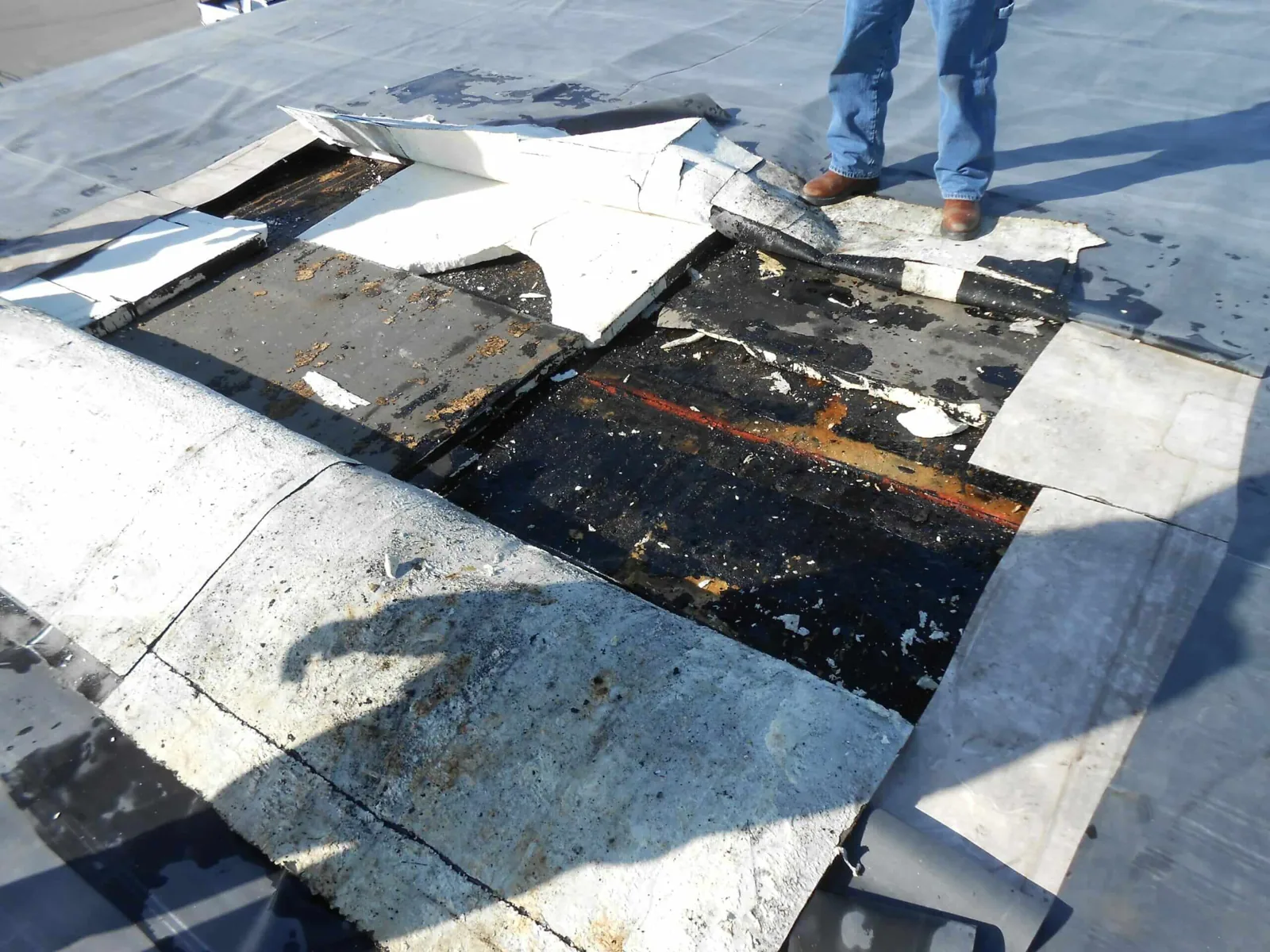
We relate apparent surface changes to the installed covering before recommending work. Reflective sheet, dark repairs and coated areas can produce different visual patterns even without a new defect. Where water remains on the roof, a view taken during one visit can help locate the affected basin; physical measurements and drainage examination establish the correction. Our drainage repair assessment considers slope, outlets and nearby flashing together. The images identify where to begin that examination, while the physical findings determine which material or component needs attention. Suspect areas are described by location and appearance so they can be revisited precisely.
Where does imaging connect to the repair sequence?
A damaged edge visible in an aerial photograph may require removal of adjoining metal before the roofing transition can be reached. We use the view to plan that access and then examine the exposed connection. The repair scope is developed from the material condition, attachment and available receiving surface. Where another trade must alter a support or piece of equipment, the image can show the junction that needs to remain available until roofing work is complete.
For storm-related roof repairs, an aerial inspection can help organize dispersed observations across the building. The April 19, 2023 hail report two miles west of Norman makes hail inspection relevant after a storm affecting a requested property. We examine suspected impacts at close range and select physical checks suited to the covering. Imaging can also help identify loose materials or inaccessible areas that require a safer examination arrangement. The construction team receives the detail locations and the next inspection tasks before ordering repair materials or closing an adjoining work area.
How can the construction team use the images later?
A close photograph loses value if the repair crew cannot find its connection. We pair detailed views with roof-area identification and wider orientation images. The description explains the visible condition and the follow-up task, allowing a supervisor to distinguish similar curbs, perimeter segments or equipment groups. Images used for a written roof condition assessment are tied to the findings rather than presented as an unclassified collection.
Repeat imaging can help compare an altered detail with its earlier configuration. The camera position, view direction and relevant construction stage are considered so the comparison remains useful. A new support, changed drain arrangement or completed perimeter repair may warrant a closer physical check even when the overall image appears orderly. We identify those inspection points in the construction sequence. The owner can use the resulting views for work coordination and later maintenance, with unresolved areas assigned an appropriate next examination. The retained images provide orientation; the roof decisions remain connected to the actual material and connection findings.
Related Work
Commercial Roofing Questions
Can aerial images help before a rooftop equipment lift?
Arrange imaging before the lift where it can show access routes, adjacent details and the existing equipment layout. We examine the relevant curb and surrounding roof from suitable positions, then identify which connections need physical inspection. That sequence helps the roofing and equipment trades plan protection and preserve access to the flashing junction.
Will drone photographs show the underside of perimeter metal?
The available sightline determines which surfaces can be photographed. A projecting edge or parapet can hide the underside, requiring another view or direct access. We identify the obscured connection and arrange a suitable inspection method before deciding how the metal and roofing transition should be repaired.
Should we choose drone imaging or a moisture survey?
Choose the method that addresses the material question. Visible-light imaging is useful for layout and exposed conditions; concealed moisture requires a suitable investigation process. We assess the assembly and recommend thermal examination with physical confirmation where appropriate, or another investigation where surface images leave the relevant layer unresolved.
What happens if a busy delivery area conflicts with the flight?
Ground activity is coordinated before launch and reassessed during the visit. We can change the viewing position, select a different inspection window or use direct roof access when appropriate. The required connection still receives an examination plan, with operating needs considered before equipment is positioned or the flight begins.
Can the photographs guide a crew returning for repairs?
Pairing the detailed view with its roof-area reference gives the crew a usable starting point. We explain the visible finding and the connection to inspect on arrival. Repair materials and closure details are selected after the actual surface, attachment and adjoining components are assessed, so the photograph supports the work without replacing that assessment.
Arrange the roof views needed for your next task
Tell us the Norman property location, connection you need examined and planned equipment or construction activity. We will coordinate imaging and the physical checks needed before that work advances.
Request a Roof Assessment