
Industries We Serve
An insulation board placed after adhesive has lost its usable bonding condition can leave an unsuitable interface beneath an apparently aligned surface. The material condition and placement sequence need assessment before the next layer hides that bond. We work with general contractors in Norman, OK, by identifying the actual receiving requirements and construction stages at the assembly. Roofing proceeds through suitable preparation and the installed system's application conditions rather than enclosing a layer whose connection remains unresolved.
Manufacturing and governmental agencies contribute to Norman's economy, while Goldsby's flex properties combine office, production and staging uses. At a requested project, we establish the retained or new roof assembly before coordinating insulation and cover board placement. The general contractor receives the component releases and inspection points that affect the roof task, allowing the next construction stage to follow suitable receiving layers and completed adjoining work.
What condition must the adhesive have when the board is placed?
Working time, receiving-surface condition and placement method follow the actual adhesive and installed assembly. We identify those requirements before material is applied. Weather and surface temperature can change the construction period suitable for the task. The board needs the specified contact and preparation rather than an assumed bond based solely on its visible alignment. Moisture or debris on the receiving base can also affect the interface. We identify drying and cleaning needed for the actual material before application, then assess the prepared surface while it remains available.
We examine the receiving base and coordinate suitable conditions before the layer is closed. An unsuitable interface requires assessment of the affected area and the correction needed through those materials. Project roof replacement work includes that preparation and the inspection stage before covering placement. The opening is arranged to support the layers that can be properly installed during the available period. New roofing follows the corrected receiving interface, with the application sequence and adjoining component tasks ready for completion before another layer makes the base inaccessible.
Which component task establishes the base for roofing?
A wall, outlet or equipment curb can require another trade's correction before the roof detail can close. We identify the receiving material and access needed for preparation. The responsible component trade completes its task while the junction remains available for inspection. Roofing follows that suitable base through the compatible termination required by the installed system.
Construction equipment curb coordination considers usable height, clearance and support contact alongside the proposed layers. A structural or loading concern is referred to the responsible professional before roofing conceals the base. Temporary protection is arranged while receiving work remains unfinished. The general contractor can coordinate the component release with the stage at which roofing is ready to connect. Equipment placement or wall closure then follows the required inspection rather than hiding an adjoining task that still needs preparation beneath a completed roof detail.
Which existing layer question must be settled before scope selection?
A retained covering may conceal affected insulation or unsuitable support near the proposed tie-in. We investigate the materials relevant to the construction decision and identify a workable replacement boundary. The exposed base is assessed before new layers are selected. If that inspection raises a structural concern, the responsible professional examines it while the receiving area is still available. The receiving layers establish retention or removal rather than the surface appearance alone.
A project roof recover task is considered with suitable existing materials and the component adjustments required by added thickness. Outlets, curbs and wall terminations are assessed against the new profile before placement. We identify investigation still needed and the defined receiving work ready for construction. The opening and temporary protection are reassessed if findings change removal. Compatible new layers then join suitable retained material after the base and adjoining components are ready, with inspection maintained before another trade limits access to the tie-in.
How does the operation below the roof affect the daily opening?
A removal area needs time for receiving preparation and closure as well as material access. We locate the actual roof task and discuss protection and release with the building team. The daily boundary is selected with concealed conditions and component work considered. A change in findings is reviewed before another area is exposed.
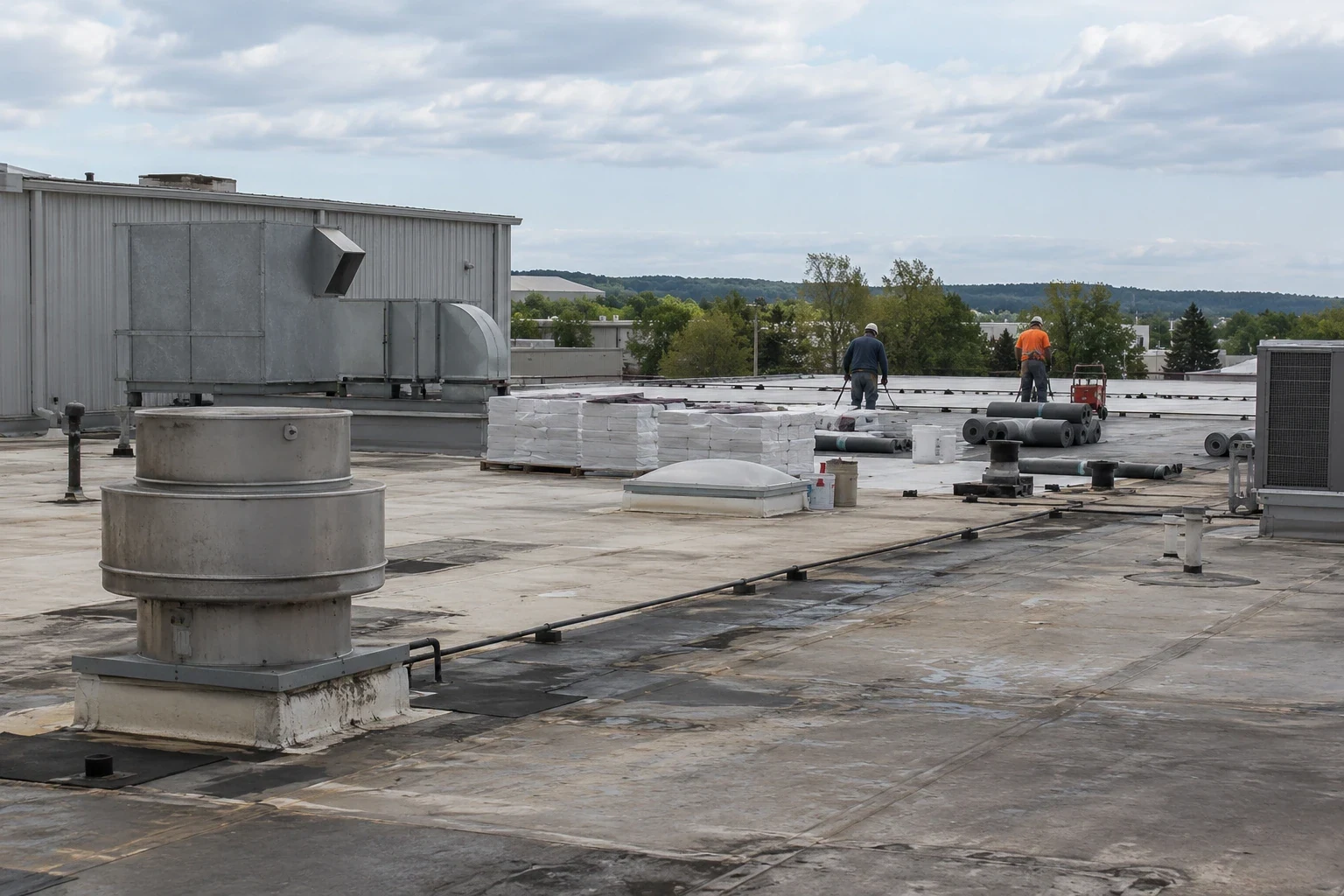
Manufacturing project roofing and healthcare construction interfaces can involve different operations and equipment tasks. The requested building establishes its own working arrangement. We identify lifting routes, occupied areas and receiving trades relevant to that section. The general contractor coordinates their release through the actual closure stages. Roofing advances after the materials and component tasks can support completion, keeping exposure matched to suitable construction conditions rather than opening a wider area while its necessary preparation or adjoining work remains unavailable.
How do the local project uses inform delivery and inspection?
Goldsby's industrial and flex properties serve office, production and staging activities, with established commercial uses east of Interstate 35. At a requested project there, the actual material approach and operation below the roof establish access. We identify the replacement components and layers needed during the work period. Their receiving tasks determine the construction and inspection sequence.
Norman's manufacturing, education and governmental activity provides a wider mix of occupied building uses. A requested general contractor project has its own roof and component arrangement to assess. The inspected assembly determines preparation, removal and compatible joining, while the building contact establishes relevant room and exterior release. Oklahoma's 2024 International Building Code with state amendments took effect September 14, 2026. Applicable project requirements are coordinated with the responsible design and permitting contacts before construction selection, connecting the assembly detail to the actual building scope and receiving conditions.
What must be examined before the next layer or component conceals it?
A corrected base, prepared overlap or adhesive interface can become inaccessible as roofing progresses. We identify the checks required at the relevant construction stage and coordinate the responsible inspection before closure. Another trade's component placement follows that stage where it affects the same junction. The roof task proceeds after suitable receiving preparation is established.
Summer heat and seasonal freezing nights are recorded in the normals for Cleveland County. At the actual project, their seasonal influence is considered alongside application conditions and installed movement details. Located photographs identify completed boundaries and materials for the construction handoff. A later unit or wall change is coordinated before it disturbs those interfaces. The general contractor receives any separate component task remaining and the access relevant to it, allowing the next stage to connect through an identified receiving detail with preparation and inspection completed before permanent closure.
Related Work
Commercial Roofing Questions
Can visible board alignment settle whether the adhesive interface is suitable?
Assess the actual adhesive, receiving surface and placement conditions against the installed assembly requirements. We identify preparation and correction needed before the next layer closes. The construction stage includes the relevant inspection of the base and bonding interface while accessible.
How should equipment placement be coordinated with roof flashing completion?
Identify the receiving curb, usable height and access needed for preparation before the unit is set. We coordinate the component correction and roofing inspection with the responsible trade. Placement follows suitable closure at the shared junction rather than concealing unfinished receiving work.
Will an existing roof investigation change the planned daily removal boundary?
Locate affected materials and assess the tasks required to reach a suitable tie-in. We review support, component correction and temporary protection if findings extend removal. The next opening is coordinated with the materials and access needed to prepare and close that actual section.
What should be checked before another trade hides the completed roof-side connection?
Examine the corrected receiving component, prepared material boundary and accessible termination at the designated stage. We coordinate the responsible checks before placement or finish work. The adjoining task proceeds after compatible roofing and required inspection are complete.
Establish the receiving stages for the roofing task
Provide the Norman-area project, assembly detail, existing condition and component schedule. We will assess the layer interfaces and identify preparation, trade release and inspection required before the next roofing stage closes.
Request a Roof Assessment