Service Areas
A roof edge can move against its flashing when the panel, restraint and receiving surface do not work together. At Goldsby’s I-35 industrial and flex properties, production, office and staging activity can shape trade timing. We map where the panel, restraint and flashing meet, then identify what must be reset before a compatible repair.
Goldsby’s comprehensive plan identifies industrial and commercial uses east of I-35 and notes production, office and staging activity in local industrial and flex space. Those operating needs affect access and sequencing, not the roof’s condition. Our field review traces each connection, records damage by roof zone and separates work that can proceed from details that need the responsible trade first. Our record identifies the support, flashing edge and return point after the adjoining trade finishes.
Which connection has to move before the flashing is repaired?
A tear beside a panel edge may begin where a restraint or support transfers movement into the roof surface. We inspect the attachment, clearance, edge metal and adjacent membrane together. If a moving support remains in contact with new flashing, a surface patch can fail at the same interface. The repair sequence should identify whether the support needs adjustment by another trade before the roof connection is reconstructed.
Goldsby’s plan identifies office, production and staging uses in industrial and flex space. We check whether a support or service line crosses the requested roof zone.
Where a panel edge meets a curb or wall, the finish trade can hide the fastener line and the membrane termination. We keep that edge open until the restraint is secure, the receiving surface is prepared and the flashing has been checked. A roof condition inspection maps the assembly and each transition that needs access.
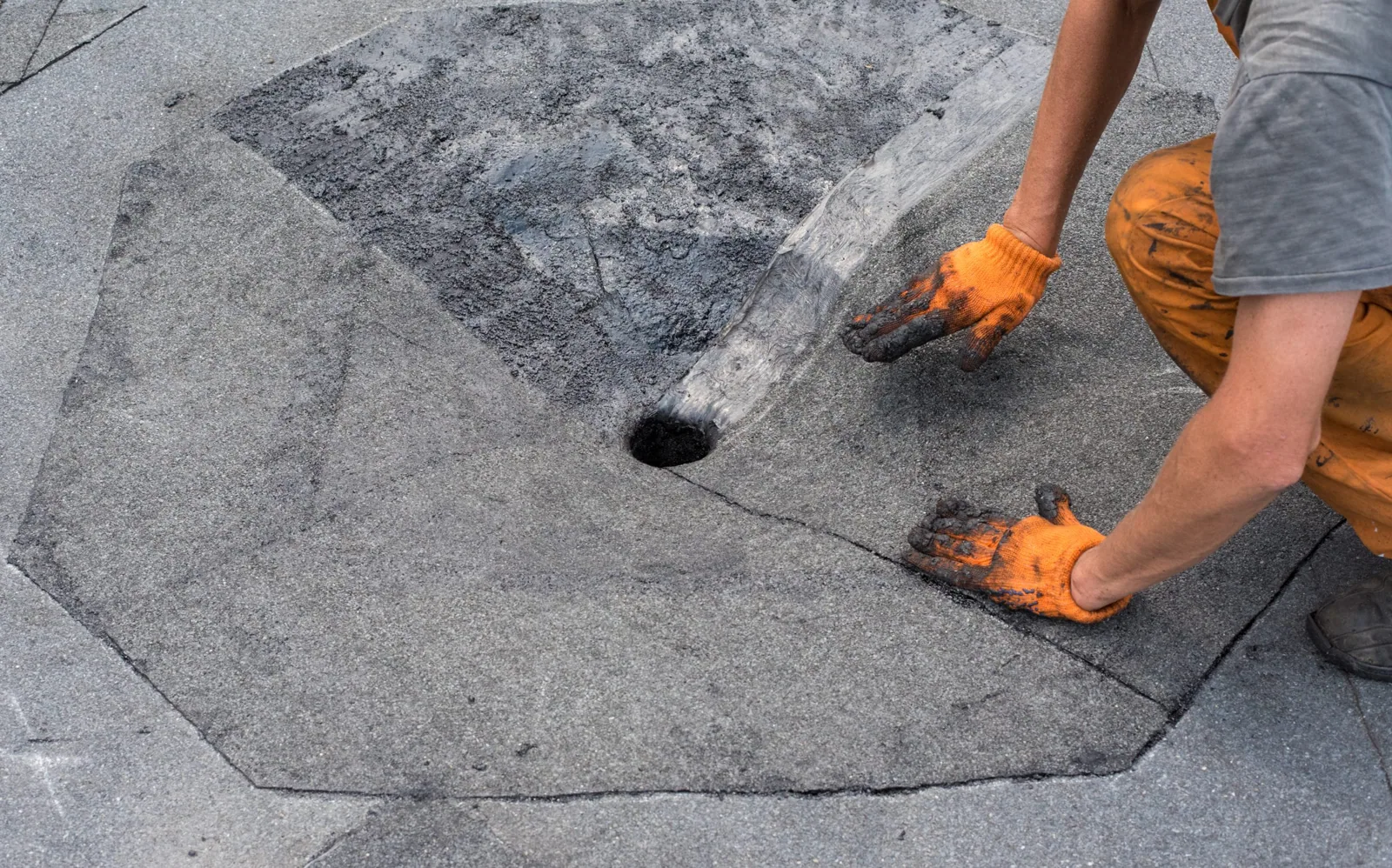
Before a patch, we confirm that the receiving layer is clean, dry and compatible. If a drain or scupper is nearby, a drainage assessment can determine whether its outlet connection belongs in the scope.
A restraint transfers load through its fastener, base and supporting member. If one part has loosened, the membrane can show a tear at the edge while the attachment problem sits below the visible surface. We check the base and the material receiving the repair before choosing a patch or replacement flashing.
What should the first roof walk expose?
Start at the reported leak or damage, then follow it into the assembly. We check seams, penetrations, curbs, edge metal and wall transitions. On low-slope roofs, we trace water toward drains; on metal, panel alignment and fasteners guide the review. We record the installed system before selecting a repair.
Production and staging can affect access. Before opening the assembly, we confirm the site contact, interior protection and material staging area.
For reported hail or wind damage, we distinguish visible impact from other surface wear and photograph seams, restraint and supports by roof zone. Cleveland County climate records include hail and tornado occurrence. A 1.75-inch hail report was logged two miles west of Norman on April 19, 2023. For a Goldsby storm-repair request, we photograph the affected membrane, restraint and supports and tie the work to those observed conditions. A storm-damage roof assessment ties the requested building’s evidence to the repair.
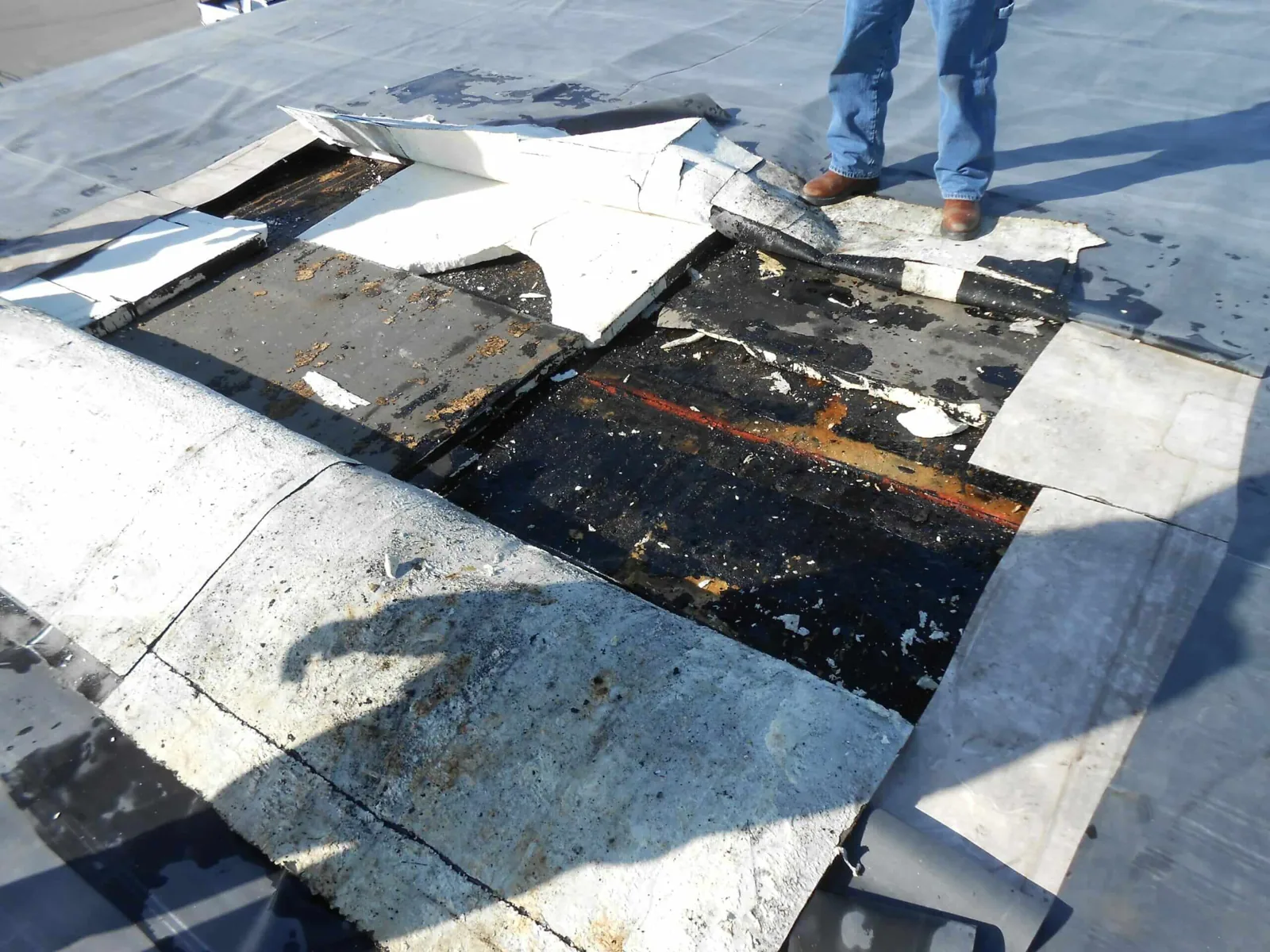
If the tear runs beneath a panel termination, an opening should reveal whether the fastener base still holds and whether insulation at the lap has taken water. We mark the cut line and restoration material before exposure, then leave the edge available until the support and receiving surface can be checked together.
In a production or staging area, roof access may cross a route used for equipment or deliveries. We confirm the access path and identify whether the work zone can be isolated while material is lifted or removed. If a suspected leak aligns with an equipment support, we inspect the counterflashing, fasteners and nearby membrane rather than assume the support itself is the source. The report keeps the interior symptom, roof observation and proposed opening tied to the same zone.
How can work stay coordinated with production and staging?
Goldsby planning identifies industrial and flex activity for office, production and staging. Before a lift arrives, the site contact should set its standing area and identify receiving routes or work bays that must stay clear during the roof opening.
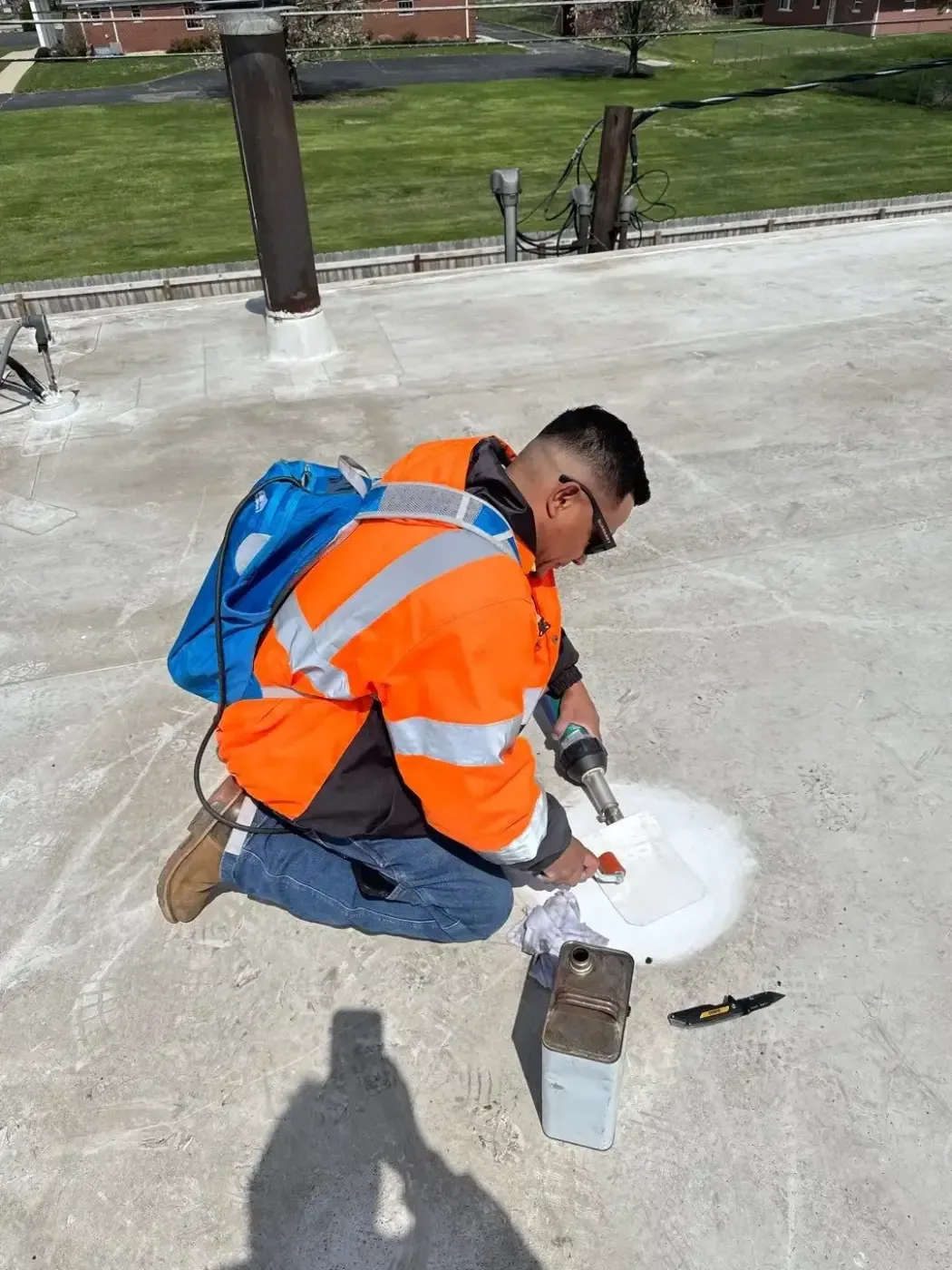
A localized repair can stay within one roof zone: prepare the substrate, remove unsound material, restore the connection and check the tie-in. If a support, curb or duct is involved, the scope names the trade handoff. An occupied-building work plan sets zone limits and closeout steps.
Where a mechanical support crosses the repaired zone, the roofer needs its final position before cutting the flashing. We coordinate the base correction first, then set the membrane termination against the prepared support and photograph the joint before the next finish hides it.
Before the roof opening is made, agree on where removed material will go, how interior exposure will be limited and who can approve a change if the support base is damaged. For a production area, the site contact can identify operating periods and equipment that cannot be shut down without coordination. We place those boundaries beside the repair steps, so the work order has a visible sequence from access through closeout.
The 2024 International Building Code with Oklahoma amendments became effective September 14, 2026. Before changing a support or rated assembly, the designer should settle the connection detail and required review.
When should the repair boundary expand?
A panel-edge repair is strongest when its restraint holds position and the receiving membrane can be prepared back to a sound bond. If loosened fasteners recur along the same run or water reaches insulation, inspect beyond the torn flashing before pricing a patch. The report distinguishes edge correction from any larger area opened for review.
For production or staging use, schedule the lift and membrane opening so the affected bay can remain protected. The work order names the panel edge, support base and tie-in to be rebuilt. If deck loss appears at the opened area, the crew holds that section for a scope decision before removing more material.
A replacement evaluation compares the existing layers, whether the scope includes tear-off or recover, and perimeter tie-ins. For repairs, a maintenance visit can revisit drainage, seams and the documented repair zone.
Keep separate roof records for Goldsby and for Norman or Noble. Send the assembly, condition and trade sequence so we can check the panel edge before the next operation.
Keep the restraint stable, prepare attached membrane, rebuild the perimeter and check the tie-in before production resumes. A shifting base needs correction before closure.
Related Work

Commercial Roofing Questions
What should a Goldsby production or staging roof request include?
Include the roof plan, the panel or curb zone affected, the planned lift path and any delivery periods that cannot move. We check the fastener line, support base and flashing edge at that location, then mark the material and reset needed. If the surface opens to a deck or insulation concern, the scope pauses at that boundary for a decision.
How do Goldsby’s industrial and flex uses affect roof access?
Goldsby’s plan identifies production, office and staging activity in industrial and flex properties. The site contact can identify which work bay needs to remain available and where a lift or removed roofing can be placed. We map those limits to the panel run or support connection being repaired so the access plan aligns with the actual roof detail.
What sequence works when production continues below a roof opening?
Set a bounded work area and a protection method with the operations contact before the membrane is cut. The roof repair should wait for any support correction, expose only the material needed to inspect the base, and close the zone after the receiving surface is ready. Record the panel edge and final flashing before the bay returns to its regular use.
Which sign points from an edge patch toward a broader repair?
Look for fasteners that keep loosening along the same panel run, wet material extending beyond the termination or edge metal that cannot hold a new flashing tie-in. We check how far the restraint and receiving layers remain sound, then price a bounded correction against any larger area the field condition supports.
Coordinate the roof connection before the next trade
Share the Goldsby building location, roof assembly, reported condition and trade schedule. We will check the connection and organize findings around the next construction step.
Request a Roof Assessment