Roofing Manufacturers
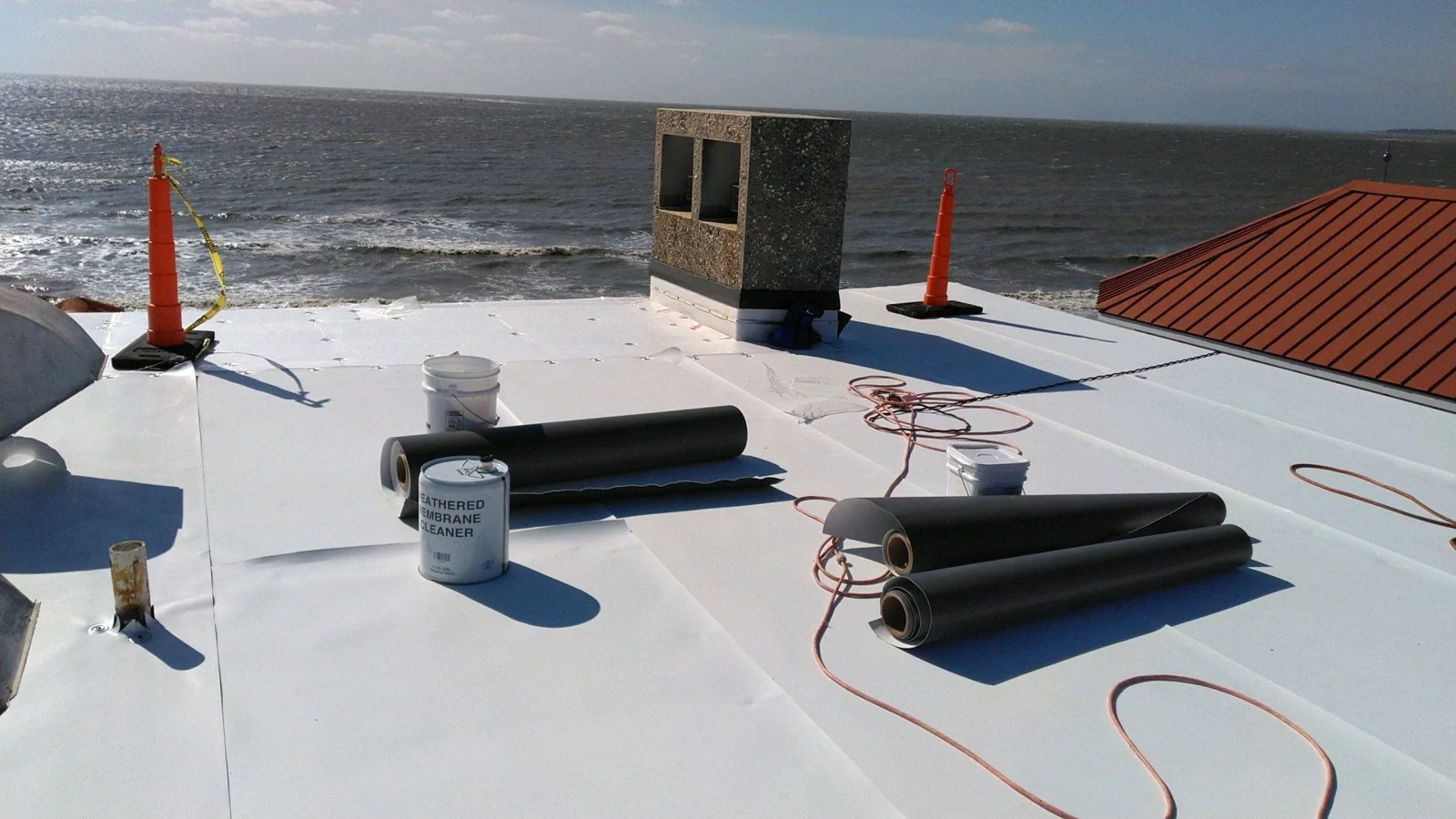
A wrinkle over an adhesive ridge can keep the underside of a membrane from making full contact with its receiving board. Pressing the raised sheet does not establish that the original bonding conditions remain suitable. For GAF commercial roof work in Norman, OK, we examine the sheet, adhesive interface and substrate together before deciding how much material to reopen. The repair must address the interrupted contact rather than merely flattening the visible surface.
GAF offers commercial single-ply and modified-bitumen roofing. Those families use different joining and attachment methods, so the installed assembly comes before the repair technique. A thermoplastic seam and a bituminous lap do not accept interchangeable preparation. We identify the actual covering and inspect adjoining details through a hands-on examination of the GAF assembly. On a requested building, the findings establish whether a localized correction can reconnect sound material or whether a wider section needs reconstruction.
How does a raised sheet change the bonding task?
A membrane can bridge a depression, a board joint or an uneven adhesive deposit. The visible elevation is useful because it locates the contact question, but the underside needs examination where the correction requires opening. We distinguish a restrained wrinkle from movement associated with an unstable base. The board surface, existing adhesive and condition of the lifted membrane then determine the preparation needed.
For a compatible adhered repair, the receiving area must be suitable for the selected materials and their application requirements. Reusing a contaminated adhesive face can leave the replacement disconnected even when the outer sheet looks smooth. We remove unsuitable material as required, prepare the base and stage the new bond without covering an unfinished substrate correction. Insulation and cover-board work at the bonding surface belongs in that sequence when damaged or irregular boards prevent proper contact. The final sheet placement follows the corrected support profile.
Which joining method matches the installed covering?
A heat-welded thermoplastic junction relies on suitable sheet contact and a controlled welding process. Dirt, unsuitable residue and deterioration at the receiving face can interfere with that junction. We examine the available joining area before placing repair material and check the completed seam after the weld cools. An acceptable-looking edge alone does not establish a continuous connection across the required joining width.
A modified-bitumen repair instead follows the installed membrane construction, compatible repair materials and the application method selected for that assembly. Surfacing and damaged plies may need preparation or removal before the repair can receive a sound connection. Comparison with other commercial membrane assemblies is useful during a replacement decision, but a different manufacturer's name does not solve an unidentified receiving condition. We connect the material choice to the installed layers, usable repair boundary and proposed installation method before construction proceeds.
What must be checked where the covering transfers force?
A fastener plate sitting above an unsound base can move beneath an otherwise intact sheet. The covering carries the resulting distortion into nearby seams or flashings. We examine attachment, the supporting deck and the connection required by the proposed assembly. A deteriorated support area needs assessment before new fasteners or adhesive are treated as a substitute for the missing base.
The required attachment arrangement follows the project design and applicable system requirements. We do not select fastening from the appearance of an adjacent roof section. Where support or loading needs further review, the responsible design professional addresses that question before roof closure. Single-ply attachment and junction alternatives can enter a broader system evaluation once the receiving structure is understood. For the installed GAF roof, the immediate task remains a compatible connection through suitable materials, including perimeter and penetration details that transfer movement into the field covering.
How do Norman's commercial uses affect the work area?
Hotels, large retailers and freestanding restaurants occupy the Ed Noble Parkway corridor west of Interstate 35. Their different service arrangements call for locating the roof task at the requested property before opening a section. A restaurant exhaust connection, hotel service route or retail delivery entrance can each change where materials are lifted and where an unfinished interface needs protection. The assembly investigation establishes the physical repair while the property contact coordinates the affected operation.
In the Ed Noble Parkway commercial corridor, we assess the actual sheet and component clearance before choosing a daily removal boundary. Northwest Norman also includes office and specialty medical development. At such a requested building, an equipment service task needs coordination if it limits access to the receiving flashing face. That coordination resolves a specific construction obstruction. It does not replace examination of the bond, deck or sheet condition that determines the GAF roof correction.
Can the underlying layers remain during renewal?
Wet insulation, displaced boards or uncertain attachment can make a sound-looking surface unsuitable for retention. We locate the concealed question and investigate the layers needed to answer it. A moisture survey can guide that investigation when conditions allow, while openings establish the material condition at the proposed repair or removal boundary. The usable adjoining layers need connection to the new work rather than being assumed from an undamaged top sheet.
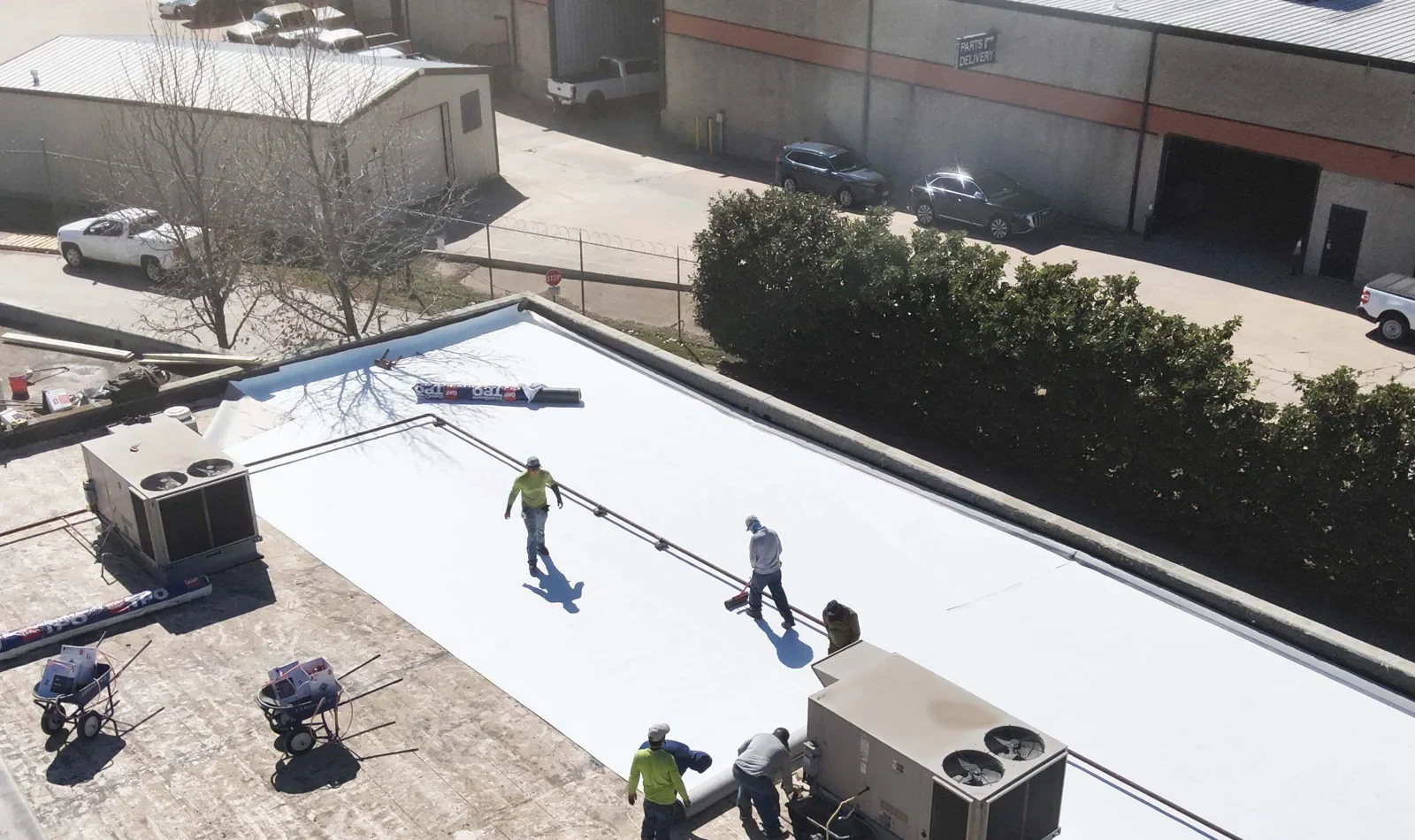
A commercial roof recover assessment considers the retained assembly, allowable construction and new system connection together. Roof height affects flashing clearance and drain transitions. Additional materials also need design review where loading or attachment requires it. Replacement may provide a more workable receiving base when the existing layers cannot support compatible renewal. We distinguish those alternatives by the actual assembly findings and project requirements, with removal extent, disposal access and temporary protection identified before the building is exposed.
Which details need inspection before later service traffic?
A completed field repair can still meet an unfinished equipment junction or a blocked outlet. We examine the repaired sheet edges, flashing continuity and accessible drainage path before returning that area to normal service. Replacement walkways and component supports need a suitable placement detail so their contact does not recreate the distortion or abrasion just corrected. A returning mechanical trade receives the location of the finished connection that its work must preserve.
Cleveland County's climate normals include freezing nights and summer heat. Those conditions make movement and contact useful inspection subjects at the installed junction, alongside actual water discharge and service damage. Maintenance of the repaired GAF roof details addresses debris and accessible defects using methods suitable for the covering. A new puncture or failed bond needs its own repair preparation. Cleaning alone does not reconstruct a separated layer interface, and coating an unresolved connection can make later access more difficult.
Related Work
Commercial Roofing Questions
Should a wrinkle above an adhesive ridge simply be pressed flat?
Examine why the membrane lost contact before selecting the correction. We assess the underside, adhesive condition and board profile where access is needed. The repair removes unsuitable material and restores compatible contact rather than leaving the interrupted bond beneath a smoother surface.
Can the same patch method be used on GAF thermoplastic and bituminous roofs?
Match the repair to the installed membrane family and its receiving conditions. A heat-welded sheet junction and a modified-bitumen lap require different preparation and application. We identify the assembly before selecting materials and examine the finished connection using the relevant method.
Will a good-looking top sheet support a recover decision by itself?
Investigate the retained layers and attachment before adding a new covering. Moisture, board condition, roof height and structural requirements affect suitability. We connect those findings to the proposed system so the renewal rests on a usable assembly rather than appearance alone.
What changes the work sequence where equipment conceals the repair edge?
Coordinate the component access needed to expose and prepare the receiving face. The responsible trade addresses its release or support task while roofing establishes protection and joining conditions. The connection is inspected before equipment placement again limits access to the repaired boundary.
Identify the GAF junction that needs correction
Send the Norman-area property location, known covering type, raised or damaged detail and any component work planned nearby. We will assess contact, support and compatible preparation before setting the repair sequence.
Request a Roof Assessment