
Roofing Manufacturers
A cover-board joint directly beneath a membrane connection can concentrate movement where the sheet needs steady support. An uneven board edge may leave the joining surface flexing under service contact even while the adjacent field remains firm. For Johns Manville roofing in Norman, OK, we follow that support change through the installed layers before selecting a surface correction. The board condition and sheet connection need attention in the same repair sequence.
Johns Manville supplies commercial single-ply and bituminous roofing systems. The particular covering, insulation and attachment arrangement need identification at the requested building. We assess the installed assembly through inspection of the Johns Manville roof layers, locating unsupported edges and the material available for compatible joining. A new membrane strip cannot stabilize a displaced board beneath it. Where the base is sound, the repair can focus on preparation and connection without unnecessarily removing usable surrounding construction.
Which board condition is loading the sheet joint?
A raised board corner, open joint or soft area changes how the covering transfers contact into the underlying layers. We examine the accessible support and determine whether the movement comes from board damage, attachment or an adjoining component. The opening needed for that assessment is located before cutting so the investigation can be protected and later joined to suitable roofing.
Replacing an affected board requires attention to its support, fastening or bonding arrangement and the finished surface profile. The new edge should receive the proposed membrane detail without preserving the step that distorted the earlier connection. Reconstruction of the insulation and protective board also follows the condition of lower materials exposed during the task. Unsuitable insulation is removed to a usable boundary. The covering proceeds after the receiving surface has the stability and preparation required for the selected Johns Manville assembly.
What makes the membrane repair compatible with that base?
A thermoplastic sheet connection needs an appropriate receiving face and welding process, while rubber and bituminous systems use different joining methods. We identify the installed covering rather than treating all flexible sheets as the same material. Earlier coatings, adhesive deposits or patch compounds can affect the available surface. The repair line is selected where suitable material can accept the required connection.
For a heat-welded detail, we examine preparation and joining conditions, then check the finished seam using the relevant method. A bituminous reconstruction follows compatible layers and the application requirements for that assembly. Commercial membrane alternatives for a replacement project can be evaluated when the roof needs broader renewal. On the existing roof, the practical question is the usable material and base available now. We establish that boundary before adding another layer that would conceal the unsupported joint or an unsuitable earlier repair.
Does rebuilding the layers reduce usable flashing clearance?
A replacement board or changed insulation profile can bring the field covering closer to the top of a curb or wall termination. The resulting junction needs a workable flashing height and connection, including space to prepare and inspect it. We examine the proposed layer profile before placement instead of leaving that conflict for the final sheet installation.
Where a component needs modification, the responsible trade coordinates the receiving detail with roofing. A structural support question receives the appropriate design review before the new assembly is closed. Equipment curb and support coordination addresses the actual base, access and flashing relationship. The revised detail also needs consideration of future service movement and contact. A taller field assembly must not simply cover a lower component connection that still admits water behind the new roofing, so those interfaces are assessed together before their installation stages separate.
How does the rebuilt surface meet the outlet?
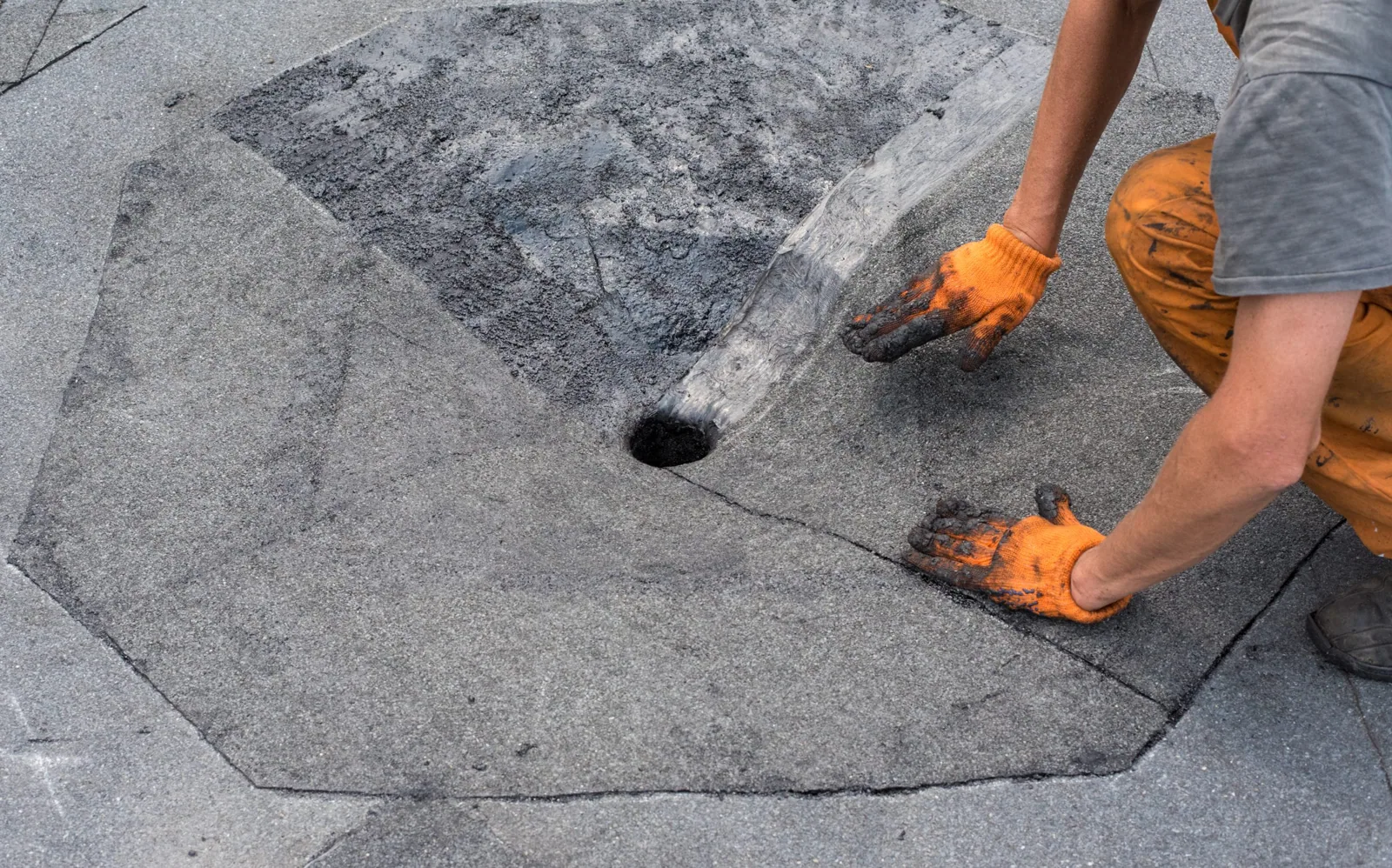
A corrected board profile can change the approach to a drain even when the drain body stays in place. We follow the surface to the outlet and examine the receiving flange, attachment and connected roofing detail. A lip or unfinished change in height can hold water beside a repaired seam. The assembly profile therefore belongs in the drainage correction as well as the field repair.
Drain and scupper transitions through replacement layers need suitable support and a compatible membrane connection. Plumbing work is coordinated where the drain component requires correction. We assess accessible discharge and the drainage arrangement relevant to the project before the surrounding layers close. An outlet cleaning task can restore a blocked path, but it does not remove a construction step left at the flange. That condition requires adjustment of the receiving profile or component detail with the repair materials selected for the installed system.
Where do local property uses change the daily construction limit?
Northwest Norman contains hotels, offices and specialty medical uses within its commercial development. A requested building in that area has its own equipment arrangement and occupied rooms beneath the roof task. We identify the support investigation and the space needed for replacement material before opening the sheet. The building contact coordinates the affected access, while the physical findings establish the work that needs suitable closure.
Northwest Norman commercial roof work can include a component release where equipment blocks the board or flashing repair. Hitachi is among the Highway 9 Technology Corridor's employers. The Postal Service also operates its National Center for Employee Development there. At a requested property within that broad corridor, the roof detail and actual operation establish the construction sequence. Material handling or a service task is coordinated when it intersects the work area. The available operating period is connected to the layers that can be removed, rebuilt and protected without leaving their receiving surfaces unfinished.
When does the support finding change the renewal alternative?
Repeated soft or displaced board areas can require investigation beyond the initial seam defect. We define the additional question through examination of attachment and underlying condition, extending the work only where the findings require it. A recover proposal needs usable retained layers, suitable height and an acceptable connection to the supporting construction. A new sheet over an unstable base preserves the mechanism that first distorted the joint.
Johns Manville system selection follows those project requirements along with drainage, component clearance and applicable design criteria. Other commercial single-ply assemblies may enter the comparison when replacement is appropriate. Removal access, disposal arrangements and weather protection influence construction planning without changing the need for a suitable base. We identify retained and replaced boundaries so the project team can coordinate its adjoining work. The completed roof then connects through stable layers, with accessible junctions checked before another finish or equipment placement limits inspection of the corrected support and membrane interface.
Related Work
Commercial Roofing Questions
Can a sheet patch stabilize a moving cover-board edge?
Examine the support problem before treating the membrane alone. A displaced or damaged board can continue stressing the new patch. We reconstruct the required base and profile, then prepare a compatible sheet connection across the usable adjoining roofing.
How should a changed insulation thickness be checked at existing curbs?
Compare the proposed field height with usable flashing clearance and the component's receiving detail. We identify modifications needed before placing the layers. The responsible trade and roofing sequence the work so the new assembly does not bury an unresolved junction.
Will a clean drain solve water held by an uneven rebuilt surface?
Follow the surface profile into the outlet after debris is removed. A construction lip or unsupported flange requires its own correction. We coordinate the component and surrounding layers before completing the compatible membrane connection and checking accessible discharge.
What finding would move the project beyond a localized Johns Manville repair?
Assess the extent of unsuitable support, retained moisture and attachment condition. A larger affected assembly may change the viable renewal method. We identify usable boundaries and project requirements before comparing recover and replacement, including the component and drainage work each alternative needs.
Examine the support beneath the Johns Manville connection
Provide the Norman-area building, known assembly, moving or depressed detail and proposed insulation or equipment changes. We will assess the base and adjoining junctions before selecting the construction boundary.
Request a Roof Assessment