Property Types We Roof
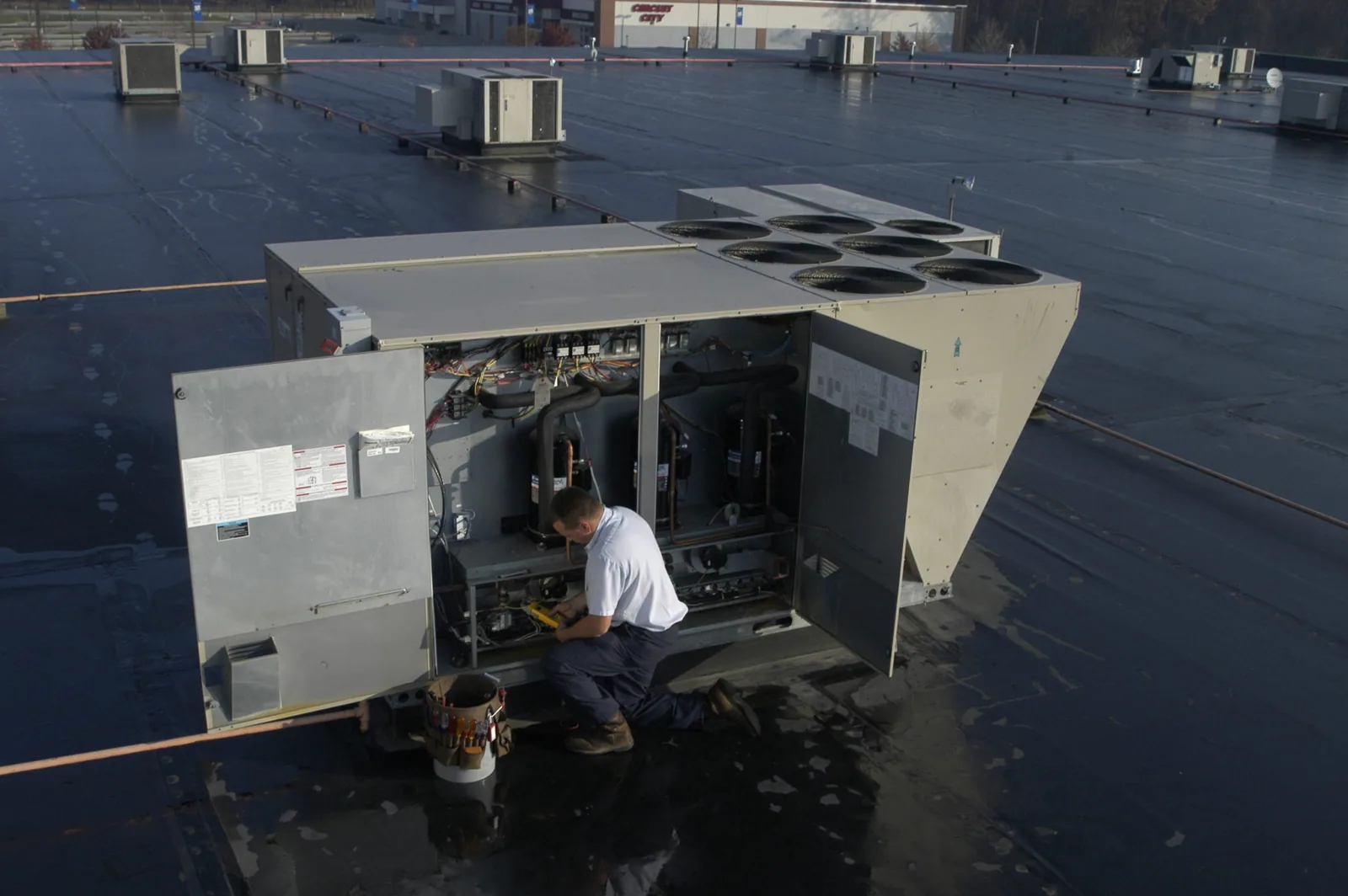
Counterflashing left disconnected after laboratory exhaust service can expose the upper edge of a curb transition. The equipment component and roof-side seal need examination before another repair closes the shared junction. We inspect, repair and renew college and university roofing in Norman, OK, by coordinating the assembly with building activity and the trades serving rooftop equipment. The scope identifies the component task that precedes compatible preparation and permanent closure.
The University of Oklahoma is a major academic institution in Norman, and its main campus is within walking distance of downtown. Bethany has Southern Nazarene University and Southwestern Christian University. At a requested educational building, the actual use, equipment and roof arrangement determine protection and the working period. We establish those requirements before assessing the educational roof connections, with the receiving materials examined at the actual curb, wall or field area that needs work.
Which equipment part completes the upper transition?
A counterflashing component can protect the top of a roof-side junction, but its fit and attachment need assessment with the underlying detail. We inspect accessible connections and identify the equipment or sheet-metal task required to make the component ready. A membrane repair below an unresolved upper opening may leave a water route at the same curb. The correction therefore follows the shared interface rather than a roof patch chosen in isolation.
Educational equipment curb coordination establishes support, clearance and the work stage needed while the junction is accessible. The responsible trade handles the equipment component and its service requirements. Roofing identifies the receiving surface and compatible closure after that task is ready. Temporary water control is arranged for the actual opening during investigation or correction. We preserve the inspection point before equipment or finish work conceals the transition, allowing the general contractor to complete the connection in its required order.
How does building activity change investigation access?
A roof opening above a working room can require protection and interior access arranged by the educational facility's contact. We identify the roof question and the actual space affected before selecting exposure or testing. Equipment operation, room release and any electrical concern remain coordinated with the responsible personnel. The investigation proceeds with the access needed to assess and restore the selected point.
Teaching, service and equipment areas can have separate working periods within one requested building. Related school roof construction or office roofing operations can raise similar access questions, but the actual property arrangement determines the plan. We connect removal and component tasks to the area they affect rather than apply a general calendar assumption to the whole roof. The building team receives the working stage and inspection requirement, allowing activity and roofing to be coordinated before a layer opening makes closure dependent on an unresolved room or equipment release.
What receiving wall remains behind the roof termination?
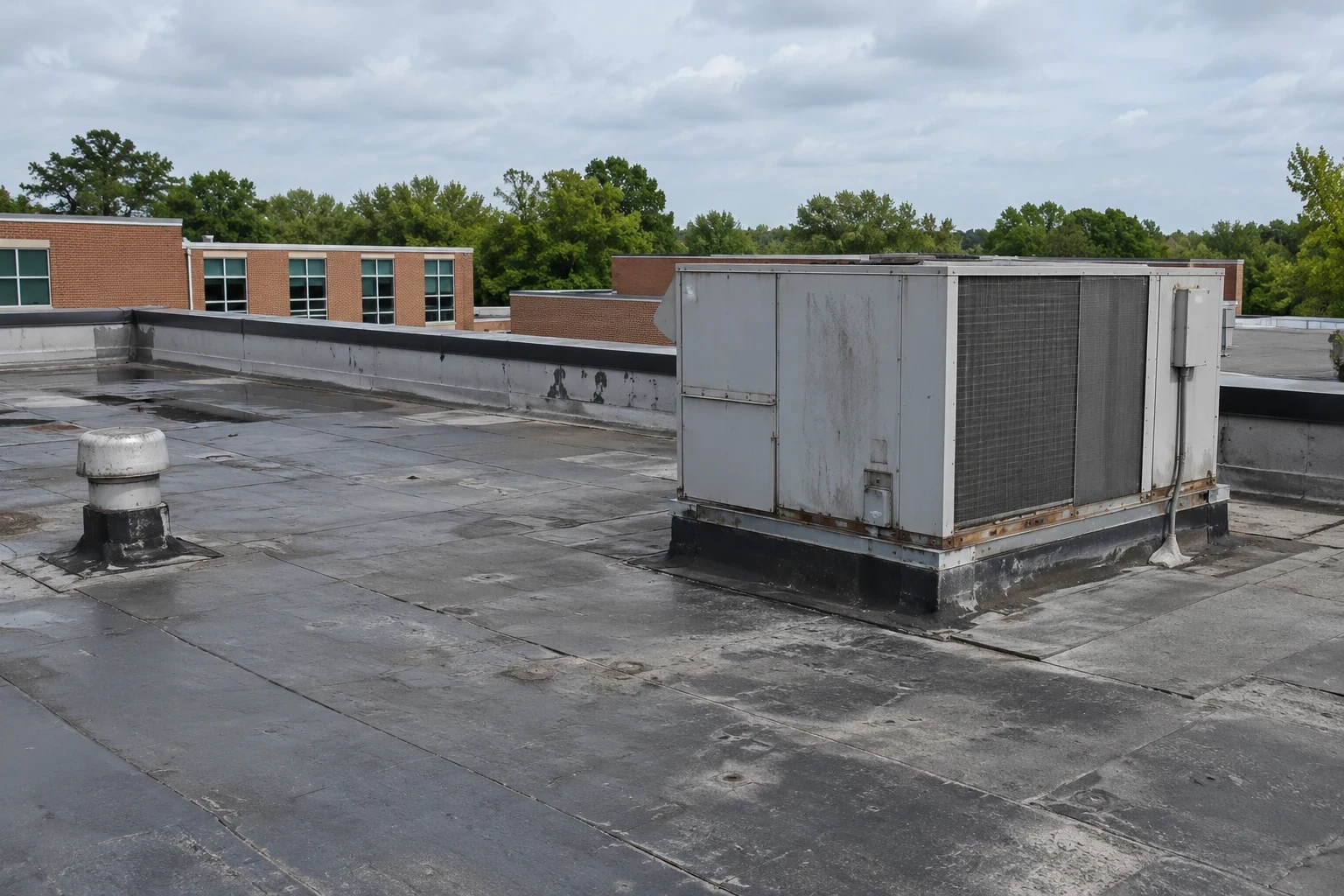
A roof-to-wall transition can conceal deterioration or unsuitable earlier repair material at the receiving surface. We examine accessible terminations and identify the exposure needed where the proposed correction depends on hidden conditions. Wall repair may belong to another trade, while the roof-side flashing follows the installed covering and the component ready to receive it. Their shared junction is planned before closure.
For a modified bitumen assembly, the plies and flashing require compatible preparation and construction. Other systems have their own requirements. We identify the boundary between useful retained roofing and the wall task affecting it, then coordinate removal and protection. A changed roof thickness can reduce available flashing height or alter nearby outlets. Those relationships are assessed together so new field material does not leave the perimeter needing an unplanned component change after it has already been enclosed.
When does a local concern require a wider layer decision?
Wet insulation beneath a failed detail can extend beyond the visible opening and change the receiving support for the repair. We investigate the area relevant to retention, with selected tests located against the roof layout. The replacement boundary needs sound adjoining material and a workable tie-in. Any deck or support condition requiring another assessment remains accessible while the responsible task is coordinated.
A thermal investigation with physical checks can help select points when suitable for the assembly and working conditions. The observed pattern is related to actual material findings before removal quantities are finalized. Connected deterioration can lead to a broader renewal option, with preparation, attachment and details examined for the proposed system. The general contractor receives the layer scope and component dependencies together. The educational work period can then account for the material removed and restored rather than only the time needed to apply a surface repair.
Where does exterior access meet the building's activity?
A lift or debris route can intersect a building entrance even where the roof task is above another part of the property. We establish the controlled ground area and material handling with the designated contact before construction. The arrangement includes roof access, overhead conditions and the working route needed for both removal and new material. Activity near that route is coordinated for the actual work stage.
Norman's university sits near the commercial uses of Downtown Norman, while Bethany contains its own educational institutions and medical use. Those local settings make a requested property's approach and occupied access relevant assessment questions. We identify the actual building route before selecting the daily roof opening. Weather, removal depth and exposed receiving conditions can change the closure task, with the next stage reassessed where needed. The construction sequence advances with its material route and component tasks ready rather than leave an exposed area waiting on access that was not settled beforehand.
How does the completed roof preserve drainage and service access?
A repaired curb and field area need the surrounding outlet route considered during completion. We examine drainage components, local elevations and the transitions altered by the work. Staging and removed materials are kept from obscuring required outlet access. A separate piping or receiving-component task is identified before the relevant roof connection closes.
Educational roof outlet work distinguishes clearing from flashing repair and a profile correction. Completed findings locate those tasks and the materials installed, with photographs tied to usable roof references. Later equipment service can use the information to preserve repaired flashing and route protection. The building team receives inspection points that warrant reassessment after alterations or a new water report. The handoff identifies the assembly constructed and separate work still pending, connecting future maintenance to the actual roof junctions examined rather than an assumption based on the educational building's name or general use.
Related Work
Commercial Roofing Questions
Can equipment service leave a curb connection needing roof inspection?
A disturbed counterflashing or support component can change the roof junction. We examine the accessible interface and coordinate the responsible trade's task. Compatible roofing follows the component correction while its receiving surfaces and required inspection remain available.
Should roof openings follow a general academic calendar?
The actual building activity and component access determine the working period. We establish those conditions with the designated contact before exposure. Removal and restoration are sequenced against the roof area and operation affected rather than a broad calendar assumption.
How do you handle wall deterioration behind a roof termination?
Expose the receiving condition where needed and identify the component task before closure. Another trade may need to correct the wall while roofing restores the compatible transition. We coordinate protection and the inspection point so the new detail does not bury an unresolved base.
What helps a returning maintenance crew locate the repaired details?
Use roof-area references paired with close photographs and material descriptions. We identify the altered curbs, outlets and transitions, along with component work still separate from roofing. Later service can then preserve access and select compatible care for the assembly actually installed.
Coordinate the educational roof junction and building activity
Share the Norman-area building, roof assembly, affected equipment or wall detail and designated working period. We will assess the receiving surfaces and trade sequence needed before permanent roofing closure.
Request a Roof Assessment