Service Areas
A curb sleeve can put movement into a roof flashing where a pipe, conduit or equipment support passes through the membrane. The collar, restraint and roofing have to reach their final positions before a new layer closes the penetration. Jones is a town on Northeast 93rd Street, also called East Britton Road, and has high school, middle school and elementary school facilities. At a school building, roof access and interior protection must fit the school contact’s operating window, and the support crew needs to finish its adjustment before flashing closes.
Jones borders Choctaw and Harrah. When a project spans these towns, keep separate roof plans and records for each address. At a Jones school roof, mark the sleeve location, support base and flashing termination, then keep the interface open until the base is set.
Which layer receives the flashing repair?
A loose pipe support can transfer movement into the sleeve flashing. Follow the post into its base, check fastener tension and look for a crease or split in the adjacent membrane. Stop the flashing repair until the support no longer shifts.
When the room below is occupied, the school contact sets the protection and access period. Inspect collar height, membrane attachment and the base; expose the support only if those details do not show what the new flashing can receive.
The boot must lap the membrane, the curb flashing must reach its termination, and any counterflashing must protect the upper edge. Record those interfaces with a penetration and curb review before ceilings or equipment hide the junction.
Where the penetration sits near an outlet, compare the water path from collar to drain. A drain and scupper inspection follows the outlet and the transition feeding it, so a backed-up path is not confused with a sleeve leak.
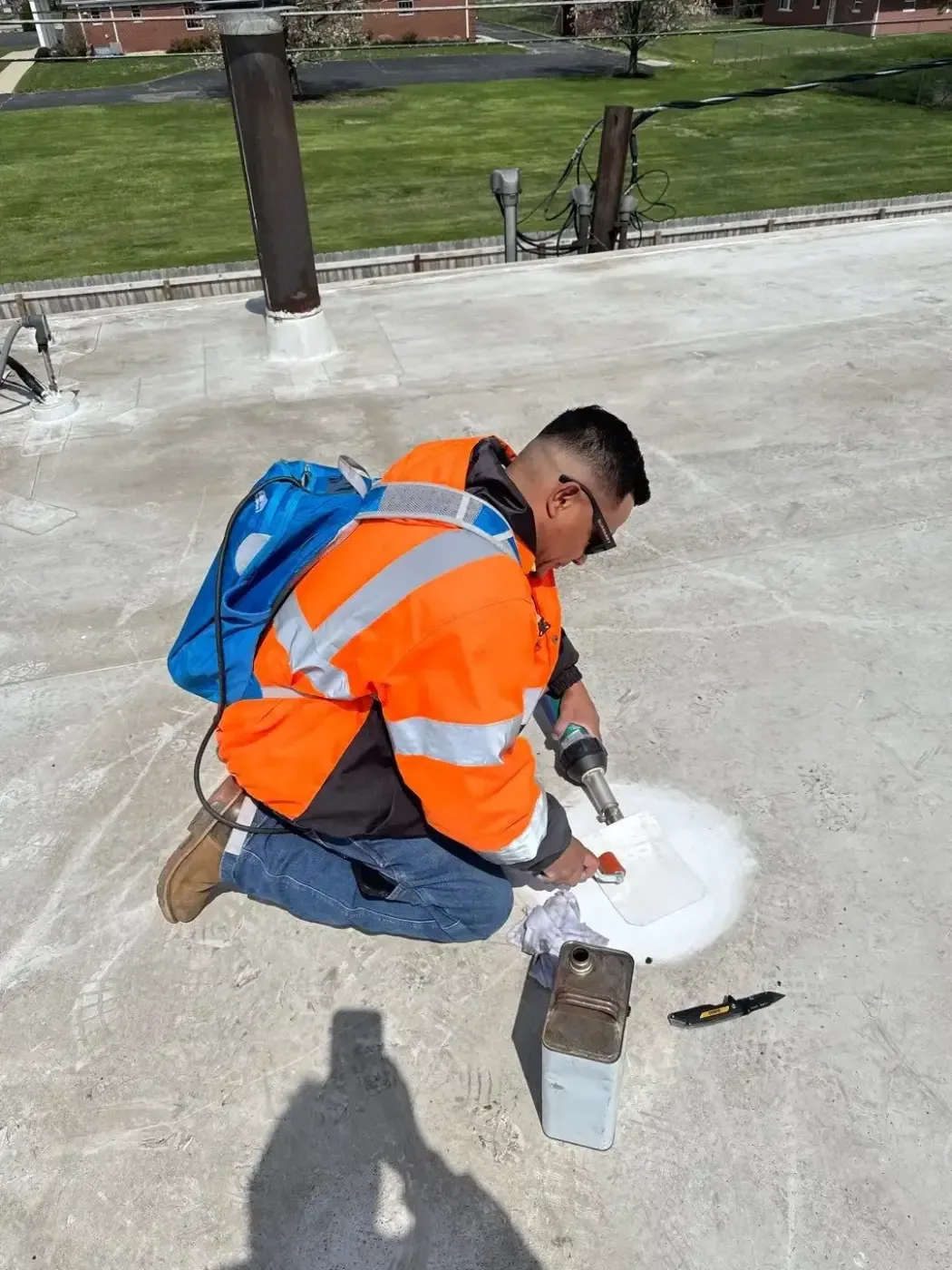
At a sleeve, we also check clearance between the pipe and the flashing collar, the height available for the termination and whether water can travel beneath the cover. The repair material needs enough clean receiving surface to bond and a finished edge that stays secure under movement. If the support position changes, roofing should follow that adjustment rather than bridge the old and new positions with a sealant bead.
What should be visible before another layer closes the roof?
Before cover-up, mark the membrane, insulation and support layers at the exposed curb. Compare the detail with the roof plan and record any change in base height or attachment. Hold the closure if the structure or equipment position needs review.
Jones lies along Northeast 93rd Street, also called East Britton Road, about four miles south of Interstate 44. Set the delivery time, lift location and roof access with the school or property contact, and route materials clear of active entrances.
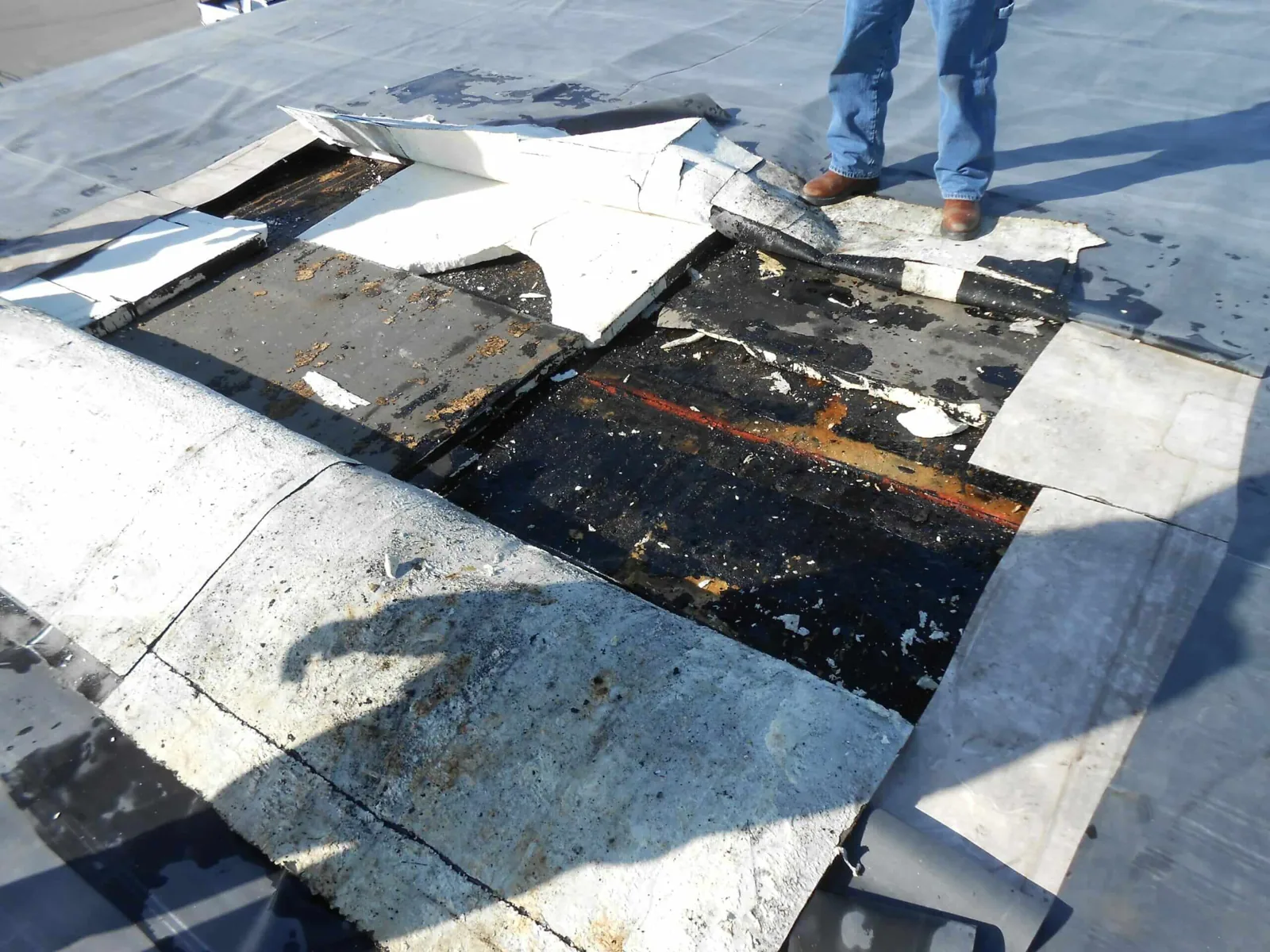
For impact or water entry, photograph the mark and nearby layers. A puncture, shifted edge, split seam or cracked flashing calls for a different repair detail. A storm-damage roof review checks the affected Jones roof zone and identifies the connection that needs repair.
Adhesive and flashing bonds depend on the substrate meeting the selected material’s application conditions. We prepare the receiving surface and complete the detail in its suitable installation window. Oklahoma’s 2024 building-code edition and amendments became effective September 14, 2026; a change to structural support or fire-rated construction needs design review before closure.
The opening should expose the layer that controls the repair: a dry, secure support may take a new collar, while compressed insulation or a weak deck changes the repair boundary. Photograph the base and membrane before restoration so the owner can see why the scope includes those layers.
How should the next trade receive the repaired area?
At handoff, photograph the sleeve collar, fastener line and roofing termination while they are visible. If equipment is reset later, keep the attachment route and the upper counterflashing accessible for a final look.
For an occupied school building, schedule roof access with the school contact and keep work separate from student and staff routes. State where materials will be lifted, how the space below is protected and who can pause work when conditions change. Confirm who verifies the area at closeout.
Jones meets Choctaw to the south-southeast and Harrah to the east-southeast. Work in Choctaw or Harrah uses its own roof plan and repair record; a shared calendar does not combine building conditions.
An reroofing sequence for an active school marks daily boundaries and protection at the work area. A sleeve leak may call for one bounded opening; keep the ceiling zone protected until the flashing is closed.
Material readiness is part of the handoff. Adhesives, sealants and liquid flashing need the surface condition and application window specified for the selected product. We check the substrate before installation, protect the repair while it cures and confirm the termination after the mechanical or structural trade finishes. Keep the final sleeve photograph with the curb detail so a later service crew can find the same attachment points.
When does an isolated flashing repair need more scope?
A sleeve repair fits when its base is stable, adjacent membrane is sound and the flashing can terminate securely. If the base shifts, insulation is wet or the deck is damaged, inspect beyond the collar and define what needs replacement.
A school access window, protection below the sleeve, flashing height and support stabilization drive the schedule. Material removal, resetting the curb and restoring the occupied area affect the price. Set the repair limit before opening; if the base or deck changes that limit, pause for owner approval before continuing.
When repeated repairs cannot tie into sound material, a commercial leak repair assessment defines the immediate boundary; a replacement evaluation compares broader renewal. We record how attachment, insulation and perimeter details affect each option.
After closeout, keep the collar and adjacent roof details in the building record. A maintenance visit can recheck that sleeve and its drain path. Include the Jones site, assembly and next trade date when arranging the review.
One loose sleeve with dry, bonded membrane can support a bounded repair. Multiple shifting bases, seam movement across roof zones or recurring water in separate rooms call for a wider evaluation. Compare those findings with the disruption of repair or renewal while the school schedule is being set.
Related Work


Commercial Roofing Questions
What does a Jones pipe or equipment-penetration repair need to start?
Provide the roof detail, sleeve location, equipment trade contact and the school or business access window. We check collar height, the clamp or termination and the surface that must receive new flashing. If the support needs resetting, that work comes before the membrane is closed around it.
What should a school contact prepare for a roof inspection in Jones?
Identify the roof access point, occupied areas below the work and the times when lifts or deliveries can use the site. Jones has high school, middle school and elementary school facilities, so we coordinate with the contact for the requested building. We then record its actual membrane, drainage and penetration details by roof zone.
How can roof deliveries avoid school entrances?
Choose a delivery window and lift position with the school contact, then mark the route around entrances and student movement. The site plan should show where materials land and how the space below the roof opening is protected. If a route changes during the job, reschedule the lift before roofing is removed.
What finding at a pipe sleeve requires a wider repair?
A loose base, membrane bond loss, wet insulation or a deck that cannot hold the attachment can move the repair beyond the collar. We expose enough of the connection to identify which layer has failed, then define whether a localized flashing can close against sound material or the roof zone needs broader renewal.
Check the roof connection before the handoff
Provide the Jones building location, assembly detail, reported condition and trade schedule. We will inspect the interface and identify what must be ready before the next construction step.
Request a Roof Assessment