Commercial Roofing Services
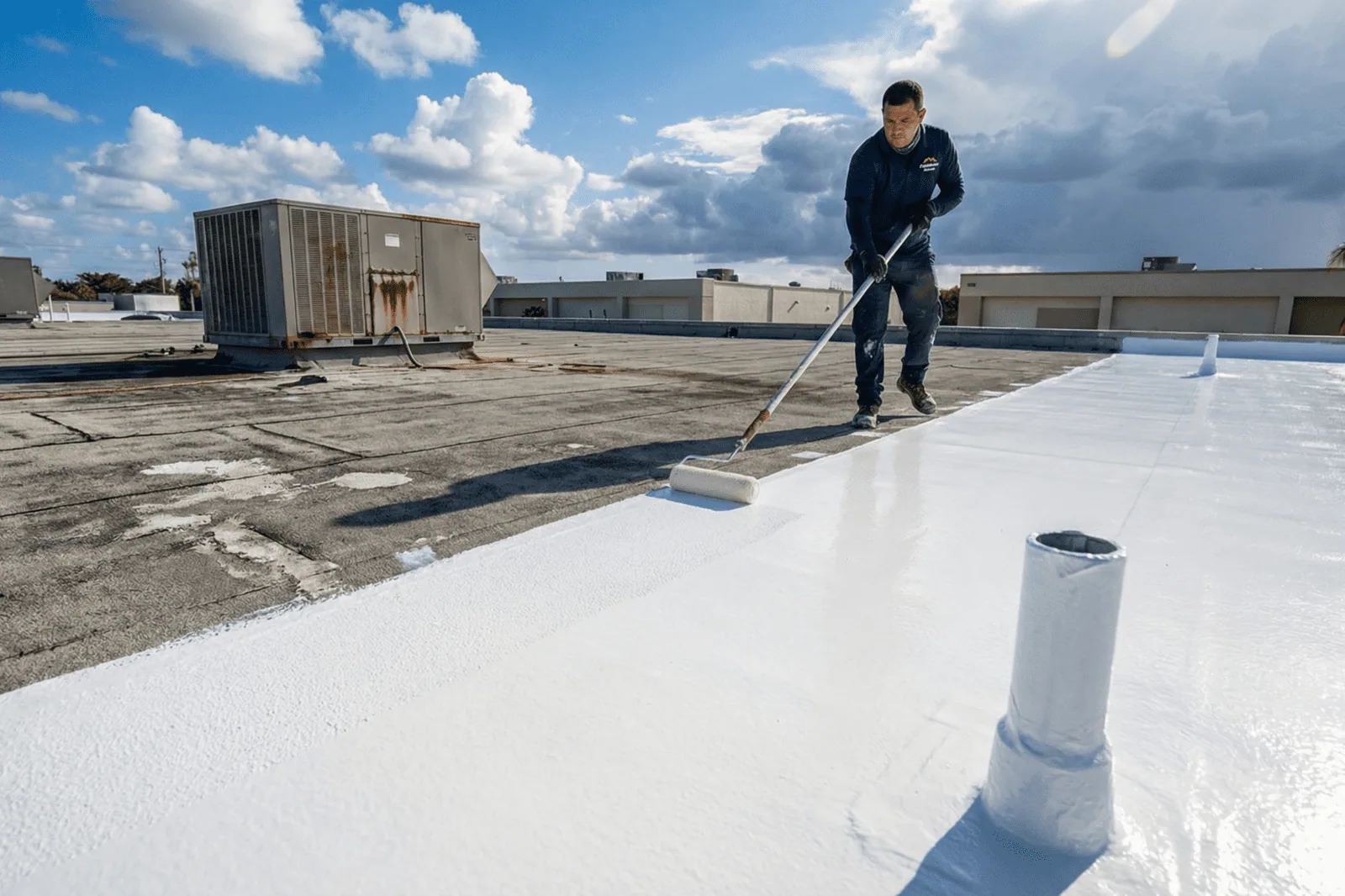
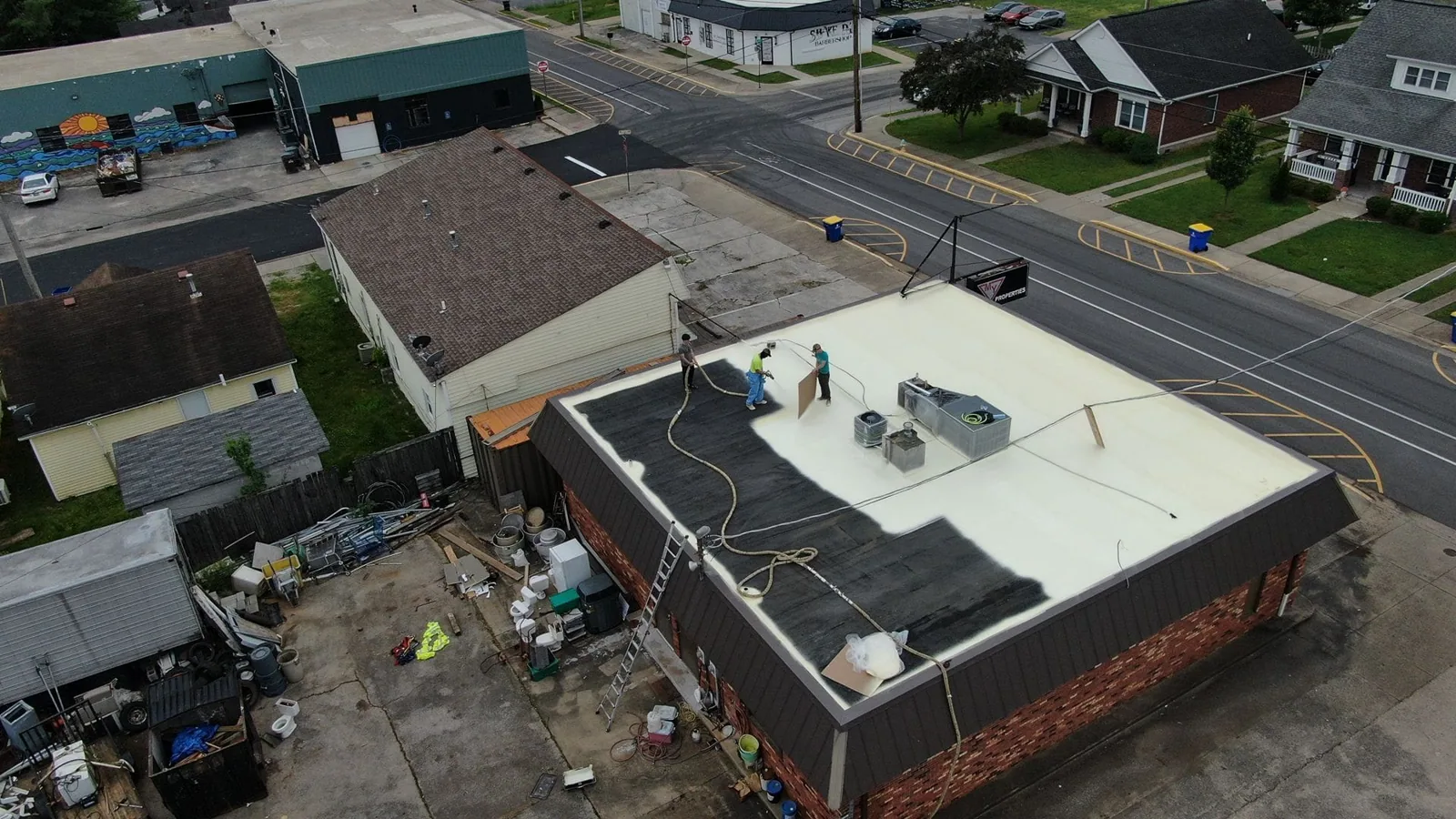
Residual oil beside an exhaust curb can separate a coating from the roof surface beneath it. Cleaning and bond assessment therefore precede coating selection, and the curb connection needs its own repair decision. We restore suitable commercial roofs in Norman, OK, with coating work that follows the condition of the installed material. The sequence establishes a sound receiving surface, corrects failed details and applies a compatible system under conditions appropriate to its preparation and curing requirements.
The Ed Noble Parkway corridor includes freestanding restaurants and hotels, while Northwest Norman has offices and specialty medical uses. On a requested property, equipment deposits, service traffic and access arrangements help define preparation and protection. We inspect those conditions before proposing restoration. A close assessment of the existing covering determines where deterioration or concealed concerns require investigation before an applied coating can become part of the assembly.
Which surface can receive the restoration?
A roof surface with loose coating, failed patches or extensive deterioration needs evaluation beneath the visible finish. We identify the covering, previous applications and their bond condition, then examine the material that would receive the new work. A coating relies on that material remaining sound and suitably prepared. Where the existing layer releases from its base, an added application does not resolve the separation underneath.
We use preparation and adhesion checks appropriate to the proposed system to establish how the surface can be treated. Old repair compounds, contaminants and incompatible materials may need removal or an alternative detail. The assessment also examines seams and penetrations where movement concentrates. A silicone coating system or another suitable application is considered against the installed assembly and drainage, with the preparation requirements explained before work begins. The material choice follows the receiving conditions instead of relying on the appearance of a weathered surface alone.
Where do the concealed layers change the option?
Soft insulation beneath an otherwise repairable covering can change the restoration boundary. We examine indications of moisture and select investigation suited to the assembly where retained layers affect the decision. Physical confirmation helps establish which material needs removal and where a workable tie-in can be made. A surface coating is considered after those concealed conditions have a defined treatment.
An investigation of suspected wet areas can support that assessment when the roof and weather allow useful thermal observation. Selected openings relate the patterns to actual material conditions. Where deterioration extends across connected areas, removal and roof replacement may provide a more suitable construction approach. We explain the physical reasons for that change, including the retained deck or insulation, rather than presenting restoration as an automatic alternative. The general contractor can then coordinate removal, repaired layers and closure against the actual assembly found.
How are seams and transitions prepared?
A moving flashing lap needs a detail that accommodates its junction before the field coating is applied. We examine the lap, attachment and receiving surface, then select reinforcement or compatible repair appropriate to the system. The detail work can require cleaning, removal of earlier material and correction of the component creating movement. Its sequence is established before the surrounding coating closes access.
Curbs, penetrations and wall terminations receive separate attention because their geometry differs from the open roof field. Equipment clearance can limit preparation and application, while a loose metal component can continue stressing the new material. We identify which connection needs another trade and when it must be released for roofing. On an office building roof, mechanical service routes also influence the areas requiring protection. The restored finish is completed after those adjoining details are ready, preserving continuity through the field and the transition rather than leaving an untreated seam at their interface.
What controls the application and curing sequence?
Moisture remaining on the surface after washing can interfere with the selected application. We assess the prepared roof and the weather window before proceeding, accounting for the system's surface and curing requirements. Material coverage, reinforcement and any required primer follow the application being installed. Work areas are selected so preparation and coating can advance without exposing unfinished detail repairs to an unsuitable weather period.
Cleveland County's climate normals include hot summer days and freezing nights. Those county conditions make seasonal scheduling relevant, while actual surface temperature and weather govern the work at the requested property. In the Ed Noble Parkway commercial area, hotel and restaurant operations can also affect washing, material handling and equipment access. We discuss that activity before application. Protected service routes and restrictions on fresh material are explained to the building team, allowing the coating to cure without immediate damage from equipment maintenance or another trade crossing the working area.
Does drainage need correction before restoration?
A low basin that holds water beside an outlet remains a drainage condition after the surface is coated. We inspect outlets, surrounding elevations and the existing water path, then identify which corrections belong before restoration. Debris clearing, drain flashing repair and slope changes address different conditions. Any change to the assembly height must also connect with the outlet and adjacent flashing.
A correction for persistent water collection may require a separate construction detail beyond the coating scope. We explain the receiving layers and transitions affected by that work, including where another trade controls piping or support. This keeps the restoration sequence tied to the mechanism producing the exposure. Completed drainage work is checked before preparation proceeds across the repaired area. The chosen coating is then evaluated for the conditions it will encounter, with its application requirements and the remaining maintenance needs kept connected to the roof's actual configuration.
Which details remain available for later care?
A completed coating needs an inspection of the repaired seams, transitions and applied field, with attention to areas where preparation or access was difficult. We review those locations against the agreed work and identify any remaining corrective task. The building team receives the material and detail information useful for later cleaning and compatible repairs.
Equipment service can damage a restored roof if sharp components or repeated contact reach the surface. We identify the protection provided and the points that warrant examination after rooftop work. Follow-up care includes drainage and detail checks suited to the assembly, with new damage assessed before another material is applied. The restoration decision therefore includes both a prepared roof and a practical way to maintain its repaired interfaces. Later trade work can be coordinated with those interfaces instead of treating the coating as a surface that needs no further attention.
Related Work
Commercial Roofing Questions
Can coating work proceed over old repairs?
Assess the repair material, its attachment and compatibility first. We identify patches that can remain with suitable preparation and those needing removal. Loose edges, contamination or concealed deterioration can change the restoration detail before new material covers the area.
Will restoration correct a low drain basin?
A coating does not supply the missing slope. We examine the basin and outlet, then propose the drainage correction required before application. That work may change insulation or flashing details and should enter the construction sequence separately.
Why is a bond check useful before choosing the coating?
Preparation needs to produce a dependable connection to the existing material. Appropriate checks help evaluate that connection and identify incompatible or releasing layers. We relate the result to the proposed application, its preparation and any change needed at the receiving surface.
How should equipment servicing fit the restoration schedule?
Complete interfering service tasks before coating where practical, then coordinate access during preparation and curing. We identify protected routes and details needing another trade. The roof connection remains available until that adjoining work is ready for permanent closure.
Assess the roof surface before restoration
Send the Norman building location, known covering and previous coating information, affected details and trade schedule. We will establish the preparation and repairs needed for a compatible restoration option.
Request a Roof Assessment